Across Polynesia, Micronesia, Melanesia, and the diaspora, a generation of directors is telling Pacific stories as only they can: through their own imaginative lenses, anchored in their own communities, and depicting their own experiences. Here are six filmmakers of Pacific Islander heritage bringing authentic stories to screens big and small.
1. Tusi Tamasese (Samoa)
With “The Orator” (2011), Tamasese wrote and directed the first-ever Samoan feature film shot entirely in Samoa, in the Samoan language, with a Samoan cast and story. The nuanced drama, which follows a taro farmer forced to defend his family through the chiefly art of oration, premiered at the Venice Film Festival and became New Zealand’s first-ever submission for the Academy Award for best foreign language film. The director’s next film, “One Thousand Ropes” (2017), traces a former boxer turned bread maker reckoning with his daughter’s return. Tamasese’s films are unhurried—all wide frames and long silences—depicting Samoan culture onscreen with remarkable patience and care.
2. Tearepa Kahi (Māori)
Kahi (Ngāti Paoa, Waikato-Tainui) writes and directs work that puts the Māori people front and center. His 2022 drama “Muru,” a charged response to the 2007 police raids on the Tūhoe community of Rūātoki, put four generations of Tūhoe-dialect speakers on screen. The film opened the New Zealand International Film Festival, screened at TIFF, and became the highest-grossing New Zealand film of the year. Kahi’s earlier work spans the hit drama “Mt. Zion” (2012) and the music documentaries “Poi E: The Story of Our Song” (2016) and “Herbs: Songs of Freedom” (2019); like “Muru,” these emphasize community, culture, and connection.
3. Vea Mafile’o (Tonga/Māori)
Mafile’o’s early-career work in the art world shows in her striking, intimate documentaries, such as the 2019 film “For My Father’s Kingdom” (co-directed with Jeremiah Tauamiti). The movie, which premiered at the Berlinale, paints an intimate, often funny portrait of her father’s devotion to the church. She went on to co-direct two episodes of the acclaimed series “The Panthers,” chronicling the Polynesian Panthers, and premiered her first fiction short, “Lea Tupu’anga / Mother Tongue,” at Sundance in 2024. With a directing gig on Amazon’s “Lord of the Rings” series under her belt, Mafile’o is steadily expanding the room for Pacific Islander women behind the camera.
4. Hinaleimoana Wong-Kalu (Native Hawaiian)
Māhū activist Wong-Kalu uses film to illuminate marginalized communities and overlooked histories. The documentary “Kumu Hina” (2014) follows a year of her life as she mentors a student in a Hawaiian school’s hula traditions, and “Leitis in Waiting” (2018) explores issues surrounding transgender rights in the Kingdom of Tonga. Upon premiering at Tribeca and screening at the New York International Children’s Film Festival, Wong-Kalu’s 2020 animated short retelling of a centuries-old Hawaiian legend, “Kapaemahu” (co-directed with Dean Hamer and Joe Wilson), narrated in the Ni’ihau dialect of Hawaiian, became the first Native Hawaiian film to make the Oscars shortlist for best animated short film.
5. Ciara Lacy (Native Hawaiian)
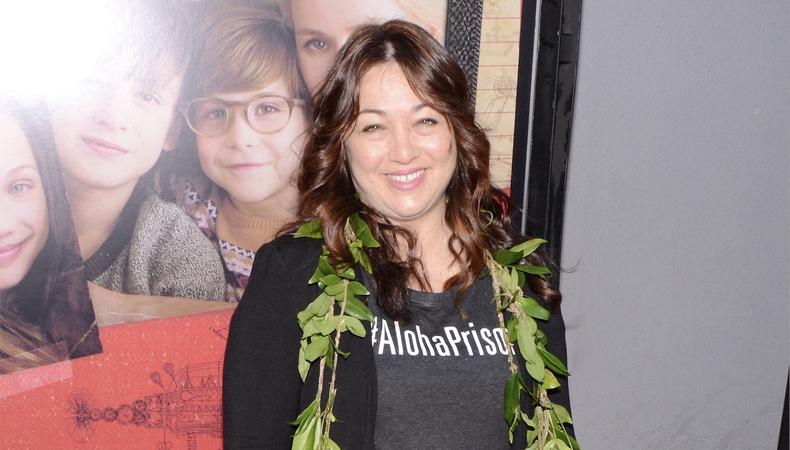
The Emmy-nominated Lacy (for her work as a producer on the 2022 documentary “Is That Black Enough for You?!?”) uses her art to highlight Pacific Islander activism, art, and self-determined storytelling. Her debut feature, “Out of State” (2017), which screened at the Los Angeles International Film Festival, depicts two Native Hawaiians who reconnect with their Indigenous traditions inside an Arizona prison. For her subsequent short “This Is the Way We Rise” (2021), a profile of Kanaka Maoli slam poet Jamaica Heolimeleikalani Osorio, Lacy was honored as Sundance’s first Merata Mita Fellow (an inaugural award named for the godmother of Indigenous cinema). She went on to direct the animated short “The Queen’s Flowers” (2024), which premiered at the New York International Children's Film Festival.
6. Erin Lau (Native Hawaiian)
Lau’s “empathy-forward” stories include the coming-of-age short “The Moon and the Night” (2018), which earned a Sundance Native Lab fellowship. Since then, her short “Inheritance” (2022), about a nature photographer facing intergenerational trauma, premiered at Tribeca and won the award for best Hawaii short at the Hawaii International Film Festival. She also produced “Standing Above the Clouds,” a documentary following three generations of Native Hawaiian women defending Mauna Kea. Like the filmmakers before her, Lau’s work points toward a future in which Pacific stories occupy an ever-larger place in global cinema.