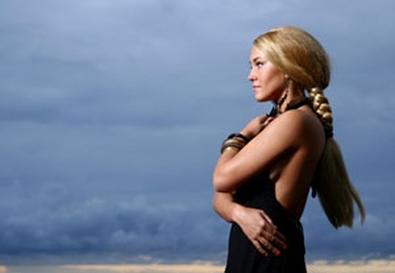
Last month, Back Stage's casting department discovered an ad touting open-call auditions for the magazine, scheduled to take place in cities such as San Diego, New York, and Las Vegas. Such open calls are nothing new for Playboy. What was new was the format. According to the ad at Playboy.com, women hoping to become "Playmates, SE models, Cyber Girls, or models for other Playboy-branded opportunities" needed to purchase one of three test-shoot packages: "basic," "gold," or "platinum," priced from $19.95 to $59.95. The least-expensive option bought only the opportunity to be photographed. The most-expensive yielded digital copies of the audition photos and a goodie bag loaded with items such as an "I Posed" T-shirt, an issue of Playboy magazine on CD, and a discount coupon for the company's online store.
Back Stage brought the ad to the attention of the Los Angeles City Attorney's Office, which opened a dialogue with Playboy. Those talks led to a change in the format of the auditions scheduled for Nov. 8 and 9 in San Diego. But the incident also called into question whether laws in other states sufficiently protect actors and models from pay-to-play audition schemes.
L.A. LAW
"Generating revenue by selling models copies of the photos taken of them seemed like an unusual option for a legitimate audition," said Luke Crowe, Back Stage's national casting editor. "However, it was the mandatory registration fee that really made us question the legitimacy of this casting call. Our view is that an audition is a job interview, and from what I understand, it's not usually legal to charge a prospective employee to be considered for work."
Crowe shared his concerns with Playboy and received a perfunctory email response: "This is not a contest. We have price points for registration and for girls to purchase there [sic] pictures."
Calls by Back Stage's news desk to Playboy Enterprises' business-and-legal-affairs and public relations departments were not returned.
Dissatisfied with Playboy's response and convinced that the auditions were legally suspect, Crowe reached out to Mark Lambert, a Los Angeles deputy city attorney. Lambert was one of the driving forces behind last year's passage of California AB 1319—known as the Krekorian Talent Scam Prevention Act—a state law designed to crack down on talent-search scams. After reviewing the Playboy ad, Lambert decided that it was in violation of the Krekorian Act. "They were charging models a fee to audition to be in the magazine or on their Internet site," he said, "and that's illegal in California."
Lambert contacted Playboy and called the company's response to his concerns "exemplary." Playboy agreed not to charge for its San Diego auditions and to refund money to anyone who had already paid to register. Indeed, a note on the ad at Playboy.com now informs visitors that "California residents are not eligible to purchase a photo package."
MONEY KEEPS ROLLING IN
But even after the pay requirement for the San Diego event was removed, Playboy's website still required registrants for the Oct. 13 and 14 auditions in New York to pony up. As of press time, San Diego is the only audition location for which registration is still open. Sign-up for the next city, Jacksonville, Fla., won't begin until December, according to the website.
Nancy Fox, the national director of policy and strategic planning for the Screen Actors Guild, said New Yorkers and residents of the other 48 states lack the protections from paid-audition schemes that Californians now enjoy under the Krekorian Act. "Employment agencies in New York are prohibited from charging up-front fees, but nothing is on the books that specifically prevents the types of scams addressed by the new California law," she explained. "However, we have enjoyed a rich history of working with New York legislators for the protection of actors in the past and would welcome the opportunity to do so in the near future."
Passing a law similar to the Krekorian Act in New York or elsewhere is likely a matter of political will—of supporters finding a legislator willing to spearhead such an effort, as Lambert, SAG, and others did in former California assemblyman and current Los Angeles City Council member Paul Krekorian. In the meantime, some California-based scammers, rather than shutting down, appear to have relocated.
"These types of companies thrive when they sell a connection to perceived entertainment hubs in the United States, such as Hollywood, New York, or Las Vegas," said Zino Macaluso, SAG's national director and senior counsel for agency relations. "While SAG was working on the California Krekorian bill, we coordinated with SAG executives in those areas about a potential uptick in the types of businesses that might seek to relocate to those areas because of the California legislation."
At this time, no Krekorian-like law appears to be on the horizon beyond California. In the absence of such legislation, Macaluso and others stress the importance of actors and models remaining vigilant, so as not to find themselves caught in money-draining scams.
"The charging of a fee for employment opportunity is the most egregious and inappropriate exercise by a casting director or producer or director as can be," Macaluso said. "Under no circumstance should anyone be paying for auditions."