The fall season is here again, and no, we're not talking about the new television shows and schedules. This season is about what's far more important for aspiring actors to focus on if the goal of a career on the stage is to be achieved — a solid, well-rounded education.
It's not just mom and dad who believe that getting into a good college is essential preparation for successfully following your heart's desire. Actors who have taken the scholastic track to the stage have found themselves trained enough to work everywhere: local theatres, respected regional houses, national tours, the Great White Way, and abroad. Why, they've even been spotted complementing their stage work with gigs on the small and silver screens!
There's simply no getting around it. Preparation is an indispensable element of success. If you had a major audition for the role you've always wanted to play, you wouldn't sit around playing video games or going out to party with friends, would you? No. (And if you answered "yes," then you might want to rethink your career choice!) You would do your homework, research what was needed, get guidance from an experienced coach or director, and be fully ready to perform when called upon. Yes, Stanislavski's famous book says it all — An Actor Prepares. And one of the most useful places to prepare is in college.
But finding the right college with the right theatre program can be challenging. Where you choose to go to school will depend a lot on your ambitions. Do you long for the life of a repertory actor? Do you get high off the heady, soaring lyricism of Shakespeare? Or do you dream of dancing and singing your way to stardom? Clarity about the kind of career you want to have will automatically narrow your field of choices and help keep you focused on finding the path you need to take. And diligent research will help determine what colleges offer that path.
Talk to actors who have the kind of background you seek, and find out where they obtained their training. Check out trade publications such as American Theatre magazine, Back Stage, and Back Stage West — all of which have annual college theatre spotlight stories. Go online, go to Samuel French and other arts bookstores, go to the library to find out what programs the school offers, who teaches within those programs, and what their training has been. Will the classes being offered give you what you need to reach your goals? Is there enough variety, or are they too heavily focused in one or two areas? Is the program all theoretical and philosophical, or are there classes with practical applications as well? If you hope to work in film and television in addition to the stage, are there classes geared toward, at least, the fundamentals of camera work: hitting a mark, understanding the terminology, awareness of camera angles, light and shadows, adjusting a performance, etc?
And, of equal importance, are there opportunities available to expand your life along with your career? Can you take a class out of town, out of state, or overseas? Will you gain a new understanding of an unfamiliar culture? Will you learn a new language? Obtain new skills? The more experience and knowledge you acquire just as a human being walking this rock, the more you will have to draw upon as an actor.

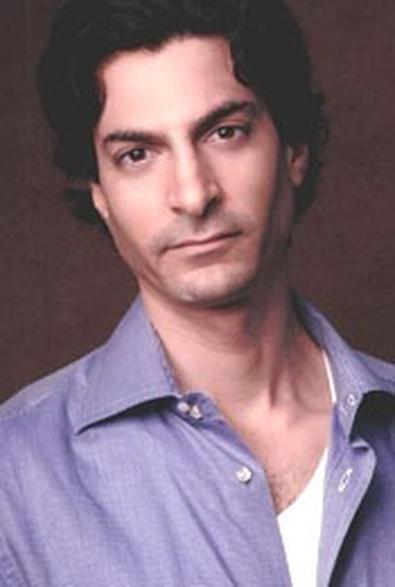
Joshua Finkel is an actor, director, acting teacher, and theatre coach in Los Angeles. Amongst his credits are four years spent in the original London and Broadway casts of Kiss of the Spider Woman, doing eight shows a week with Chita Rivera, Brent Carver (whom he also understudied), and Anthony Crivello; he logged another ten weeks on tour in Bombay and Bangalore, India, starring as Molina. He was also featured as Thenardier/Jean Prouvaire in the original L.A. cast of Les Misérables, then as Thenardier/Claquesous in the national tour. He has appeared in modern dramas, classic plays, comedies, and musicals across the country, and has also been seen in several commercials and on such television shows as Caroline in the City, Ally McBeal, Family Law, General Hospital, and Desperate Housewives.
Finkel did his undergraduate work in theatre at UC Irvine before moving on to grad school in Milwaukee in what is now the University of Delaware Professional Theatre Training Program. He obtained his master's degree in theatre, with an emphasis on classical theatre. During his time in Milwaukee he was introduced to the Suzuki Company of Toga, and spent the summer of 1986 studying Suzuki actor training in Japan.
"All of that classical training has completely influenced not only the caliber of shows I've gotten to do, but the timbre of them," says Finkel, "shows that require good speaking, or darker 'actory' shows, not just light and fluffy kinds of things. But all that work, all that honing of my skills, through my graduate school — which was a very British-based training — I have found to be very useful. You pick up skills from all the different kinds of training you've done, and you become the consummation of all that. And then you learn other things as well when you're on the job, that, if you're lucky, you get to pass on to others. Now that I have my MFA, other coaching jobs have been opened to me as a consequence. Not only has the training helped me to land work, but it's also given me the 'something to fall back on,' which the parents of any artist always want for their child!
"I'm such an advocate for training because the market is very, very competitive," he continues. "In Los Angeles, it's very easy to have the luck of the draw — the right look, or the quality, or a connection, or something that gets you a job — but the people who really, really last are the ones who have training. Training will sustain a career for you as you go in and out of types and ages. Like with any job, really, there's just so many things you'll be able to do if you're well trained. And I have found that the more you can do, the more you will work."
Steven Schub grew up in a family of thespians. His grandmother performed in the Yiddish theater, and his uncle was a professor of drama at Syracuse University in New York. Schub was born in Brooklyn, and at age 16 ended up in San Francisco at the Summer Training Congress of the American Conservatory Theater. His teacher that summer was Annette Bening, who, he laughs, "basically saved my life. At the time, I was this punk-rock little anarchist, pretty much dedicated to insurrection and causing trouble. I had no concept of what acting was really about. Annette really gave me a respect for acting — both literally and metaphorically. She gave me the book respect for acting by Uta Hagen, and she also slapped me around, because really, I had no direction.
"When I was done with that summer at ACT, I knew very clearly that I might be able to make a living at this shtick, and more importantly, that I loved it. I knew some of the names, like Lee Strasberg and Stella Adler, and I had read a book called A Method to Their Madness, which was the history of the Actors Studio. So I called Annette, and I said, 'You know, this is what interests me.' It was a much more practical approach to acting.
"I have to admit that I do have a huge bias towards what is often called 'method' training. It sometimes gets a bad rap, based upon people who don't teach it or practice it properly. But in my opinion, Stanislavski (and Strasberg, Adler, and Meisner after him) realized that the fundamental problem in acting is activating the emotions and the imagination on command. That's not to say that all the external training — voice, speech, movement, script analysis, etc. — isn't equally important. But my feeling is that it's critical to make sure that whatever program you enter addresses these internal aspects as well. There are tons of actors out there who are incredibly well-trained classically, so they move and speak well, but they are at a loss when inspiration does not strike and they have to create real emotion on command."
After that summer at ACT, Schub became interested in NYU's Tisch School of the Arts program. The appeal for him was that, "number one, it's in New York City, so you're right in the heart of things, and number two, what they did at the time — and I'm sure they still do it now — is three days a week you'd go to a conservatory: the Lee Strasberg Theatre Institute, or the Stella Adler Conservatory, or Circle in the Square, or the Experimental Theater Wing, etc. They had the League Auditions there, where you audition simultaneously for NYU, Juilliard, the North Carolina School of the Arts, etc. And even though I had auditioned for Juilliard — I think I did a monologue from Friday the 13th — I really wanted to go to Lee Strasberg at NYU. So I focused like a laser beam on that, and thank God I got in."
Not only was Schub accepted, but his NYU roommate turned out to be an actor who would go on to national fame, critical acclaim, and, earlier this year, an Academy Award for his uncannily precise portrayal of Truman Capote — Philip Seymour Hoffman. Another friend was Bennett Miller, who went on to direct Capote and receive an Oscar nomination for his efforts. Together, the classmates formed the short-lived Bullstoi Ensemble, later dubbed by the teachers the Cock and Bull Theatre Company.
The point to all of this, of course, is that typically, the friends you make in college, and the professional relationships you develop there, can follow you, influence you, and be a support for you throughout your career. Says Schub happily, "Phil, Bennett, and I are still friends. That's the great thing about going to any four-year school — everyone sticks together. Even my teacher at NYU, Mel Gordon, said, 'Choose your alliances carefully. If you're lucky, you're going to be spending your creative life with these people.'"
"The main thing is that you love what you do," adds Finkel. "This business is too hard to not love it. So it's an endeavor. It can bring you great joy, and it can also bring you great challenges."
And the challenges will be plenty if theatre is in your blood. The lure of lucrative Hollywood can make the choice of a stage career seem pale by comparison. And there is certainly frustration to be had over glittery movie stars, hunky men, flawless beauties, and under-trained actors walking off with roles better filled by someone who knows their Ibsen from their Ionesco. But the rewards of live performance far outweigh the difficulties of the rough road getting there.
"There are things I'm not happy about," admits Schub, whose post-college work includes stage productions in New York, Israel, and Los Angeles; a variety of film projects, including the cult classic Caught; and television appearances in NYPD Blue, Third Watch, E-Ring, and a recurring role as a terrorist this season on 24. "There are kids who come here to L.A. fresh off the boat, and they get work very quickly 'cause everything in Hollywood is about youth. So, sad to say, they do get hired prematurely, without any kind of training or technique, and it's hard for me to say, 'Well, you shouldn't come here when you're 18,' because the fact of the matter is you do get work when you're that young. However, I do say that if you're in it for the long haul...well, you can tell on set the people that have studied philosophy and world literature, and who have a technique and a sense of history. People in their 30s and 40s who are still acting well are not people who came here at 18 and took some film acting or cold reading course somewhere. There are always exceptions, of course, and I think we all know the difference between a TV star and a celebrity, and a real actor. I mean, there's a huge difference between the kind of work that's done by Robert De Niro or Al Pacino or Meryl Streep or Daniel Day-Lewis and someone who's simply a good-looking guy who can just say words naturally. So I am a huge fan of someone who takes the time, takes the four years — either does it on their own, or through a college — and grounds themselves as a human being.
"But don't panic and think this one decision will change your life forever, 'cause you can always take another path later on. I think the great schools of ten or fifteen years ago — Juilliard, NYU, Carnegie Mellon, Boston University, etc. — are probably the great schools still today. If you can't get into those, then take your time! You can educate yourself on your own as well. But I'm also a fan of NYU, and I'd be lying if I didn't say I'm a fan of the training and the people I connected with when I was there. Just know what you want, and create it for yourself."
"College is a fabulous experience," Finkel says. "And it's important. You find a lot of yourself in college, and nowadays, when you look at how competitive the world is, a college education is useful in any career you choose. And certainly, if you're pursuing the arts, some of the connections you make, those relationships, they will be invaluable to you. Enjoy every minute of being there and doing it! If your parents are helping you go, then thank them for doing that. And if you're doing it for yourself, well, bravo! Good for you! I just think your education is always going to come back to you in spades."
And no doubt, with all of that preparation behind you, and the opportunities that will arise in the course of your studies and after you graduate, luck — and a career in a field you love — will surely find you.