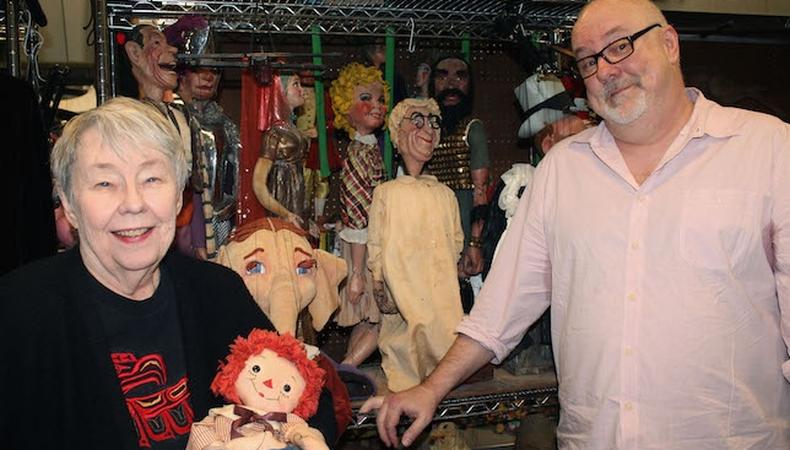
Like movement, voice, dance, and mime, puppeteering can supplement an actor’s training and improve their skills. “Becoming a puppeteer made me a better actor,” says Doug Burks, a puppet worker at the Kathy Burks Theatre of Puppetry Arts, currently based out of the Dallas Children’s Theater.
Despite the kid-friendly location, it doesn’t mean they’re doing kids’ stuff. The name of the company is carefully chosen—“theater” and “art” are part of their work.
“[Puppeteering] taught me intense focus and how to convey an emotion through movement,” adds the actor. “It teaches you to direct the energy of the character through the marionette. You are acting down through the strings, through the puppet, and out toward the audience. And you can’t find that many actors who can puppeteer.”
The discipline requires tremendous versatility from the actor, who will manipulate potentially dozens of figures during a show, and have to know the movement and personality for each one. The production of “The Nutcracker” employs about 50 puppets, Doug Burks says, and is performed by just six puppeteers.
A love for theater and the chance inheritance of a large collection of puppets from one of the preeminent, ’60s practitioners, Sue Hastings Marionettes, lead directly to this career path for Doug Burks, his mother Kathy Burks, and his sister Becky Burks. Working with puppets since childhood for over 50 years, the family has built a profession around this singular performance versatility. And the Burkses still have most of the Sue Hastings collection, numbering in the hundreds, and many as old as 80 years. Some were even performed at the White House.
Since the 1980s, the Burkses have also made their own puppets (they estimate they have more than 3,000 now), and have extended from marionettes to the panoply of puppeteering, including hand puppets and rod puppets, which require the actor to practically disappear.
“You’re all in black velveteen—black hoods, black gloves, and lights above and beside you. You’re this close to the audience, but if you do it right, you’re not seen,” Kathy Burks says. Which raises an issue important to the Burkses: The value of their skill to the acting profession.
“A puppeteer is an actor!” Kathy Burks stresses. “It’s a nice device for an actor to learn the art of acting through puppeteering—they can see themselves from another point of view.” Ultimately, acting with puppets is like any other form of acting—it’s a matter of using what’s at your disposal to tell a story.
Many puppeteers, Kathy Burks says, will first act out a role without the puppet, “so they can study the movement and get the emotion they want to get.”
“For me, it isn’t the figure of the puppet,” adds Kathy Burks. “It’s what the message is. If you don’t have a message to convey, don’t bother using puppets.”
Inspired by this post? Check out our Texas audition listings!