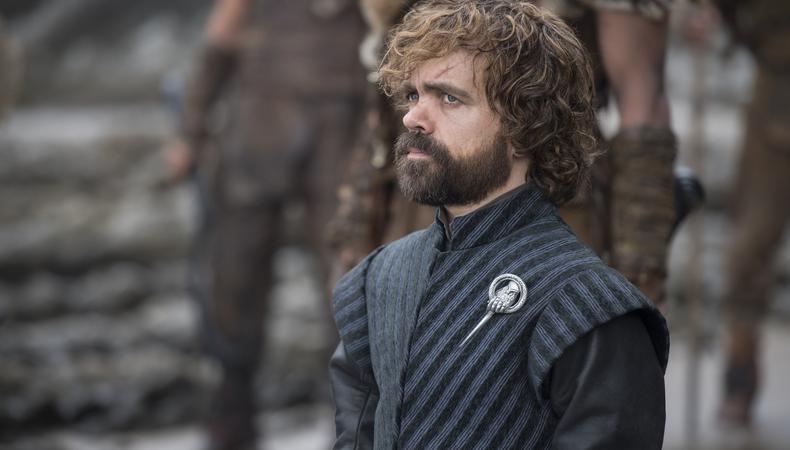
Many actors with dwarfism, such as Peter Dinklage of “I drink and I know things” fame and renowned voice actor Linda Hunt, have successfully carved a path for themselves in the industry. Still, it’s no secret that Hollywood and the entertainment world at large must reckon with a harsh history of discrimination that continues to shape media to this day. It’s clear that there’s no better time than now for actors with dwarfism to have their voices heard—here’s how.
Misunderstanding: People with dwarfism—those who have a short stature of 4'10" or less due to a genetic or medical condition—may experience a lack of knowledge from the general public about dwarfism, its causes, and its disability status.
Many of the most famous actors with dwarfism, like Dinklage and “Jackass” stunt performer Jason Acuña (aka Wee Man), have achondroplasia, a form of skeletal dysplasia in which cartilage fails to ossify or change into bone. Other types of dwarfism include spondyloepiphyseal dysplasia congenita, which affects genre-legend Warwick Davis, and osteogenesis imperfecta (aka brittle bone disease), which affects Michael J. Anderson, who’s known as the Man From Another Place from David Lynch’s cult-classic “Twin Peaks.”
Though some people with dwarfism don’t identify as having a disability, others do; and dwarfism is recognized as a disability by the Americans With Disabilities Act. The nonprofit Little People of America (LPA) says it “embraces the idea that dwarfism is considered a disability and members should identify as such. Members should feel confident to identify themselves as disabled.”
Discrimination and stereotypes: Like many actors from marginalized communities, actors with dwarfism often face discrimination and ridicule when it comes to sitting at Hollywood’s table.
“I am still haunted by memories of primary school kids asking if I was the ‘Grumpy’ or ‘Happy’ dwarf today, and singing, ‘Heigh-ho, heigh-ho, it’s off to work we go,’ at me,” wrote author and advocate Cathy Reay. “Don’t get me started on the Oompa Loompa song, unless you’re planning to foot my therapy bill.”
Typecasting and limited roles: Actors with dwarfism have long been relegated to fantasy and other genre fare, with roles such as dwarfs, pygmies, elves, munchkins, and monsters. This often limits their opportunities to land diverse and meaningful roles.
Replacement and erasure: Past representations of little people in media are often replaced or erased under the guise of progressiveness. The 2023 “Wonka” prequel cast Hugh Grant as the sole Oompa Loompa—a move that the president of Little People of America, actor Mark Povinelli (“Mirror Mirror,” “Water for Elephants”), described as “troubling.” Similarly, though developed as a live-action adaptation, the 2025 “Snow White” remake uses animated miners to portray the seven dwarfs from the 1937 film, instead of casting actors with dwarfism. The creators of 2024’s “Time Bandits” adaptation even chose to remove little people from the titular group entirely, despite their prominence in Terry Gilliam’s original 1981 film.
Balancing representation and employment: Actors with dwarfism may find themselves caught between perpetuating stereotypes and landing jobs. For instance, before Disney revealed its plan to replace the dwarf roles in “Snow White” with CGI characters voiced by actors, Dinklage said that being “proud” of casting “a Latina actress [Rachel Zegler] as Snow White” while “still telling the story of Snow White and the Seven Dwarfs” is “backwards.” “You’re progressive in one way but you’re still making that fucking backward story of seven dwarves living in the cave,” he said. “What the fuck are you doing, man? Have I done nothing to advance the cause from my soapbox? I guess I’m not loud enough.”
However, Dinklage’s comments and Disney’s subsequent decision both received pushback. While at least one animated miner will be voiced by a little person, Martin Klebba (“The Electric State,” “Pirates of the Caribbean: The Curse of the Black Pearl”), many feel like that’s not enough—and that eliminating stereotypical roles also means eliminating roles for little people.
“Five years ago, there were constant commercial auditions,” explained Terra Jolé (“Little Women: LA,” “Dancing With the Stars”). “Because of equality, and voices stating that they weren’t OK with things like elf roles, or dwarf roles, or leprechaun roles, they’ve been eliminated. And not only are you not seeing a lot of little people in the acting industry anymore, but you’re not seeing productions being created to give little people an actual role, either.”
This creates a complicated scenario for actors with dwarfism, who may want to avoid perpetuating stereotypes but (like any actor) would be hard-pressed to turn down a part. “When considering roles associated with dwarfism, instead of thinking that changing these roles may ‘rob’ a few people with dwarfism of a job, we need to look at the bigger picture and think about what damage it is doing to the wider dwarf community,” wrote disability studies specialist Erin Pritchard. “To satisfy all, we should leave some representations in the past, along with the freak shows, and instead, provide more empowering and true-to-life roles for people with dwarfism.”
For Hollywood to match the progressive tenor it propounds, little people and other marginalized groups need to be represented in all areas. It can still be tough going to be taken seriously—but these tips can help.
1. Seek resources.
Joining relevant advocacy and outreach groups, such as LPA, allows you to develop a network and engage with members.
2. Find an agent.
While you don’t need to seek specialized representation, acting agents with a history of working with performers with dwarfism may be better equipped to help you navigate the industry. Several agencies, such as Oh So Small and Willow Management, specialize in casting little people.
Industry veteran Lisa Osmond (“Harry Potter”) and her children, Jo Osmond (“Dumbo,” “Captain Marvel”) and Edd Osmond (“Snow White and the Huntsman,” “Dungeons & Dragons: Honor Among Thieves”) created Oh So Small “with the goal to enhance opportunities for actors of ‘extreme height’ in the arts.” Davis and his father-in-law, Peter Burroughs (“Flash Gordon,” “Labyrinth”), co-founded Willow Management to help “change the way that short people were represented in films and on television.”
3. Audition for roles you want to play.
You can search using specific keywords on our comprehensive casting database to find roles that you feel best fit you, but remember that you have more to bring to the table than just your appearance. If you feel uncomfortable only working in genre roles, branch out and try others that don’t specify body type.
4. Be your authentic self.
“Every actor brings their body to a role,” wrote actor Kiruna Stamell (“Doctors,” “Moulin Rouge!”). “I can’t leave being a dwarf behind me; whatever I do, I will be a person with dwarfism doing it. But when characters are well written, dynamic, and interesting, that’s what excites me as an actor.” Whether you’re playing a human, fantastical creature, a member of an alien race, or anything else, your character will feel more authentic if you’re excited to bring your own experiences onto the scene. If a role or delivery doesn’t feel right in your experience, work with the director to get it right.
5. Advocate for your needs.
Depending on your specific needs as an actor with dwarfism, you might require different accommodations on set. According to the Job Accommodation Network (JAN), these might include:
- Adjustable chairs, tables, microphones, and workstations
- Modified props, set pieces, and costumes that match your proportions
- Step stools or platforms for certain camera angles
- Additional help with harnesses and safety equipment
- More downtime for physical recovery between shots
The ADA protects you from discrimination, and it’s perfectly professional to discuss your needs with production teams; don’t be afraid to speak up and advocate for yourself.
Kathy Hutchins/Featureflash Photo Agency/Shutterstock
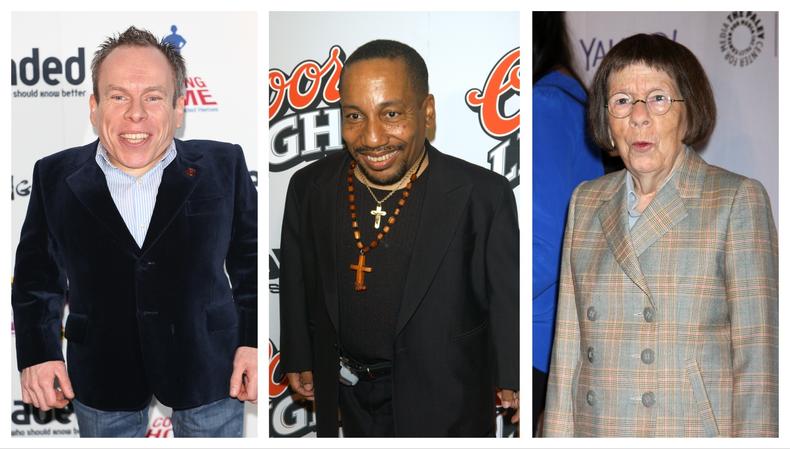
Despite the challenges that actors with dwarfism have and continue to face in Hollywood, there are still some (though not enough) examples of performers who have built stellar careers and impacted the lives of audiences everywhere.
- Peter Dinklage: It goes without saying that a list of the top actors with dwarfism would be incomplete without Dinklage. A fan favorite for his stunning portrayal of Tyrion Lannister on HBO’s “Game of Thrones,” Dinklage is now a household name with substantial roles in projects including “The Hunger Games: The Ballad of Songbirds & Snakes,” “Brothers,” and the Marvel Cinematic Universe.
- Warwick Davis: Davis got his start acting at the young age of 11 when his grandmother noticed a casting call for Ewoks in “Star Wars: Episode VI—Return of the Jedi.” The rest, as they say, is history, and Davis has gone on to have an illustrious career playing humans and creatures in franchises including “Willow,” “Harry Potter,” and “Leprechaun.” Now, Davis is a household name among movie fans and reportedly one of the highest-grossing supporting actors of all time.
- Tony Cox: Like Davis, one of Cox’s early roles was as an Ewok in “Return of the Jedi.” Cox has also gone on to play humans and non-humans alike in several beloved films and franchises. He’s likely most recognizable for his roles in both “Bad Santa” films, but others might know the actor for his many roles in Hollywood mockbusters like “Epic Movie” and “Disaster Movie,” or his small part as the Preacher in Tim Burton’s “Beetlejuice.”
- Martin Klebba: After occasionally appearing as a guest on “The Howard Stern Show,” Klebba’s first film role was an uncredited part in Burton’s “Planet of the Apes” remake in 2001. Though the actor, who has acromicric dysplasia, is likely best known for his performances as pirate Marty in the “Pirates of the Caribbean” franchise, he also has an illustrious career doing stunt work for films including “Zombieland” and “Van Helsing.”
- Linda Hunt: Though many of the most famous actors with dwarfism are male, that doesn’t mean there aren’t fantastic female actors that equally steal the show. Case in point: Linda Hunt, who portrayed Billy Kwan in “The Year of Living Dangerously” and Hetty Lange on “NCIS: Los Angeles.” She’s also voiced such memorable characters as Grandmother Willow in Disney’s “Pocahontas” series and acted as the narrator for the Greek Saga of the beloved “God of War” video game franchise.
- Francesca Mills: Mills got her start in entertainment upon joining Davis’ Reduced Height Theatre Company, a U.K.-based troupe of actors under 4 feet tall—and it wasn’t long before she made the move from stage to screen. Notable roles include Cherry Dorrington on “Harlots,” Meldof on “The Witcher: Blood Origin,” and Detective Katherine on the “Time Bandits” remake (she plays a supporting character, not one of the primary bandits). She’s also lent her voice to the podcast series “1984” and “Doctor Who: The Ninth Doctor Adventures.”