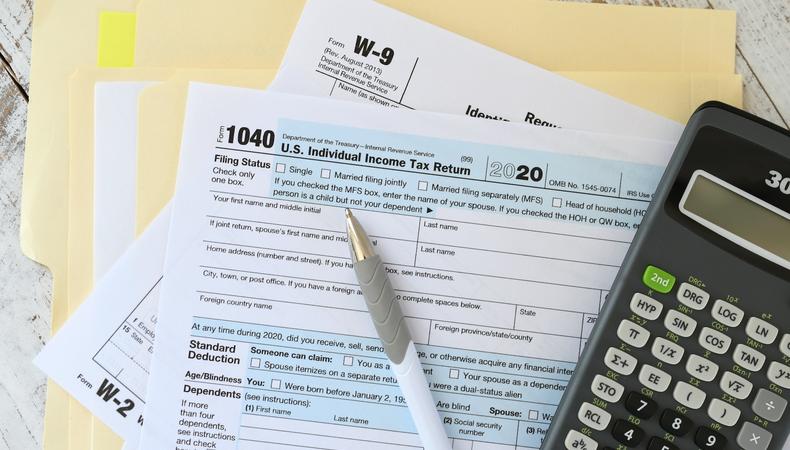
When tax season rolls around, even the highest-paid actors like Dwayne “The Rock” Johnson and Margot Robbie face a harsh reality: The tax code hasn’t kept pace with the entertainment industry. Within the labyrinthine rules of the IRS, there exists a special category called the “qualified performing artist” (QPA)—a provision that once offered significant value to actors during tax season, but has become increasingly obsolete as living costs have skyrocketed while the income threshold remains frozen in the 1980s.
The qualified performing artist provision allows performers who fulfill its conditions to write off their acting-related expenses as an adjustment to their income and to take the standard deduction as well. This is a significant tax break for performers—assuming you fulfill the requirements, and therein lies the problem.
Requirements for the qualified performing artist tax deduction
The rule requires that you:
- Have no more than $16,000 in adjusted gross income
- Have at least two W-2s, each paying at least $200, from entertainment-related companies
- Have performing-related deductions equal to at least 10% of your adjusted gross income
Difficulties of the qualified performing artist deduction
In 1986, when the QPA category was created, it was a great break for performers. Unfortunately, there was no provision tying the $16,000 income ceiling to the cost of living. As the cost of living has increased over the last 39 years, that $16,000 requirement has become harder and harder—if not impossible—to meet.
$16,000 in 1986 would be equivalent to approximately $47,000 in today’s dollars when adjusted for inflation. The cost of living has increased substantially since the bill was initially passed, making it very rare for anyone to qualify for this tax break while still being able to afford basic living expenses.
 The Actor’s Guide to Filing Taxes in the U.S.
Still, there’s good news for struggling performers: The Performing Artist Tax Parity Act of 2025—a bipartisan legislation seeking to modernize the QPA deduction—has been introduced in both the House (H.R. 721) and Senate.
The proposed changes include:
- Eliminating the outdated $16,000 income limit, and raising the threshold to $100,000 for individuals and $200,000 for joint filers
- Increasing the minimum payment requirement from $200 to $500 per employer (adjusted for inflation starting in 2026)
- Including a phase-out provision for higher earners
The legislation is supported by major industry organizations including SAG-AFTRA, the International Alliance of Theatrical Stage Employees (IATSE), Actors’ Equity Association, and the Motion Picture Association. As SAG president Fran Drescher and national executive director Duncan Crabtree-Ireland wrote, “By restoring essential tax deductions, PATPA will help ensure that working artists can continue to contribute to our nation’s cultural and economic vitality.”
The outdated QPA rules have created widespread confusion among performers and even some tax professionals. Numerous actors are incorrectly advised that if they don’t have at least two acting-related W-2s or make $16,000, then they are not qualified performing artists and therefore can’t write off their acting expenses.
But remember, the term “qualified performing artist” refers to a specific regulation in the IRS. You either do or do not fulfill the requirements of that particular tax break. Beyond that narrow definition, the terms “qualified” and “performing artist” have no special meaning to the IRS.
If you made money as a performer, you are entitled to write off the expenses you incurred to earn that income, provided they are valid deductions according to IRS regulations and you can prove them with receipts and other records. (It is also possible to do this by filing as self-employed and completing Schedule C for business profit and loss reporting.)
The question isn’t whether you’re “qualified” enough to call yourself a performing artist—it’s whether you have sufficient expenses to warrant itemizing your deductions.
So save your receipts and other financial records, and plan for when your acting career is generating income—and, of course, tax payments—with the same focus and dedication that you train and rehearse. The tax code may not recognize your worth at $16,001, but that doesn’t mean you can’t deduct legitimate business expenses.
You never know when the day will come when no one will question whether you’re qualified to call yourself a performing artist. Except maybe your friends, your mother, the critics...
For the most current information on tax deductions for performers and updates on the performing artist tax parity act, consult with a qualified tax professional or visit the official IRS website.