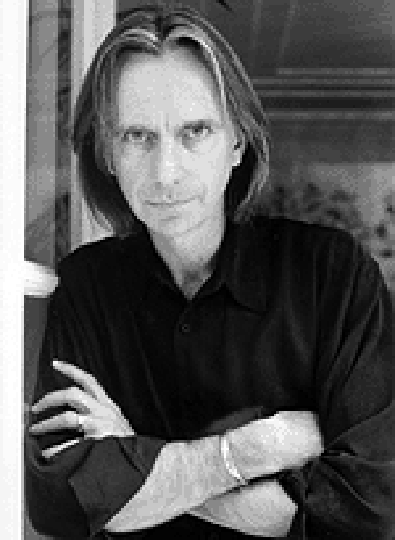
If there's an adjective that best describes Scott Hicks' approach to filmmaking, it would be collaborative. The director of Shine, Snow Falling on Cedars, and now Hearts in Atlantis, Hicks is truly an actor's director, one who relishes input from his cast, as well as his crew.
As Hicks told Back Stage West during a recent visit to Los Angeles from his home in Adelaide, Australia, this close collaboration with his actors commences during the casting phase of his projects. He said, "I remember reading of Jean Cocteau that his only instruction to an actor in an audition was, 'Astonish me.' Some of the tremendous actors I've worked with always have that capacity, and not in a contrived way. Their reading of the material can come at you from another angle that you just didn't anticipate, and that is what I want--an actor who will bring to the table ideas and feelings I might not have conceived of myself."
Indeed, Hicks has combined his talents with some of our greatest acting talents, including John Gielgud, Armin Mueller-Stahl, Geoffrey Rush (whose film career was launched by Hicks' insistence that Shine not be made without Rush), and now Anthony Hopkins in Hearts in Atlantis, which opens this weekend.
Likewise, when casting less-experienced actors, Hicks looks for those who surprise him during their auditions. Such was the case on his latest project; he needed to find an 11-year-old to play the fatherless boy growing up in 1950s New England who befriends a mysterious stranger, played by Hopkins. With the help of casting director Ronna Kress, the director began a widespread search for child actors. Given his already stated taste for actors who claim a role from a fresh perspective, he chose a young performer who approached the material in an unanticipated fashion.
Shared Hicks, "Quite late in the process, this tape arrived with young Anton Yelchin's work on it, and I was more than quietly excited. I was very excited. I was seeing things that he had done [Along Came a Spider, 15 Minutes, and the Disney MOW Geppetto] and that he could evidently hold his own as a young actor. He clearly had access to his emotions and was not afraid to show them. And then he surprised me in his reading of some of the lines from the script, for his ability to change his emotional pitch very unexpectedly and yet very truthfully.
"He didn't appear to be acting. It's one of my pet hates, really. I don't hold it against them, but very often in movies you see children who are acting their little hearts out, but you never believe what they're doing or saying; whereas with Anton, I just believed him."
Noise Ordinance
That respect for what actors bring to the table does not stop once casting has been completed. It's really just the beginning. Anyone who visits one of Hicks' sets walks away having observed how unusually quiet it is. That is because he requires that his crew follow his direction when communicating with one another and around the cast.
"Having chosen actors I want, I feel the best thing I can do is provide an environment within which they can then do what they do best," explained Hicks, who, like the ambience of his sets, has a gentle but highly focused manner. "A film set can be thinly disguised mayhem. I don't tolerate people yelling on the set. I don't tolerate open walkie-talkies. People have to have headsets and whisper to each other and so on.
"Part of it is my own [needs]. I communicate quietly with people. I feel like my relationship with every actor is one-on-one. It's not for me to bark instructions across a room, hidden by banks of equipment. If I have an observation, I'm going to deliver it to an actor in a way that hopefully only they will hear, because they are in a vulnerable position, and it should be only the actor and I who know what the intention is. It's about trying to create a safety zone."
It's also about building a foundation between himself and his actors. Hicks has found that, even with the most experienced performers, you can't expect them to give their best on command just because you call yourself the director. "A lot of actors have been very bruised by other experiences they've had. They're defensive and distrustful, and you have to earn that trust. You can't just demand it because you have 'Director' written on the back of your chair or you're carrying the viewfinder."
Interestingly enough, the most valuable lessons Hicks has had in terms of building that trust have involved the youngest of his actors--children. In nearly all his narrative film projects (he's also made documentaries), Hicks has had the opportunity to work with a number of young performers who often are not technically trained but instead rely heavily on their instincts.
"Psychologically they get closest to the purest form of acting, in a way, which is just, 'Let's pretend,'" said Hicks. "You have to generate some relationship of trust in order for them to attempt to do the things you want, which is sometimes very difficult for young kids. I'm not saying I apply those mechanisms to every actor, but I stand ready to educate myself about what this person's tools are that they operate with, so that I can try to help and to find a way to communicate that will trigger something for them."
In working with Hopkins, who clearly has a superlative command of his craft, Hicks never talked shop. Obviously, Hicks had suggestions for him--minor adjustments regarding his performance--but these were not in-depth discussions or debates about Hopkins' approach to the role. Instead the director found it much more valuable to get to know Hopkins as a person--to put the actor at ease and to build a friendship with him over the course of the production. Hicks made a habit of stopping by Hopkins' trailer at the beginning of each shooting day. They would usually go for a brief walk and simply get to know each other.
Just as he tries to maintain an atmosphere of tranquility on his sets, Hicks is fond of actors who can convey so much while seemingly doing so little.
Said the director, "Somebody once remarked, 'The art of cinema acting is the ability to do nothing extremely well,' and I used to joke about that with Tony, because that's sort of what he does. He'll stand in front of a camera, and you can project onto him the responses that you're making. He apparently is doing nothing, but it is so eloquent. The finest actors are like that."
Hicks recalled a moment on the set of Snow Falling on Cedars when he overheard Rick Yune, a rather inexperienced actor at the time, comment to his co-star, renowned Swedish actor Max von Sydow "You make it look so easy." Sydow replied, "But it should be easy. You should relax and let it flow."
Across the Board
One of the greatest challenges Hicks faces as a director is creating a sense of flow among the various performances within a film. Often some of the lead actors have little, or even no, screen time together in his films. For example, in Shine, Noah Taylor and Geoffrey Rush, who both play pianist David Helfgott at different stages in his life, never worked together on the film. Likewise, David Morse and Anton Yelchin did not appear in any scenes together in Hearts in Atlantis, as they played the older and the younger version, respectively, of the same person.
Another obstacle presented to Hicks is that he never gets time to rehearse with his actors before they get to the set, in most cases because he hires such disparate casts who often live and work in many different parts of the country or parts of the world. "[On Shine,] there was John Gielgud in London, Geoffrey Rush in Sydney, a child actor in Adelaide, and Lynn Redgrave in Los Angeles. On Snow Falling on Cedars, Max von Sydow was in Paris, Ethan Hawke was in New York, and Sam Shepard in Minnesota. The reality is that you can never bring these people together ahead of time, and yet I try to create an ensemble in that cast so you don't just have this 'tent pole' with everybody suspended from it. Everybody is acting together in the same movie. The idea is to give the actor enough feedback to the point where you know, as the director, that you're on the right tone. Otherwise you can end up with wildly fluctuating performances across the board."
Hicks acknowledges he's hired rather "worldly" casts on his last three films. His only explanation is that he's always searching for the best actor for any given role, wherever that might lead him--often outside his home in Australia. For example, during the long pre-production period for Shine he was also working on a documentary in Houston and happened to catch a stage performance by Lynn Redgrave. He had never thought about her to portray Helfgott's wife, Gillian, until that unexpected night at the theatre.
Once again the notion of surprise pops back into the conversation. "You just never know where you're going to see somebody really interesting who has not crossed your mind or a casting director's mind," said Hicks, who doesn't know what his next project will be and doesn't mind not knowing. As his career has been unfolding since Shine, "suddenly something crops up and I think, If it's engaging now as a script, what can I do with it as a film?" BSW