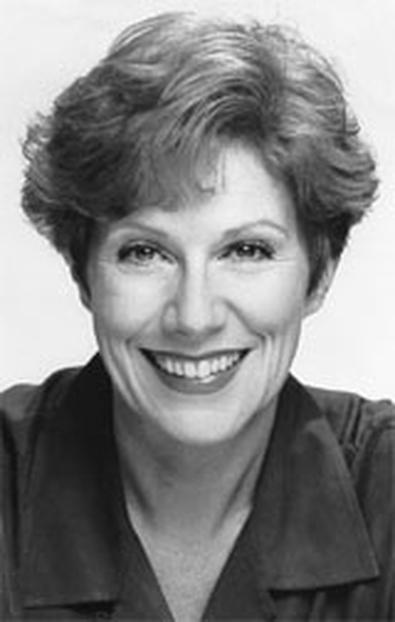
Roberta Reardon -- national second v.p. of the American Federation of Television and Radio Artists (AFTRA) and new president of AFTRA/New York -- got her first taste of political compromise growing up at home.
"I was born in Crawfordsville, Ind., a town of 13,000 people," she told Back Stage recently. "I had five brothers; I was the only girl, and I was in the middle."
Enough said.
Now a New York veteran of soaps, commercials, voice-overs, and industrials, Reardon's love for acting also began in her hometown. Crawfordsville might not sound like a stirring training ground for acting, but the town touted a college, Wabash.
"It was a men's college. They needed females to put on plays," Reardon recalls. "So when I was 14, I auditioned for 'Guys and Dolls,' and started working with the drama program there and fell in love with acting. That was an important part of my life. I got to hang out with people older and more sophisticated than me. I did four or five shows there, and decided to carry acting on into college."
She eventually moved on to garner a B.A. in theatre at the University of Wyoming, then decided to make the move to the Big Town.
"I asked myself, 'Do I go east or west?' " She chose east. "I had been to New York when I was 16 with my parents, and I loved it. I thought, 'This is the place to live.' So I came here, and lived with my aunt for a month until I found an apartment."
Then, suddenly, a role: "I got a job on a soap, 'The Secret Storm,' which was about to go off the air. I worked on it a year and a half."
Today, the veteran Reardon feels her "Storm" experience actually may have come too soon.
"Interestingly, looking back, I wish I had been in New York longer, and had a little more seasoning. I wasn't fully prepared to take advantage of it."
She took a year off to deal with family illness, returned to New York for study, and, as she puts it, "I popped up on some shows, and started doing regional theatre."
She eventually found her groove, and by the '90s, life was good.
"I started doing commercials, and was very fortunate to start making a living at that," Reardon confides. "In the early '90s Kmart had a 'Shopping Families' campaign. They developed a stable of 24 or 25 actors; sort of a repertory company. We shot commercials every month. It was an amazing experience. I must have shot 150 commercials in three years."
Lately, she's been heavily involved in voice-over work, including a recent Lysol commercial.
AFTRA's Call to Service
Still, Reardon's focus and energies have gone more and more to the American Federation of Television and Radio Artists, both on the national and local levels. She was elected president of the New York local in June of this year, after serving on the local's board since 1997 and as the local third v.p. from 2001-03. On the national's board of directors since '98, she was elected last month as the 80,000-member union's second v.p.
As a veteran commercials actor, she serves as AFTRA's national co-chair for the important commercials contract, which AFTRA began co-negotiating this week with the Screen Actors Guild (SAG). The two unions began facing off with the ad industry's Joint Policy Committee at the Westin Hotel in New York on Tues., Sept. 23. Both sides agreed to the current pact in October three years ago, after a bitter six-month strike by the two unions.
"It's been a very tough three years in the industry for a variety of reasons, certainly Sept. 11 and the economy," Reardon confided. "We're all very hopeful we'll get a good package for our members. The good news is the work is coming back. Commercial work has improved over the past year."
Reardon clearly didn't want to discuss specifics of the spot-pact talks; but when asked if health care would be an issue at the table, she responded, "Absolutely."
Like all unions, AFTRA has been struggling with its health plan, primarily due to rising health-care costs and a sour economy.
"We had to change the earnings test and benefits for the health plan because of the crushing costs, and it doesn't make anybody happy," Reardon asserted. "It's very difficult for us in the union to have to do this. But in order to protect the members we had to do it. For now, the plan is stable. Keeping it that way certainly depends on earnings. Obviously if we organize more work we'll get more money; and the fund will get healthier. With all our contracts we'll try to push the percentages up. But it's a struggle.
"We've had people get upset with AFTRA's plan," she added. "I told them during the consolidation campaign, 'You find me an industry that's not suffering from this type of effect on their health plans, and I'll go to work there.' It's a national health crisis."
Reardon was active in this year's effort to consolidate SAG and AFTRA. SAG's voting members failed by 2% to meet the required 60% majority to approve the melding, but AFTRA voters favored the merger by a strong 75%. Reardon expects the consolidation eventually to happen.
"This is our future; not just AFTRA and SAG; most unions need to do it for economy of scale, clout at the table, and to handle pension and health in a more economical way. I personally was very proud of the consolidation campaign we ran. We had 15 informational meetings here in New York; I spoke at all of them. People came; a lot came with a negative view and with big questions. But they came, listened, got their questions answered, and left feeling empowered. Over 250 members participated in our phone bank. It's the way unions need to communicate with their members. I think there's a good possibility of winning the vote next time."
During the consolidation campaign, AFTRA projected a $2 million deficit, and leaders said they looked to merging as a way to help overcome it. With the consolidation vote failing, AFTRA went into its national convention looking for ways to put the union back in the black. Reardon says they found it by raising dues -- 5% each over this and next year -- and initiation fees, as well as a $50-a-head assessment to members, and ordering the union to form a strategic financial plan.
"That should definitely keep things floating," Reardon said. She added there's also a possibility that AFTRA may bring another dues increase up for a membership vote in two years, should the budget need it.
"It's important to note that AFTRA's dues are remarkably low compared to other unions," Reardon emphasized. "Our dues are at the bottom end of the scale. We've been extremely conservative financially. If we're going to be able to negotiate contracts and organize workers the way we have to, we have to have the money, and support our members."
Presently, besides the commercials-pact talks, Reardon is gearing up for the soon-to-be-announced New York digital organization campaign, AFTRA's mission to bring digital production -- independent productions of $2 million or less -- under union contracts. She's also become involved in Cornell University's Labor Training Institute, the first leader in an entertainment union to do so.