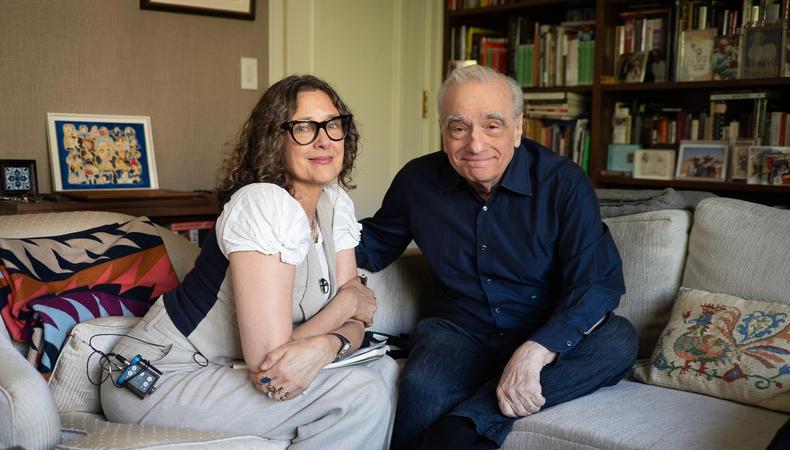
Rebecca Miller has spent more than 30 years directing award-winning films that often tell the very personal stories of women. Her credits include 2002’s romantic drama “Personal Velocity,” 2009’s dark comedy “The Private Lives of Pippa Lee,” and 2015’s rom-com “Maggie’s Plan.” A novelist as well, “Personal Velocity,” which earned Sundance Film Festival’s Grand Jury Prize, and “The Private Lives of Pippa Lee” are both based on Miller’s own books.
Miller is also a documentarian who, in 2017, directed “Arthur Miller: Writer,” about her Tony Award-winning playwright father. Her latest work is about another legendary storyteller, Oscar-winning director Martin Scorsese. Miller calls her five-part docuseries “Mr. Scorsese” a “cinematic portrait” of the 82-year-old filmmaker’s long and varied life and career.
The entire series—all 285 minutes—had its world premiere on Oct. 4 at the New York Film Festival, and it debuts Oct. 17 on Apple TV+.
 Two of Scorsese’s films, 1993’s “The Age of Innocence” and 2002’s “Gangs of New York,” star Miller’s husband, Daniel Day-Lewis, who is one of many figures to appear on “Mr. Scorsese.” Others include Robert De Niro, Leonardo DiCaprio, Jodie Foster, Steven Spielberg, Mick Jagger, editor Thelma Schoonmaker, and the late musician Robbie Robertson.
A few days after its premiere, Miller spoke with us about the new series, Scorsese’s work with actors, his casting process, and how she got the filmmaker to say yes to the project.
Tell me the backstory of how you came to direct “Mr. Scorsese.” How long was in the works?
The whole thing took five years. I first started talking to him right before the pandemic. It was really just me and my producing partner, Damon Cardasis, batting ideas back and forth about who my next doc would be on. But Marty was really the first person I thought of. And then I talked to his producing partner in documentaries, Margaret Bodde, and she said “There are some people who have been circling for a long time, but he just never says yes. But that’s a really interesting idea.” Then she went to him, and he said, “Let her write a letter.” So I wrote a letter saying how I would approach it. And yeah, that was that.
Having talked to Scorsese at length, and with your husband having worked with him, what was your biggest takeaway about his relationship with actors and the way he directs them?
I think that he says it in one of the interviews; he said actors are his core collaborators. You know, De Niro brought him some of his great subject matter—he suggested “Raging Bull,” and he suggested “The King of Comedy.” And I think, also, “The Irishman.”
All of the actors talk about the immense sense of trust and freedom that he gives his actors. But at the same time, it’s this really interesting combination of preparing visually, but also being open to what people suggest. Like Margot Robbie talking [on the docuseries] about rethinking the last sequence of “The Wolf of Wall Street”—and saying, “Wait a second,” and opening the books on him and saying, “Well, this happened, and this happened; let’s use this.” And that, to do what it takes, takes so much security on the part of a director. It’s very unusual, but that’s one of the reasons I think actors love working with him so much.
You talked about De Niro, but another prominent relationship in Scorsese’s career has been with Leonardo DiCaprio. How would you describe the difference in those relationships and how he works with each of them?
Of course, there’s a big age gap. It goes from being sort of a brotherly relationship or a peer relationship to [one of them] being much younger. And really, Leonardo was so young when he started working with Marty that he’s really grown up with him. But what’s wonderful is, Marty talks about one of the things that Leonardo gave him, or what he loved so much about working with him, and that was he was always willing to go further. I love that because he really wants [to work with] people who are very brave, very resourceful in themselves, and whom he can trust. And Leonardo has shown that to be the case many, many times.
What can you tell me about Scorsese’s casting process and how it may be different from other directors?
Well, he does use a lot of real people. [On the series] he talks about this for “Casino.” I think it’s Thelma Schoonmaker who talks about how he used real dealers and pit bosses. He wants that authenticity, often in some of the smaller parts. And even in some of the bigger parts—like, Steven Prince is in “Taxi Driver.” I think he’s looking for people who either are the real thing or can really feel like the right thing.
You interview a lot of actors who have worked with him. Someone says in the film that Joe Pesci doesn’t really do interviews. Was there anyone you really wanted to talk to but weren’t able to?
He was the main person, actually. There were people whom I loved hearing from, but they already had great interviews. Ellen Burstyn, for example, had really good interviews in the period when she was making “Alice Doesn’t Live Here Anymore”; or Harvey Keitel, who had interviews closer to the period when he was working. You don’t necessarily need to do new ones all the time. And I had a limited number that I could do. But overall, I was very lucky, especially since some of these people aren’t here anymore.
This interview has been edited for clarity and length.
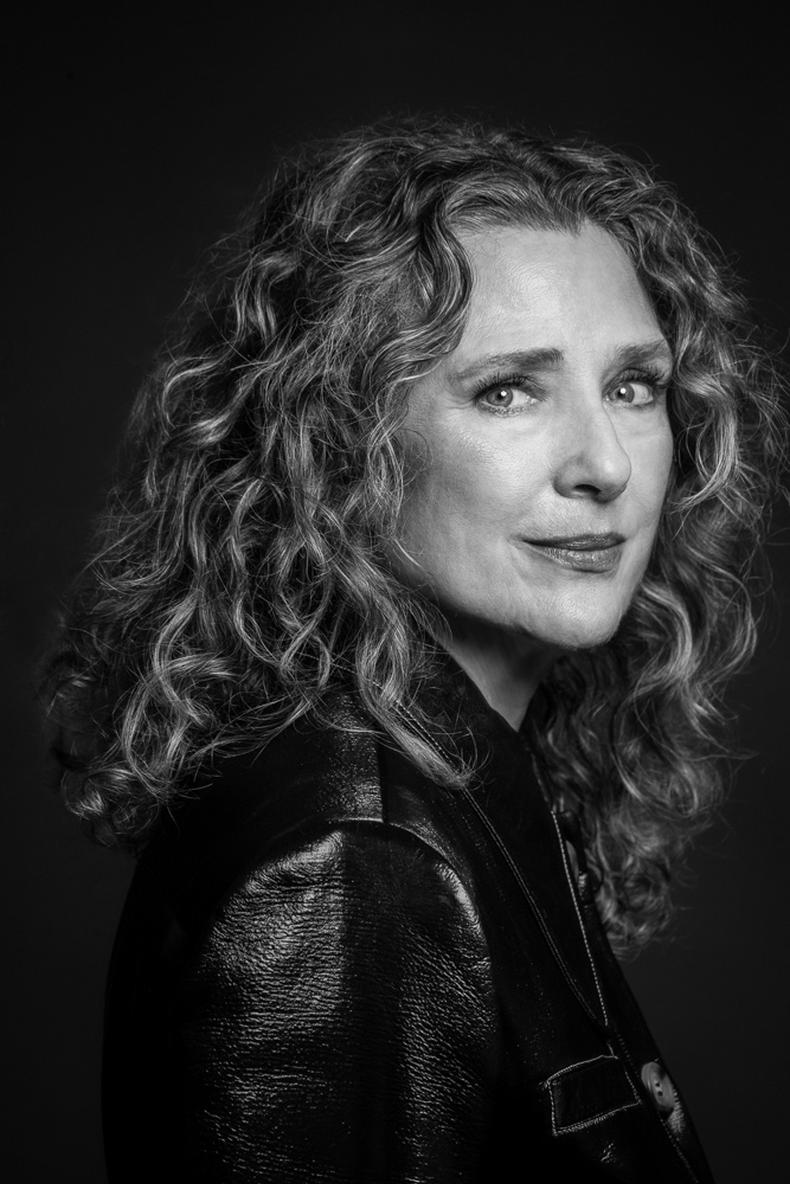
Rebecca Miller headshot © 2025 Lynn Goldsmith (1).jpg