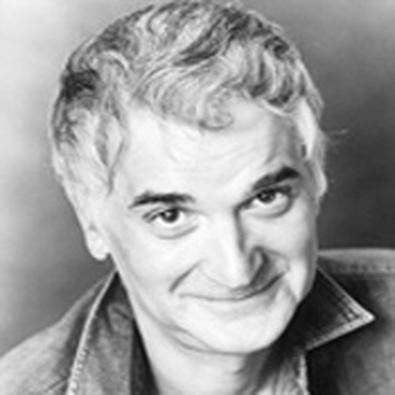
You might never have heard of Martin Harvey Friedberg, but if you ever struggled to catch your breath while laughing at the genius of Richard Pryor or squirmed in your chair at the neurotic hijinks of Larry David, you have probably witnessed the effects of his work.
Friedberg, a workaday standup comic, actor, and instructor whom The New York Times dubbed "the Lee Strasberg of contemporary improvisational comedy" and the person Pryor once credited with teaching him everything he knew, died at 75 on Oct. 30, 2005, from the effects of a heart attack, stroke, and dementia. His legacy, however, survives in the work of his students, and his life will be celebrated Sat., Oct. 27, at the Ha! Comedy Club in midtown Manhattan.
Friedberg was a member of one of the largest entertainment fraternities on earth, the one for comics and actors whose faces might ring bells but whose names draw only blanks. Among the community of stand-up comics, however, he was as well-known as he was well-regarded, particularly for a type of comedy born in the late 1950s that moved the art form away from Borscht Belt zingers toward improvisation and character-driven sketches, where the humor came from a story's journey rather than a punch line's destination.
He didn't invent the style or become its most famous practitioner -- that title probably belonged to Pryor, who died six weeks after Friedberg -- but he passed it along on the stage and in his classroom, the inhabitants of which included David, Dom Irrera, Jim Gaffigan, Rick Overton, Judy Gold and, for at least one class, Ben Stiller.
"He loved seeing students get the truth out of themselves," said Nancy Redman, a comic and Friedberg's girlfriend and sole survivor. "The humor came from the truth in the person rather than any joke jokes."
A Bronx native, Friedberg developed his style in the early '60s at New York comedy clubs such as the Improv and Café Wha?, where he first met Pryor in 1963. The two would work together over the next three decades at comedy clubs in New York and, at one point, on The Merv Griffin Show. According to Redman, the two shared the stage in 1990, and it was there Pryor said of Friedberg, "He taught me everything I know."
In the mid-60s, Friedberg was discovered at the Improv by producers for Chicago's famed Second City, where he would work with Peter Boyle and David Steinberg, among others. With the latter he created the sketch "The Crazy Psychiatrist," which became Steinberg's calling card.
Friedberg also appeared in several films: He starred with Karen Black in Can She Bake a Cherry Pie? and appeared with Beau Bridges and Brian Keith in Gaily Gaily and with George Segal and Eva Marie Saint in Loving.
In 1982, Fred Ferretti wrote a lengthy article in the Times magazine, "A New Breed of Stand-Up Comics," a piece that was peppered with the names of the then-unknown: Bill Maher, Paul Reiser, Rita Rudner, and Gilbert Gottfried. Toward the end of the article, Ferretti wrote: "And then there are those like Martin Harvey Friedberg, the Lee Strasberg of contemporary improvisational comedy, who worry about bringing along the next crop of comedians."
"A brash, loud and very funny man," the report continued, "he brings... members of the comedy-club audience up on stage and teaches, by doing, such vital tips as: 'how to get out of trouble'; 'how to think on stage'; 'what to use of yourself'; 'how to be truthful.'"
Ferretti later quotes Friedberg as saying, "I got no talent, but I got brass."
Though the comic relished playing his part in "The Crazy Psychiatrist," Friedberg's long demise was no joke. According to Redman, he struggled with depression, anxiety, and bouts of dementia. In 1995, Redman said, Friedberg underwent the first of what would be 28 shock treatments. Doctors prescribed and then adjusted various medications, which included anti-psychotics, and at one point they thought Friedberg might have Alzheimer's disease.
One doctor, Redman said, was able to turn Friedberg around by getting him on anti-depressants, rather than anti-psychotics, and the comic "became normal again." Ever the instructor, he began teaching the art of comedy and improvisation to some of his fellow residents at a Brooklyn nursing home.
A few years before his death, Friedberg returned to the Improv to watch Robert Klein perform. According to Redman, Klein singled him out in the audience and declared him "the funniest man to come out of Second City."
The memorial for Martin Harvey Friedberg will be held at Ha! Comedy Club, 163 W. 46th St., Manhattan; 1 p.m. For more information, call Nancy Redman at 646-331-5042.