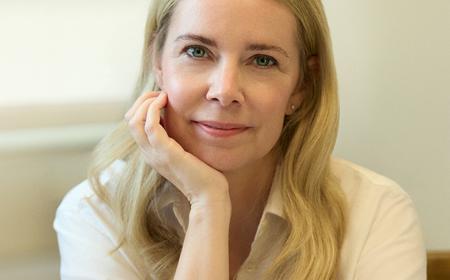
Rhea Seehorn still isn’t sure what she can—or should—say about her mysterious new series, Apple TV’s buzzy “Pluribus.” But there’s no doubt that the chance to be the lead for the first time in her career is something worth crying over.
For 30 years, the three-time Emmy-nominated actor has plugged away on her craft, first onstage, and then in various sitcom and guest-star roles. Her career game-changer came in 2015 when she was cast on the “Breaking Bad” prequel “Better Call Saul” as highly skilled lawyer Kim Wexler—who, in many ways, became the heart of the series. Seehorn impressed “Breaking Bad” mastermind and “Better Call Saul” co-creator Vince Gilligan so much that he wanted to keep working with her.
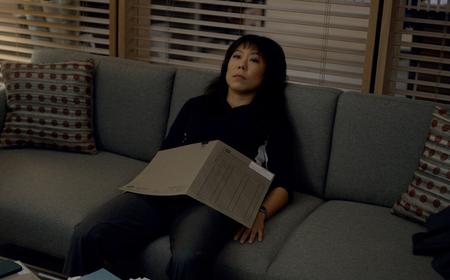
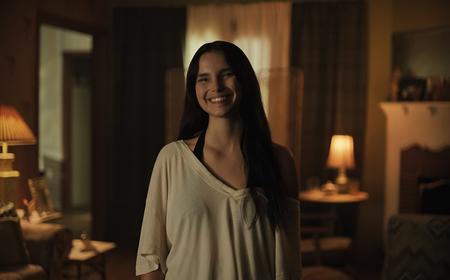
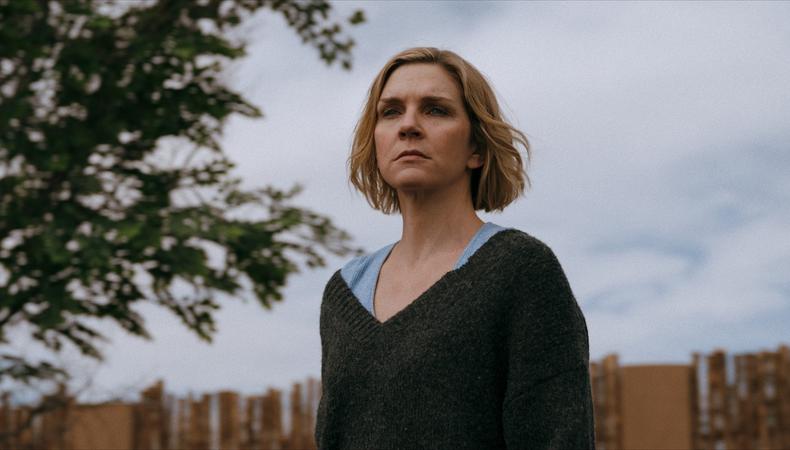
“Pluribus,” Gilligan’s latest project, stars Seehorn as Carol Sturka, a popular fantasy romance author who’s one of the few people immune to an extraterrestrial virus that has turned the rest of the world into one happy mind. “I was like, Wow, he’s really swinging for the fences with this show,” Seehorn recalls. “I was so thrilled for a show like this to exist, and I was over the moon that I was gonna get to be in it.”
With the first few episodes of “Pluribus” now available, Seehorn talks about what drew her to the role of Carol and the thrill of carrying a show.
What was your reaction when Vince first laid out this concept to you?
Well, he told me nothing. We had wrapped “Better Call Saul,” but the last season had not aired yet, and I was on the phone with Vince. He was like, “I wrote something for you, if you’re interested.” I was like, “What?” I must admit that I cried. I didn’t even know what to say to that. But it was like, “Of course, yes.”
He goes, “I don’t want to pitch you. I want you to just read the script…. But I’m not ready to send you the script.” I said, “It doesn’t matter. Whatever you’re doing, sign me up.” All I knew was he said it had nothing to do with Kim Wexler.
Then I got the pilot script, and now that you’ve seen it, you probably had a similar reaction [to mine], like: This is bananas. What is happening? But I was instantly like, I would be a massive fan of the show even if I didn’t get to do it. The twists and turns. The massive philosophical and psychological questions it’s asking while maintaining this breathless pace of a mystery. And this physical threat that then becomes actually a psychological threat. I could also hear this undercurrent of dark comedy going through it, which just delighted me.
What was it about the character that you wanted to dig into?
It was instantly exciting to me that Carol’s the polar opposite of Kim. She’s so reactive, so impulsive. Although I will say that they both have this thing that if, in their gut, they know what’s right to do, they will do it. It’s just that I think Kim would lead the brigade; whereas Carol, as Vince would remind me all the time, is a reluctant hero.
When Carol goes to Spain and tries to recruit allies to form the revolution, I think she was hoping to just be the person that brings chips and dip to the party, not actually lead the revolution. So I loved how incredibly complex she is and that [the experience] was really going to take me down a whole different path of building a character.
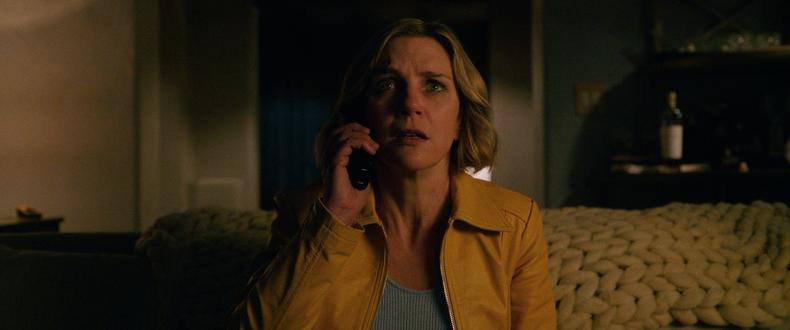
Was it tricky stepping into Carol and putting Kim to bed—especially as you filmed in New Mexico and worked with many of the same crew members from “Better Call Saul”?
Because the characters are so different, it wasn’t that hard. And I wasn’t trying to put Kim to bed. Make no mistake, if the phone call with Vince had been, “I’m doing a Kim Wexler spinoff,” I also would have cried. I will hold that character close to my heart for the rest of my life. It was a thrill to play her, and I would play her again.
It was actually comforting to see people and places that I had known for seven, eight years while shooting “Better Call Saul.” When you need to be away from your family to shoot something this intensely, with this workload that I had, it’s very comforting to know exactly what aisle the snacks that you like are in.
As the lead on “Pluribus,” you’re the person who is virtually in every scene. Did that change your approach to the work?
I don’t want to get an opportunity like this and barely pull it off. You want to be your best. I want to deliver a performance that’s better than I did yesterday. So I try to challenge myself and come to the table with thoughts, and knowing all my lines, backwards and forwards.
I was like, OK, we need to think about some fundamental things: When am I sleeping, and when am I eating? That sounds small, but I got together with the assistant director staff and executive producers, and we were looking at the one-liners. Normally, I highlight what days I’m shooting, and it was just all the days, all the scenes. So I had to figure out: When am I memorizing? When am I prepping, trying to break down scenes?
It’s very important to me to meet anybody that has a scene with me and have them run it. I know what it’s like to be a guest star that has five lines and I’ve only gotten to say them out loud in the hotel room by myself before I go to set. It wasn’t about being coddled because of my position as much as: How can I deliver and be as available as possible when I show up?
After all your years of auditioning and pounding the pavement, did you have a moment when you could sit back and appreciate being the face of a major series for the first time?
It is not lost on me. It is a pinch-yourself moment. I stepped back, reminding myself to be present, but I was also doing that during “Better Call Saul.” Before that, I’m super proud of the sitcoms I did, all the pilots I did that… Well, almost all the pilots that didn’t air. [Laughs] The stage plays I did for 12 years in Washington, D.C. and New York. The first time you quit your day job, that’s its own milepost to celebrate that you’ll never forget.
But I do understand and think about what it means to continue to work and move forward, and be offered more and more complex material, and work with people at the top of their game. And then when one of those people you hold in the highest regard says, “I actually think you’re capable of doing anything, so I’m gonna write a part that has everything,” it is a remarkable thing. It’s almost hard to take in without crying.
This interview has been edited for clarity and length.