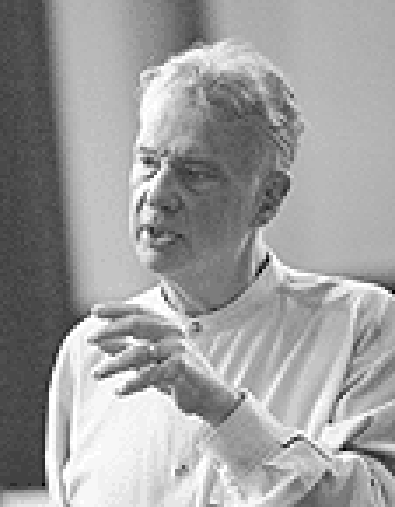
One of the most torturous questions young, actor wannabes throughout the nation have to ask themselves is, "Should I learn my craft at a university, or should I head straight to New York or Los Angeles and find an acting teacher?
Robert Benedetti is in a good position to have an opinion. He's spent a good hunk of his 66-years with his feet solidly entrenched in both worlds.
Even if you don't recognize the name outright, it probably rings a bell, whether you're an actor, teacher, director, playwright or a fan of the fiction novel. He's a multiple Emmy winner (as the producer of HBO's "Miss Evers' Boys" with Laurence Fishburne, and "A Lesson Before Dying," with Cicely Tyson), the former president of Anasazi Productions (owned by actor Ted Danson), a former actor with Second City in Chicago, the author of a play about Jonas Salk ("Undoing Salk"), the former head of the Yale acting program (where he worked with critic Robert Burstein), the author of seven acting books (including the about to be released third edition of "The Actor in You"), a directing book ("The Director at Work," with a foreword by John Houseman), and the recently released novel, "The Long Italian Goodbye." But for the folk in Vegas, his most important resume listing is a new one: theatre professor at the University of Nevada, Las Vegas' Nevada Conservatory Theatre.
Benedetti's experience (which includes 35 years as a teacher prior to his time in the trenches) has apparently allowed him to see both worlds with a realistic, critical eye. And he has a strong opinion about what sort of training a beginning actor should pursue.
"There are now about 106,000 members of the Screen Actors Guild," he points out. "About 75,000 live in Southern California. Simple arithmetic tells you that if you want to break into this business, that's not the place to be. If you're a good actor, living in Vancouver, or Atlanta or Toronto, you can work a hell of a lot more than you can work in L.A. You can get some momentum going, some credits.
"As far as going back to school-it depends at what point in life you're at. If you're a young person on an undergraduate level, I think, yes, get an education. The survival rate in our business is so low that you don't want to end up like a basketball player who only has a season or two and then breaks his knee. There are so many people wandering around out there who were trained as actors and didn't make it, and what are they supposed to do now? To go to a university where there's a broader, more defined education than just a narrow, professional training experience is important. In the professional acting class, you get trained but no education. And that can be fine for someone after undergraduate school. Professional acting schools are good for those who want to maintain their skills and expand them. And many people feel the years right after undergraduate school are the most employable years. There's some validity to that argument."
Does that mean Benedetti sees no use for grad school theatre programs?
Not quite.
"If a person feels he's had a good undergraduate experience, and feels trained, then I would say grad school may not be the place for them. On the other hand, if a person has come out of an undergraduate program, and they exhibited talent, but their undergraduate experience did not develop that talent as fully as it might have, then I'd say he's a very good candidate for a serious, professional-level M.F.A. program."
NTC artistic director Robert Brewer feels the hiring of Benedetti is a further demonstration of how serious UNLV is about its theatre training program.
"When I got an e-mail [from the dean] telling me Benedetti had applied for the position, I said, if he shows up and wants the job, the search is over. We would have been crazy not to want to bring him on."
Benedetti was pleased that UNLV wanted him.
"I had to do the whole job hunting thing from scratch," he says. "It was a horrifying experience. I did encounter age discrimination; so much for our culture's value on experience and the so-called wisdom that comes with age."
Benedetti was eager to get back into education after a 15-year absence for the same reasons he was at one time eager to do TV-film production.
"I got into movies in order to pursue the same kinds of motives that had made me want to teach and make theater-which was to make a better world, as corny as that sounds. I left movies because I despaired of being able to do the kind of work I'd been doing because of the cooperate takeovers. The threshold for risk has been sufficiently lowered. I think at this point in my life I can accomplish more by returning to live theatre and teaching where we still have the freedom to take risks. And I miss the esprit-d'corps. I miss talking to grown-ups. There ARE intelligent people in the movie business, but there aren't accessible. It's hard to create the network of connections that can feed you intellectually and socially. Besides, at my age, I have a personal need to pass on what I know. By working in movies, I learned a lot more about theatre."
Although Benedetti's primary responsibility will be the graduate playwriting program, he'll do a lot more.
"I have a short attention span," he admits. "I'm easily bored. I've taught acting, directing, script analysis, and some scholarly subjects. I'm teaching two graduate seminars. One is Aristotle's 'Poetics/ and one is a subject very dear to my heart: the radical American theatre of the 60s and 70s, which I think we need to revive the spirit of, with circumstances being so similar now as they were in the 60s. And I don't think the American theatre is doing enough in response to those circumstances. There's only pockets of theatre people doing what I consider what I would regard as experimental, socially-oriented work. In general, our theatre is apolitical, uninvolved."
Benedetti is aware some find it bizarre that a man with his background would wind up in Vegas. But he says he finds being in Sin City is as culturally exciting as being in Australia was at one time.
"Vegas is a unique situation, just as Australia was years ago when it was just beginning to develop. [Benedetti directed the Australian premiere of "Glengarry Glenn Ross" at the Melbourne Theatre Company.] There was a feeling there of expansion, of horizons that were exploding and limitless, and a sense that we could do anything. I feel that here. Vegas is in a period of incredible expansion. It's not burdened by a rigidly defined cultural identity. It's in the process of forming a cultural identity, beyond the Strip, although I would include the Strip in that too. It's wonderful what's happening with all the Broadway shows coming here."
Benedetti feels it's part of his job to question things at UNLV. He thinks institutions need regular doses of new blood.
"It's in the nature of institutions to get to a point where its S.O.P. stifles anything new. The very structure that has been developed to liberate the work, starts to imprison it. We have to always question why we do the things we do, to constantly redefine our objectives, to be always finding our way."