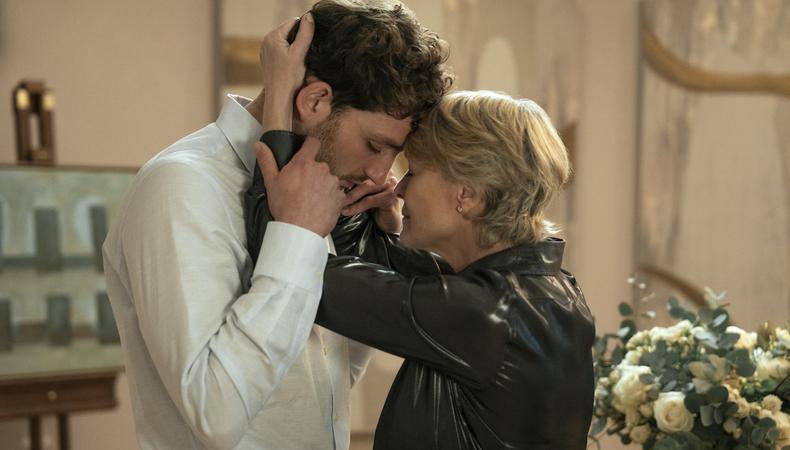
“We need to get more perverse.” Such was Robin Wright’s primary directive upon signing up to star in and co-direct (with Andrea Harkin) Prime Video’s psychological thriller series “The Girlfriend.” The result is a steamy, edge-of-your-seat adaptation of Michelle Frances’ eponymous 2017 novel. Created by Gabbie Asher, the series follows manipulative mother Laura Sanderson (Wright) and scheming girlfriend Cherry Lane (Olivia Cooke) as they compete—both maliciously and deliciously—for Laura’s oblivious son Daniel (Laurie Davidson). Wright and Davidson sat down with us to talk about craft, chemistry, and why the best actors never stop playing make-believe.
Laurie, you chose not to read the novel that the series is based on. Robin, you did. What impacted your approach to the source material?
Laurie Davidson: I’ve been caught up before. When you read something, you get attached to stuff, and then they end up not in the eventual story. The script was my starting-off point, and I knew our scripts were going to stray quite a bit from [the novel]. So for me, it wasn’t a big decision. It was all there for me in the script. I don’t have a hard-and-fast rule for approaching novel adaptations. That was just the one I chose for this one.
Robin Wright: Really, all we added to the format was [translating] the dual perspectives, the misperceptions—two alpha females who want the same thing, Daniel, just for them. But when you translate that to the screen, and you’re doing a limited series, and you see the content out there that’s very risqué and shocking… I watched “Euphoria” before I flew to England to start prepping, got there and was like, “Guys, we have a big job. We have to get more perverse.” “Euphoria” has done it. “The White Lotus” has done it beautifully. And people who like that genre are expecting that. So we were constantly looking for a good hook at the end of every episode, because you have to do that, otherwise they’re not going to move on to Episode 3. It’s a very different world.
This is a six-hour movie. You’re constantly modifying, moving the chess pieces around: That’s not going to fit there; we need to put that at the [end]. You have to track the arc, then escalate and keep people on the edge of their seats. It’s a very different world from sitting in a movie theater watching a film for two straight hours. And it’s different from sitting in bed reading a book, where you get six pages describing why Laura felt the way she did when Cherry kissed Daniel in front of her. You have to reduce that to a page of a scene: dialogue, stage direction, a shot of a mom looking at Daniel putting his hand on a bare leg. Those nuances you have to capture with the camera, not necessarily with dialogue. It’s always the look, which is the perception.
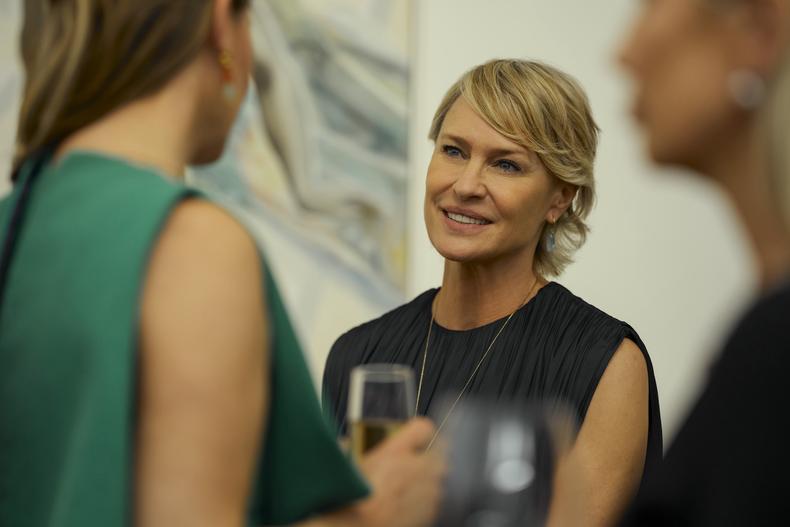
The story is told from both women’s perspectives. How did the dual-perspective structure change the way each of you prepared?
LD: It was very freeing. So often, you read something and go, “My character wouldn’t do that—that would never happen.” Having the different perspectives made it freeing, because you could step out slightly from the realm of your absolute reality because you’re seeing it through someone else’s lens. It’s going to be warped by their own perception. In Laura’s perspective, we could be more overtly hands-on between Cherry and Daniel. And on the flip side, in Cherry’s eyes, I could lean into Daniel being even more of a mummy’s boy, more of a simp. It didn’t have to be exactly how I saw Daniel, because I was seeing him through these different women’s eyes at any given moment. That was a totally different approach from how I would normally do things.
RW: I really saw it in the editing room. I had so much great material from everybody—they’re all such pros. We were always racing the clock, so I only had time for two takes. But I got so much variation because I’d say, “Give me something completely different on the second one.” I could do a take that should have been from Cherry’s perspective and move it to Laura’s perspective. It was like a Rubik’s Cube.
Daniel is the quiet third part of the triangle. Laurie, what are the challenges of playing reactive rather than driving the scene?
LD: That’s often to do with moving the story forward and making the plot work, and then my job is to justify those things. Sometimes that means Daniel has missed something, or he’s choosing not to see it. There were times when I would decide that Daniel was genuinely oblivious and other times when he’s not seeing because he doesn’t want to. He wants to believe in a reality in which Mum is good and Cherry is good. He doesn’t want to see the dirt, because he adores both of these women. So it’s a mixture of both, at different times.
How did you build the intense chemistry between your characters?
LD: [Laughs] I mean, that’s just the job. Getting on was the first step, and we got on like a house on fire and became a family. I was lucky enough to meet Olivia before we started working. We ended up doing karaoke in a bar, singing Celine Dion’s “It’s All Coming Back to Me Now.” When I met Robin and read with her for the first time, it was straight away that we were riffing and coming up with ideas, sharing stories. So much of our familial work was about sharing our own experiences and building a shared sense of history and truth. The rehearsal periods we got, limited but valuable, helped enormously in building that real sense of family.
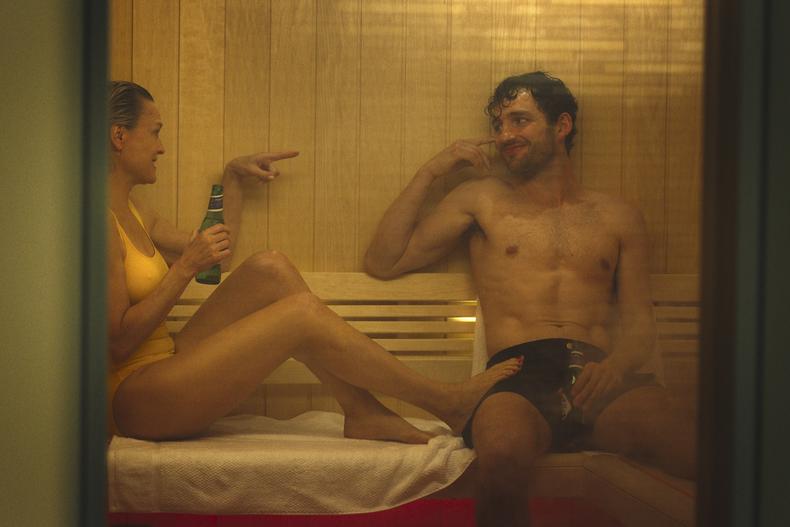
Were there particular experiences you drew on?
LD: Growing up as a young man, as a teenager, I certainly had some awkward experiences—things that no mother should see her son doing, without going into too much detail. [Laughs] My poor mother. Those times when you’re experimenting and finding yourself sexually. I had some of those embarrassing instances to draw upon. It was a tough thing, going back down to some of those memories I had locked away for a long time.
Robin, what did you find sympathetic about Laura, and how did you ensure that translated to what we see onscreen?
RW: I don’t think I’m that kind of mother—though maybe you could ask my kids. But I understand it intellectually: You lose your first child, you put everything into your second child, and you’re never going to let him go. He’s the most pristine egg, and if anything touches it, it will crack. Cherry comes in and just bulldozes that egg. So I looked at it as an extreme version of the instinctual thing a mother has, which is to protect your child from any potential danger—or a gold-digging, opportunistic girlfriend. It’s like a lioness with her cub. This is a psychological thriller, so it’s overly dramatic, but it’s in the same vein as what’s intrinsic in us as females who bear children. They are part of us. She’s not. And baby doll, Daniel, you’re being blinded by it. I didn’t have to do homework on it. You just get it.
What was the most challenging scene to film?
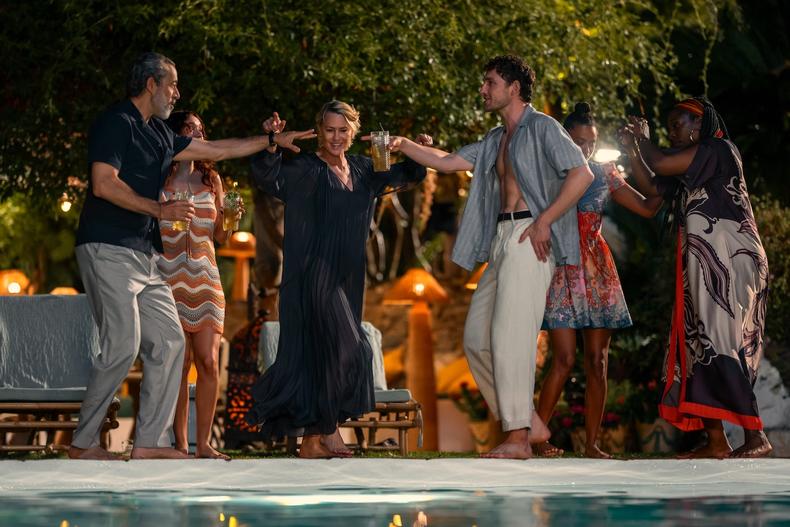
RW: For me, it was the stuff in the pool. The water was so cold, and we couldn’t wear wetsuits because you’d see them through the silk. That was the most physically difficult. But the emotional stuff—the flow between all of us—I felt like we were all in the same living room, because we all know what we have to do to get where we want to go. I just happened to be over here directing all of us, but we were a tight-knit family. I wanted ideas from everybody: “What do you think Daniel would say? Great, then Laura’s response will be this.” And I love, as a director, giving an actor a free take, telling them, “We’ve got the take we needed. This one’s for you.” It frees an actor’s head completely. You’ve rehearsed the scene, you’ve locked into your choices, and then suddenly you’re out of the box. It’s so much fun to watch. It’s like watching a kid grow up.
Do you have any advice for early career actors?
LD: Trust your instincts and hold on to your own sense of what is good, what is right. Make the stuff that you want to watch. The hardest thing for a lot of actors is making that transition from acting for the love of it to acting for a job. You can suddenly feel like a cog in a big wheel, and often that’s because you’ve lost your own sense of artistry within a moment. But you can find it in a tiny moment. You have to find it in every little moment and just hold on to that whenever you can.
RW: It’s so true. Take anything you can get, even if it’s one line as a day player on a great show. Somebody may see that and think, “I like that guy’s vibe.” The industry has changed. It’s getting harder and harder, and streaming has taken over the medium. Everything’s self-tape auditions. You’re not in the room with people. But do what Laurie said: Be a part of something you would want to watch yourself. Keep your dignity and your self-preservation. If you really want it, you’ll get something, and it may be small, and that’s OK. Because you’ll be on set, you’ll meet people, and that person may say you’d be perfect for something else. Like any business, you’ve got to get out there and socialize. Take anything you can get without selling your soul to the devil.
LD: I’d add one more thing. The best actors I’ve ever worked with, and Robin is one of them, all have one thing in common: They are so in touch with their inner child. They’re still so curious and playful. We do make-believe. And it can be easy to forget that, but just be curious and childlike and playful.
This interview has been edited for clarity and length.