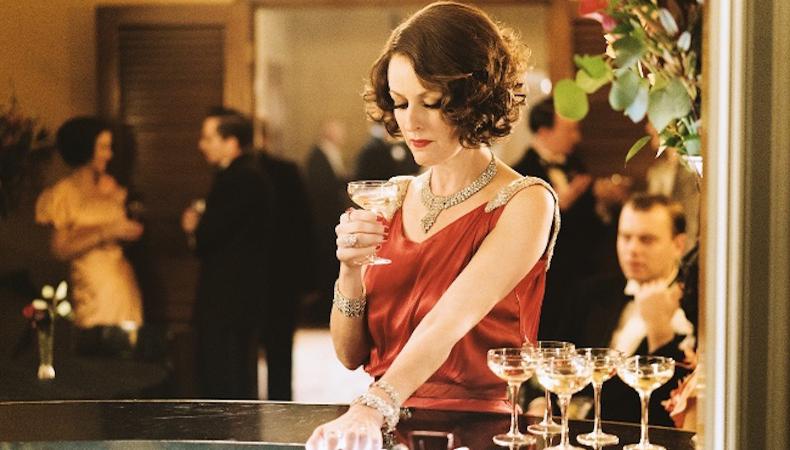
As the production designer for Amazon’s 1930s-set series “The Last Tycoon,” Oscar winner Patrizia von Brandenstein (“Amadeus”) reifies the not-so-glamorous underbelly of Hollywood’s golden age.
Production designers produce a reality.
“A production designer is a jack-of-all-trades. It’s everything that has to do with translating what the script is and the director’s vision of it into a living, breathing thing. It’s not just the dressing of sets, it’s not just picking out a location. You have to think in terms of the whole, about a whole season and where you’re going with it.”
READ: Actors Should Engage With Production Design + 1 Way to Do It
Listening is everything.
“I like to talk to actors about what they’re after in their sets. Do they regard it as their home away from home, or do they regard it as a place that’s alien? Do they think about how comfortable it is or do they think about how much they impress people with it? That’s part of my process: talking to actors and finding out what’s behind them.”
Part of her job is to make actors comfortable.
“I learned in the theater [to] always listen to actors—if they need a chair that’s higher, if they need a door to open a certain way, if a hardware has to turn a certain way, if their closet has to be a certain height. The actions they go through have to be natural to them and they’ve got to be comfortable, and part of my job is to make them comfortable with their spaces.”
Production design can deepen an actor’s character development.
“Production design should [help deepen character development]. That’s what I do. It involves so much more than picking out a wall color or picking out a chair. If the actor is open and they ask questions—and actors are great question-askers—they want to know why you’re doing it and how you’re doing it. I don’t want to impose my idea of good taste or bad taste onto a character. I want the character to tell me, and that’s the way it has to be because if I’m imposing something on them that isn’t a natural fit, I think I have myself to blame if it doesn’t turn out well.”
READ: How Production + Set Design Will Help You Develop Your Character
Actors will talk if the designer is listening.
“I’m on the set every day and as the actors come in from makeup, if they have an issue about anything, they’ll say it—[only] if they feel you’re going to listen to them and not dismiss it. I think they should feel free to talk to you—and they do talk. It’s important to make them feel comfortable so that they know we’re all on the same page and that you’re on their side.”
Actor nerves are normal.
“If an actor is just beginning a career, they will very often ask for advice. They will ask, ‘Why is this here, and what does this mean?’—and so on. They’ll say things that sometimes are masking. If actors seem to act out or act inappropriately, I find it’s usually because they’re nervous about what they’re about to attempt and you’ve got to help them along. When you first start out, of course you’re nervous. You’d have to be. But I want to help make them feel comfortable.”
Looking to get cast? Apply to casting calls on Backstage.