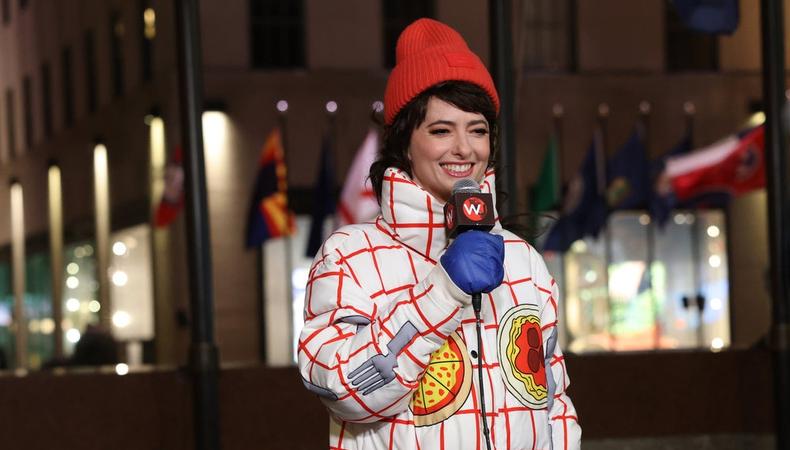
In the high-stakes pressure cooker of Studio 8H, few performers have embraced the chaos quite like Sarah Sherman. As the reigning body-horror queen of “Saturday Night Live,” the comedian has spent her tenure transforming into prosthetic-laden spectacles—fake eyeballs are definitely her thing—and redefining what hits on late-night TV.
We sat down with Sherman to dive into her surreal comedy style and her debut HBO standup special, “Sarah Squirm: Live + in the Flesh.” From the adrenaline of live performance to her viral “Weekend Update” sketches with Colin Jost (where she’s usually in some kind of bizarre costume), Sherman reflects on the ways collaborating with her 30 Rock peers has sharpened her chaotic edge. She also pulls back the curtain on her unique “SNL” audition process and offers essential advice for fellow actors who refuse to polish away their weirdness for the Hollywood mainstream.
You’ve gone from underground body-horror comedy to being a household name. As you were filming “Live + in the Flesh,” did you find that your time at “SNL” changed your approach to standup at all?
Yes—not that my shows were ever more punishing than they were funny, but “SNL” kind of teaches you to aspire to be a joke machine and to not be precious about stuff. So I would say [my standup] before “SNL” was more verging on… I hate saying performance art, because that makes it sound completely not funny or fun to watch. But there were less jokes and more weird crap.
And then in the editing process [for “Live + in the Flesh”], the show was like an hour and a half, and we wanted to cut it down to a fun 55 minutes or an hour. So, because “SNL” has beaten the shit out of me in so many ways—in a good way!—it’s taught me not to be precious about jokes. And even if a joke was my favorite, it’s like, Well, it’s not working in the special. Just cut it. Which [happens] a lot. You gotta learn it the hard way sometimes.
That’s nice that you already learned that from the fast-paced environment of “SNL.” You know when it’s OK to let go of a joke.
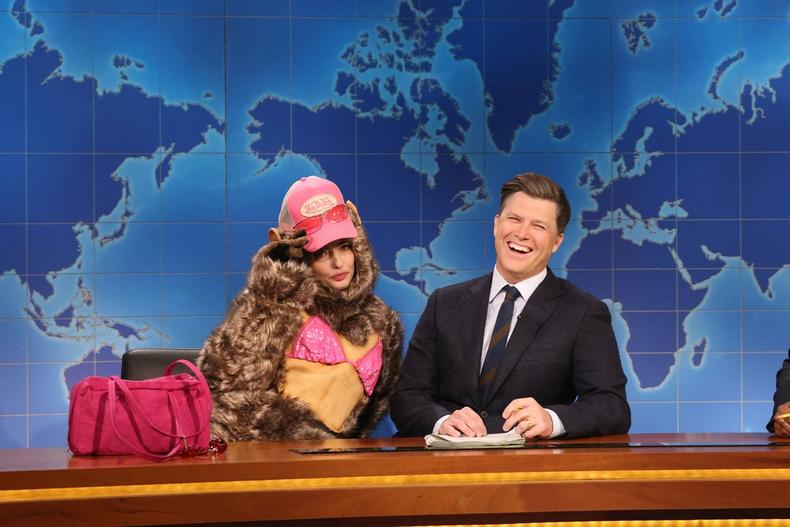
I did a Punch the Monkey “Weekend Update” thing with Marcello [Hernández] a couple of weeks ago, and we did this joke where I turn around and I have a baboon’s butthole. Even though it was not the correct species of monkey, I really wanted to do that crazy monkey butt prolapse thing that all those crazy monkeys have. And we had a bunch of jokes about this, like, monkey butthole. And between dress [rehearsal] and air, we had to lose a minute and a half out of it. They were like, “By the time you get up, turn around, show your butthole, do a couple jokes about it, that’s a minute.” I was like, goddammit, all right. I guess I’ve learned this the hard way.
You’ve mentioned before that your comedy style was rejected by many early on. What advice do you have for actors whose brand doesn’t fit the traditional Hollywood mold?
You’re always afraid, especially if you do a crazy kind of comedy. Like, Wait, am I too crazy? Am I delusional? Does anyone like this? I think you should half-listen to your friends when you’re being too crazy and you want to make it look like there’s slime coming out of your eyes, so you’re like, “What if I put mayo with green food dye in my eyes?” And your friends are being like, “Don’t do that. Mayo has vinegar. Remember, that’s going to burn.” So it’s like half-listening to your friends and people you trust. That’s something “SNL” has taught me; it’s taught me to be collaborative. But you never know what’s going to work. I never thought I would end up on “SNL” through what I was doing. So you just never know.
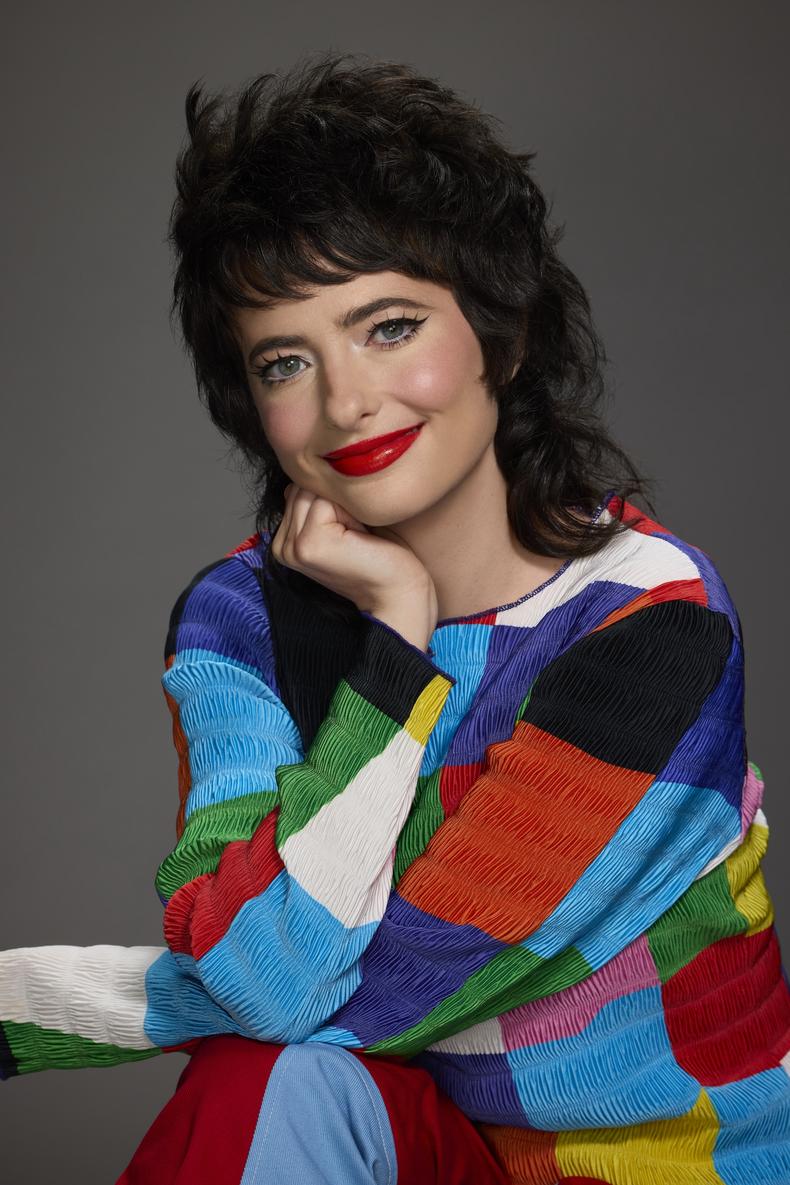
Credit: Mary Ellen Matthews
In both your special and on “SNL,” you’re dealing with live audiences where things can go off the rails. What’s your advice for recovering in the moment so the audience stays with you?
For “SNL,” if something’s going off the rails, it’s important to connect with the people in the scene with you, because you don’t have to go down alone. There was a blood gag in [an episode] Chris Rock hosted last season. Like, Adam Sandler’s spleen was supposed to spray me in the face with blood, and it wasn’t working. So, it’s like, if you just lock in with Sandler, you don’t have to figure it out alone.
I think that’s the same thing with standup. You’re out there alone onstage, but you’re not—there’s a whole audience. A lot of my jokes can seem alienating because they’re bizarre. But if you just connect with the audience for a second and touch down and be like, “All right, what do you guys want to talk about right now?” You never have to go down alone; there’s always a way. This is why I like live performance so much. It’s because there are people around you, whether they’re onstage with you or they’re in the audience. You don’t have to be struggling by yourself.
You’ve praised the “SNL” makeup and prop departments for helping bring your characters to life. What was one idea where you thought, “There is no way they can actually build this,” only for them to pull it off?
This past week, or the last show, I did a thing where I’m a really jacked, buff guy, and the joke was like: I’m on so much testosterone that my balls have retracted up into my body, and now I have two Adam’s apples. And we were kind of like, Is that going to look like anything? I know that Louie [Zakarian, the head of the “SNL” makeup department] can always pull it off. But I’m like, even if it’s funny to think about, does it look like anything to an audience? He built it, and it did.
But the sketch ended up getting cut after dress rehearsal. I don’t normally do this, because I get a lot of stuff cut, but I asked them if I could put that online, because so much work went into this, besides the writing and performing. They did a full muscle suit with a jaw, and I asked for, specifically, a bunch of veins and neck nuts.
Your “Weekend Update” segments are hilarious, especially for how you dismantle Colin Jost. What’s your favorite part of that performance trust where you can just go all out and know he’ll lean into it?
There’s something about the way that those “Weekend Updates” have been going recently where it’s not all fully formed until Saturday. Maybe the idea isn’t fully formed, or my voice changes, or we don’t really know what the costume is yet. But, basically, whatever happens at the table read on Wednesday is not usually the same thing that happens on Saturday—which is fun, because I know if something is new, it’ll be entertaining to Colin. Which is what I think keeps it fun and interesting. And I think because I’ve had the most success and comfort on the show doing “Weekend Updates” with Colin, I was afraid of it becoming stale. But it has still felt fresh because we’re finding ways to keep it new for even him.
Credit: Will Heath/NBC
“SNL” gets the biggest names in the industry to host. Was there a guest that you were surprised to find was down for the weirder ideas?
It’s funny—like, seeing Michael B. Jordan win an Oscar, I was like, Oh, my God. Like, three years ago, we did a sketch where the joke was that we got stuck on a roller coaster. And so the wind blew our faces and hair, and we were wearing these crazy mouth prosthetics that blew our mouths open, and we couldn’t talk or eat normally. At the time, when he was down to do it, I was like, Oh, I guess this guy’s, like, a total weirdo. That’s awesome. This guy’s awesome. And then I saw him win an Oscar, and I’m like: Right. LOL. That’s so cool.
I was at an Oscars viewing party with all my friends. So every time someone pops up, I could be like, “Oh, that person was really nice.” And I got to be like, during his acceptance speech, “Yeah, he’s really cool.”
You’ve mentioned being starstruck by Ryan Gosling’s commitment to a sketch. How has working with high-level actors at “SNL” shifted your perspective on the acting side of comedy?
I always thought of myself as a really outrageous kind of clowny performer. Like, “Live + in the Flesh” is very extra, I guess. The performance style is dropped into being absurd. You don’t really touch down with normal human behavior really that much. So what “SNL” has taught me is that it’s funny for human beings to realistically and emotionally react to bizarre situations.
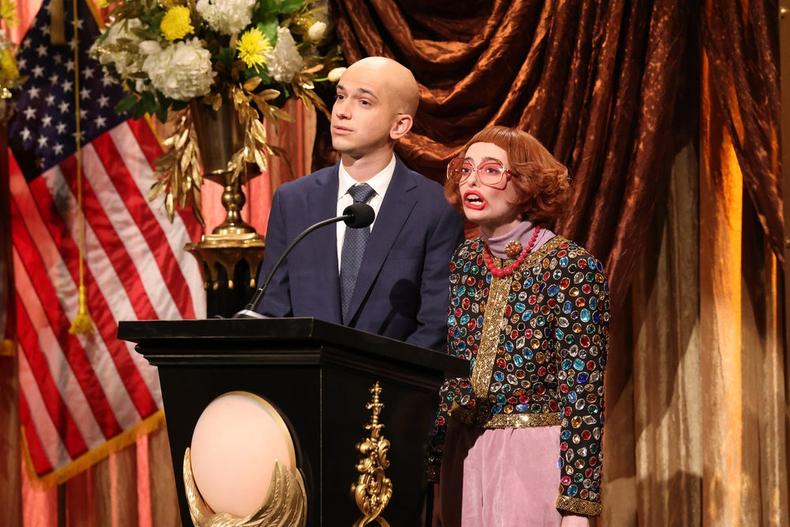
Ashley Padilla is a really good actor. I always thought of sketch comedy as prosthetics-first or costumes-first, because those are the things that are fun for me. But it’s really fun learning to work with people who are coming from different sides of comedy. Ashley is very performance- and emotional motivation–first, and so much of her comedy comes out from that. Or like Veronika [Slowikowska], who’s just joined too, she’s kind of voice-first. Or Jane [Wickline] is almost absurdist concept with a deadpan delivery. Everyone’s different approaches to comedy, I think, coalesce really nicely. We’re all writing very different things, and I feel like I’ve learned a lot from my coworkers at work, because we all come from comedy from such different places.
Definitely. The collaboration is what makes “SNL” so special.
I have a sketch that I really want to do that I haven’t been able to get on the show, and I’ve been pushing it. I put it at the table read a couple of times, and then Ashley, who comes at sketch comedy from a different place, is like, “What if you did it more like….” She had an idea for a different approach for it. That’s why the job is great, stuff like that.
I’d also love to talk a little about your “SNL” audition process, which you’ve said was unfiltered and surreal, much like the material in your new special. Can you remember the specific moment during that audition when you realized, Oh, they’re actually liking this comedy or they want this type of humor?
I got there and I realized the room is smaller than people think it is. It’s more similar to performing in a club than you would realize. Like, the ceiling is kind of low and people are really close to you. So once I felt like, Oh, this is a familiar experience, even though the material was kind of crazy that I was doing, I was like, This is not an alien experience.
You hear about the “SNL” screen test, and you see clips of the “SNL” screen test, and so you have an idea in your head about what that space is like. But once I realized I was at a comedy club, basically, and the audience was five to 10 feet away from me, I felt more comfortable.
Credit: Will Heath/NBC
What advice would you give to someone who wanted to learn how to be funny? Is that even possible?
Just go to open mics and try stuff so you’re not paralyzed by the fear of being judged. I was doing comedy for a million years ago in Chicago. There’s so much pressure on people now to just put stuff online. I feel really grateful that I was able to fuck around for a long time without putting anything on camera. I was totally forced to incubate, basically, in a way that I don’t think people are afforded that opportunity as much, because there’s so much pressure from the internet. When I started, I was able to pay my rent because I hosted an open mic in Chicago. And I paid my rent in cash. I think that’s just the only way to do it.
“SNL” has such a massive history of icons. Is there a specific cast member from the show’s legacy you ever find yourself looking to for inspiration?
I love Fred Armisen. The best part about his sketches is, like, I know what he likes—what music he listens to and what kind of movies he likes—from watching his sketches. I became such a fan of him because I was just like, Oh, my God. He loves the Ramones. He loves Sid Vicious. I could tell from this crazy sketch that he did. He’s the person whose sketches I’m the most jealous of. And then seeing all of his sketches on “Portlandia,” too. It’s also helpful to see that he was able to get so much weird shit on the show. But also, “Portlandia” is such a look into all this stuff that maybe wouldn’t have worked on “SNL,” but he found an outlet for it outside the show, which I find really inspiring.
Especially now, I feel like sketch comedy—we have “I Think You Should Leave With Tim Robinson.” That show is so popular, but we don’t have that many sketch shows outside of that. So I hope, one day, my sketches that never made it onto the show can live somewhere else. I just don’t know how or where.
What’s something that someone told you when you were first starting out that still sticks with you today?
This sounds kind of corny, but my favorite crazy comedy performance artist ever is Dynasty Handbag [Jibz Cameron], my friend in L.A., who does this show “Weirdo Night.” Jibz Cameron is just a total weirdo comedy performance art legend in L.A.
I did her show when I first moved to L.A., and I brought props, video, sound effects, and crazy costumes. It was such a high effort for a show where I’d get paid like $30 in front of not that many people. She was like, “You are enough. I know you like this maximalist aesthetic and bells and whistles, but you’re gonna exhaust yourself and tucker yourself out if you have to come to sound checks two hours early all the time and lug props around.”
Especially with “Live + in the Flesh,” there are so many bells and whistles, but those are the ones that made it. It is important to think about how much you don’t need, or how much you feel like you’re relying on something because you don’t have faith in just yourself carrying it through. And sometimes you are just enough—which is funny to think about, considering what special I made.
This interview has been edited for clarity and length.