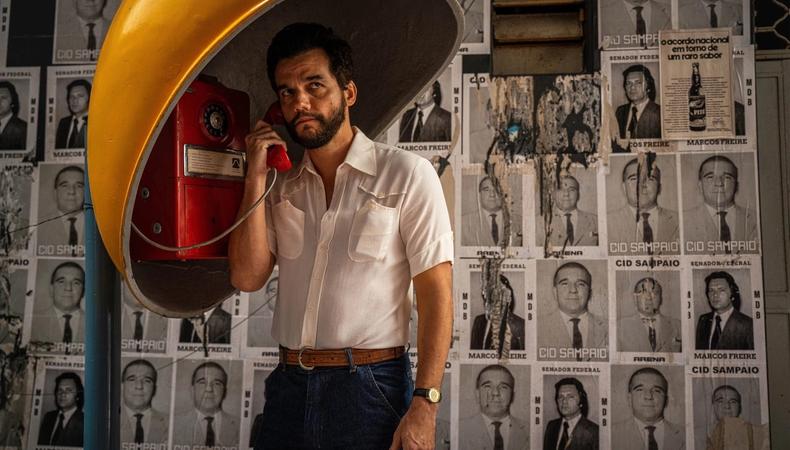
Gabriel Domingues is among the first-ever nominees for the Oscars’ new casting category, which is being recognized at the 98th Academy Awards ceremony on March 15. The Brazilian casting director earned the nod thanks to his work on Kleber Mendonça Filho’s best picture contender, “The Secret Agent.” The film is set during Brazil’s 1977 military dictatorship and follows a fugitive professor (Wagner Moura) who arrives in the city of Recife to outrun a hit ordered by a corrupt official.
We sat down with the CD to discuss the overwhelming honor of his nomination, his philosophy of finding actors who truly enjoy the craft, and the intricate task of surrounding Moura—the film’s triple-threat lead and best actor Oscar nominee—with a cast that feels just as visceral as the era they inhabit.
How does it feel to be among the first nominees for the inaugural Academy Award for best casting?
I’m so honored and overwhelmed and [have been] since the announcement of being on the short list. I was invited to the U.S. for the Oscars Bake-Off, where we had to present ourselves and our work, and it was such a beautiful night because 10 movies [were represented] by their respective casting directors. And it was so fascinating to see everyone talking about their process and discussing their ideas on how they work. It was very moving and emotional too, because there were, like, six American movies, three European movies, and one Brazilian movie. I was by myself there, so the fact that “The Secret Agent” got nominated for best achievement in casting, side by side with these other four amazing movies, is such an incredible thing.
It’s so long overdue for casting professionals to get the recognition they deserve.
Yes, we’re very happy that it exists now. In Brazil, we’re all celebrating for many reasons: The movie got four nominations, which is amazing for Brazil, and also because we were nominated in this category; it’s a very important thing.
The casting of the movie is so interesting. The movie is full of people from different parts of Brazil, with different accents and faces. The word “diversity” doesn’t explain how complex this group of characters in the movie is, and how much it says about Brazilian culture, life, and society.
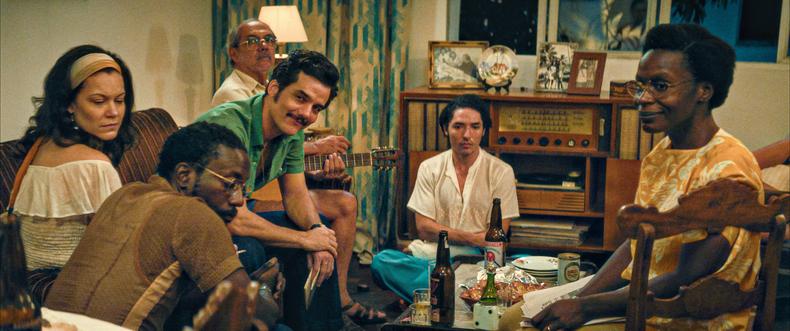
“The Secret Agent” is a political thriller set during Brazil’s 1977 military dictatorship. It’s been said that director Kleber Mendonça Filho wanted faces that looked like they belonged in the 1970s. When casting, what physical or emotional traits were you looking for to evoke that era?
Kleber’s films always include social commentary on Brazilian life. So, once I was working on casting this amazing script that Kleber wrote, I tried to understand this commentary as best I could. Like, what’s the reach and the power that we can create? By casting the right people, it will emphasize this observation about Brazil of that time.
Since the film is a period drama, there are many cares that we had to take to create this world. Kleber was very interested in giving the movie the feeling and the spirit of the ’70s [in Brazil], like with the rebel spirit, the dirtiness, the imperfection…the strangeness of the ’70s as a tone. And it is in the movie—in the images, in the production design, and in the custom design. It’s all there. The creation of the ’70s world is very original, I think. And also, because of this, in the casting, I had to understand that spirit.
Wagner Moura is up for best actor for the film. What made him the right choice to play the dynamic roles of Armando Solimões, Marcelo Alves, and then the adult version of Armando’s son, Fernando?
Yes, he plays three different roles in this movie [Armando, the fugitive professor; Marcelo, Armando’s alias; and Fernando]. He did such amazing work, and he worked as a light filter to enlighten each of the other characters, which is a symbol of generosity, and it shows that he has a big soul. He’s an amazing artist, and that’s why I think that he should win, because he’s there in the scenes with all these different kinds of people, and he gave light to all of them.
While Wagner is a global star, many supporting roles were filled by newcomers, like Tânia Maria. What is your philosophy on pairing seasoned stars with first-time actors to achieve authenticity?
Sometimes, someone doesn’t have that much experience as a professional actor, but has an amazing experience of life, like of living life and being an interesting person. In “The Secret Agent,” there were many people who had never done cinema before, so the most important thing was to figure out [what] the relationship [would be]. Like, how does it feel to be in a movie [with that new actor]? Because if they’re interested, if they’re excited about this idea, then we can do a lot of rehearsals.
We had an amazing actor’s coach, Leonardo Lacca, who was also the [associate] director, and he created a safe and comfortable environment for people who did not have as much experience as others. So we’ll invite them to be in the movie, and then we’ll try to create the best space for them to get there.
What advice would you give to an up-and-coming actor who is trying to land a role opposite a major star?
Have fun, first of all. Because if you have pleasure and have fun while you are [acting], you’ll want to do it more and more and more and more. And so get obsessed with art, cinema arts, and dramatic art, because if you love it, people will recognize it. People will understand it. We can tell when someone has the sparkling eye of love for dramatic arts.
Why do you think it is essential for an actor to show they are having fun, even when auditioning for a heavy political thriller like “The Secret Agent”?
It’s the excitement that someone goes off of. I like it when actors ask good questions, the right questions. That’s a thing for me. Like, “Let’s talk about this. Let’s discuss that. Let’s try to think about how it would be if we do this.” That interests me a lot. And also, besides asking questions, I feel that when they’re honest and they’re vulnerable in a way that we can connect to them in their vulnerability, like in the human aspects of it, if we create a good human connection, then we can have fun.
Can you describe a time when an actor made a choice so bold or unexpected that it completely changed how you and the director viewed the character?
In this movie, there was one character, Flávia [played by Laura Lufési]. She sent us a very amazing and interesting self-tape with the scene that we gave her. She was so nice. We were all like, “Oh, that girl has a good face, a good ’70s face.” She did [the scene] with a very interesting sweetness that we liked a lot.
Then we invited her to an in-person audition with Kleber, and she didn’t know she was going to act with Wagner at that time. We gave her two more scenes. It was a very deep scene, with that final monologue when [Flávia] talks about her parents, and her father, and that she always thinks of him but doesn’t know exactly what has happened to him. And [Laura] asked questions: “What do you think has happened to her? If you don’t mind sharing it with me, I would love to know, because it will guide my construction.” And we had an amazing conversation about the scene, the character, the movie, and the whole situation. It was moving seeing her being directed, even for a short moment, by all of us.
For an actor who’s trying to leave a lasting impression with a casting director like yourself, what advice would you give them?
Be comfortable in your own skin. I can tell when someone’s very comfortable being exactly who they are. There’s an attitude, something charming about that. Like, “I like being myself even though I’m not perfect. I like the complexity of being myself.” And I can tell when they’re feeling good in their own skin.
This interview has been edited for clarity and length.