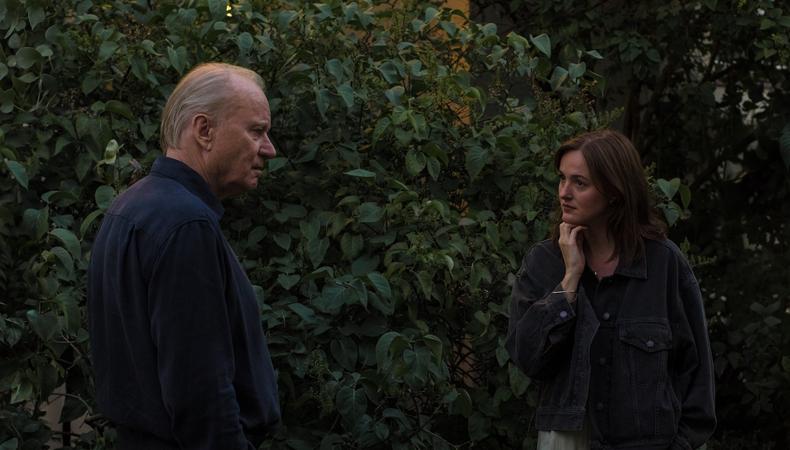
Following Stellan Skarsgård’s recent Golden Globe win for “Sentimental Value,” Norwegian filmmaker Joachim Trier’s drama has emerged as a formidable dark horse in the 2026 awards circuit. The film’s casting directors, Avy Kaufman and Yngvill Kolset Haga, are also making history with a spot on the short list for the Academy Awards’ inaugural best casting category.
In “Sentimental Value,” sisters Nora Borg (Renate Reinsve) and Agnes Borg Pettersen (Inga Ibsdotter Lilleaas) are forced to confront past family drama when their estranged father, the once-celebrated director Gustav Borg (Skarsgård), wants to cast Nora in his latest project, a film centered on their own private tragedy. While “Sentimental Value” explores familial pain, renewal, and fame, its heartbeat is an electric ensemble of Hollywood A-listers Skarsgård and Elle Fanning, alongside Norway’s exciting powerhouse Reinsve and breakout star Lilleaas.
To learn how the cast’s unmatched chemistry was achieved, we sat down with Kaufman and Haga to discuss their cross-continental collaboration and the meticulous process of building the unforgettable family at the heart of the film.
How does it feel to be among the first casting directors short-listed for the Oscars’ new best casting category?
Yngvill Kolset Haga: It is exciting just having focus on what we do every day as our work. For the whole casting branch, not just us who are very lucky to be on this short list. Or long list—people say different things, I think. But I think the whole branch is very excited about this [category].
It’s definitely long overdue. What do you both think makes a great casting director?
YKH: You have to love actors in one way or another, because that’s what it’s about, working with the actors. So you have to be very curious about them. Watch them do their work in film, TV, and onstage.
Avy Kaufman: I think one of the important things for a casting director to live by is being really open. So often I find myself going to the theater [to see someone] because it’s part of my job, besides being the benefit of my job—and I feel like I’ve seen that actor for 20 years onstage, but I’ve got to do it. And then I see something entirely new that they’ve done. So I think it’s important for me not to feel closed off, to stay open, and not to judge.
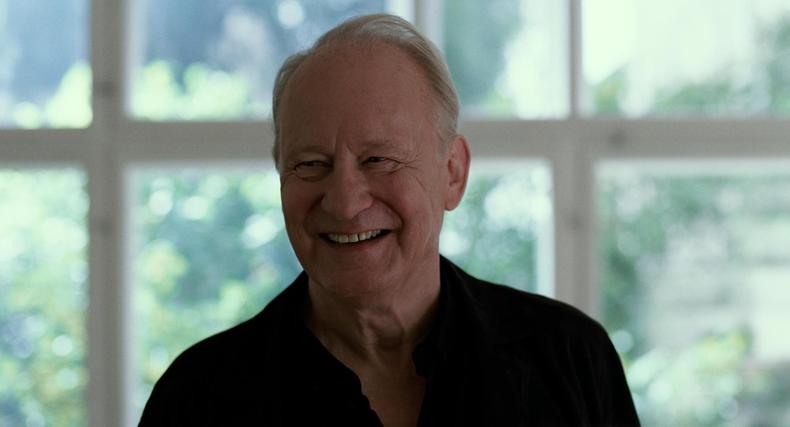
Stellan Skarsgård just won a Golden Globe for his performance in the film. Can you talk to me about casting his role?
AK: He was in Joachim’s mind. He was in all of our minds. I mean, he’s Stellan. He’s brilliant. And I think his choices were so honest and deep.
I’m so grateful to be on this movie for many reasons, but one reason is, everybody’s got family dynamics—good, bad, ugly. It’s family. It’s the salt of the earth. And to see how this family came together is one of the most beautiful pieces of art I could see. Stellan nailed it.
What qualities did he bring that made you feel like he was perfect to play the complex character of Gustav?
YKH: I think maybe his character is my favorite in the film. I discussed this with someone who said that in the scene where [Nora] says, “I don’t want to do your film,” when they’re in the cafe, they were like, “I totally understand her.” But I feel so sorry for his character. So it’s something about how he manages to play this father who, yeah, he’s made so many stupid choices, but I understand him. And that’s what good actors do. I really adore his character, so I’m so happy that he got that Golden Globe.
The film was written specifically for Renate Reinsve, who also starred in Trier’s “The Worst Person in the World.” How did that play into casting, especially when looking for a sister dynamic?
YKH: I started off with [casting] the younger sister, Agnes. And it was a challenge, because Renate is someone special in the Norwegian acting [industry] and also internationally. So it was a challenge to find the sister who could match Renate’s level of acting and her type of acting. We had a big search, and many really great actresses were in [the running], and Inga was one of them. And I think we found the right sister.
What was the exact moment in Inga’s casting that made you know she was right for the role of Agnes?
YKH: When Inga and Renate had the audition together, it was quite clear that it was going to work. Inga is a very grounded, private person, and that’s also something that comes out of her in her acting. Her energy, it’s very trustworthy in a way, and that suits the character, and also the [dynamic] with Renate. Inga was just a great piece to the puzzle in so many ways. We’re building a puzzle in front of the camera, but also behind the camera. The cast is going to work together for a long time. And this [ensemble], I think they have a lot of fun together.
Who was the hardest puzzle piece to fit into that family ensemble?
AK: I don’t think anything in casting is easy. If we do a good job, it looks easy, like it all just came together and it’s beautiful and there you go. For me, when I first met with Joachim, Renate and Stellan were in his head as bookends. Then in reading the script and seeing the film, it’s so genius what he did [with Elle Fanning’s character, Rachel Kemp]. She’s this outsider who you would think would destroy the family—a movie star walking into another movie star’s life—but she healed the family. How exquisite is that? And Elle gave an effortless performance.
As a casting director, we see lots of people. We do lots of lists. We have lots of conversations. We, in our head, imagine how [actors] are going to be together. I personally fight for a lot of actors in my career. But this [cast] just came together, as well as working with Yngvill, because that’s a relationship, too, with a vision.
Joachim Trier has said it took over a year to cast the film. Where did you look to find fresh talent?
YKH: When I work on projects that give me time and resources, it’s also a [way] for me to meet actors I don’t know and invite them into the casting room or watch self-tapes, wherever they are, in Norway or in the world. And so I try to be open and give people chances, because I might not know these actors so well yet, or haven’t met them yet. And so it’s just a wide-open search.
AK: I wasn’t sure who, actually, on this side of the pond was familiar with Joachim. So even with the smaller American roles, I just wanted to bring him the people that would really fit and have the personality to [play], you know, agents and managers, but not be prototypes to laugh at. Even the children that Yngvill found, when it’s cast correctly, they all just blend. Like [Øyvind Hesjedal Loven, who plays Agnes’ son] is brilliant, and he’s never acted before.
How did you cast Øyvind for the role of Erik, Gustav’s grandchild?
YKH: He was not from a theater school. He had never acted. It was from an open search. We were lucky that his parents read the open call and they wanted to make a self-tape at home, and he stood out. But still, it was a long process. During the meeting, when Joachim said, “OK, I’m choosing him,” I cried, which I do a lot in the casting process. [Laughs] It was happy tears. I was so relieved, but also happy because of his choice.
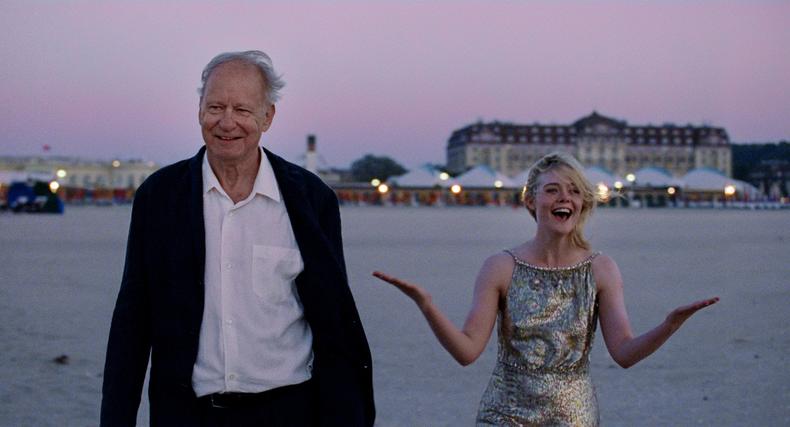
Elle Fanning is essentially playing a version of her own professional reality in this film: an American blockbuster actor who comes to Norway to work with a Norwegian filmmaker. Did this “life imitating art” dynamic influence the casting process at all?
AK: She was taken with this movie. And I know, being an American, I’ve been fortunate to work with a lot of European directors, and when I first started seeing different films from what I grew up with, I was [amazed]. When she says, “I’ve never been this touched,” you believe her.
I have to say that, on and off throughout my career, when people pass when I make offers, I know there have been situations where I’ll take it personally, because I want them so badly. But now I want to think that if an actor passes, they know it’s not for them, and we have to trust that. And that was in our faces [with this story and Elle’s character], and you never get to see that. And that’s the honesty that ran through the film.
Elle was shooting “Sentimental Value” and “Predator: Badlands” at the same time. Did her busy schedule affect her casting at all?
AK: It’s always a struggle. We research the character in our heads. We discuss it with the director. I start with a long list. I don’t always want a long list. If I could have two names, I would be happy, but that’s the behind-the-scenes part of the casting process. Elle nailed it. And she was busy. If I go back into the emails, I’m sure I was cringing about dates, because it was a long shoot. It’s a process.
What’s your best advice for aspiring actors?
YKH: You have to be visible. We have to know about you. We have to find you. So be available to be found on platforms or wherever.
With Renate, I get some questions where I’m asked, how [can an actor] go international? Because Renate is having this great career after “The Worst Person in the World.” But it was a small Norwegian film that took her there. So you have to be the best actor and use the possibilities around you. I don’t think it’s so important to aim for the red carpet. And also try to have as much fun as you can with every self-tape, every small casting you get. Take the possibilities.
This interview has been edited for clarity and length.