
Shiwani Srivastava is a hot new name on the screenwriting circuit, fresh off the success of “Wedding Season,” her debut rom-com recently released on Netflix. But, she's quick to explain that she’s not the ingenue you may be expecting.
“I’m 40,” she says. “I don’t mind saying so in interviews because I think it’s encouraging to writers who are younger. It can happen.” For her, it happened via winning the ScreenCraft Comedy Competition with the script in 2018. From there, it made its way into production with Netflix.
Along with the myth that breakouts are the domain only of 20-somethings, Srivastava would like to dispel a few others, namely: that you have to be married to your career (she has twins and a spouse); that you have to live in Los Angeles to make it in the business (she lives in Seattle and used to call San Francisco home); and that you have to have connections up the wazoo to get a script produced (she did not have an agent when she won the contest that got “Wedding Season” noticed by Netflix).
Here's her advice for getting noticed, busting through writer’s block, and taking script notes while still staying true to your vision.
JUMP TO
 VGstockstudio/Shutterstock
Shrivastava has always been a writer, but not a screenwriter. “I think a lot of writers sort of have the circuitous route,” she says. She studied journalism and English at NYU, and later got a Master’s degree in South Asian Studies. “It felt like it wasn’t for me,” she says of film school. “I didn’t see people who look like me, even though I think in my heart of hearts, I’ve always known I’d wanted to try screenwriting.” Instead, she spent the first part of her career working in journalism, publishing, and copywriting. When she turned 30, however, she took a leap into creative writing and enrolled in a class with “One Fine Day” screenwriter Terrel Seltzer, who eventually became a mentor. “That really launched my whole journey into writing.”
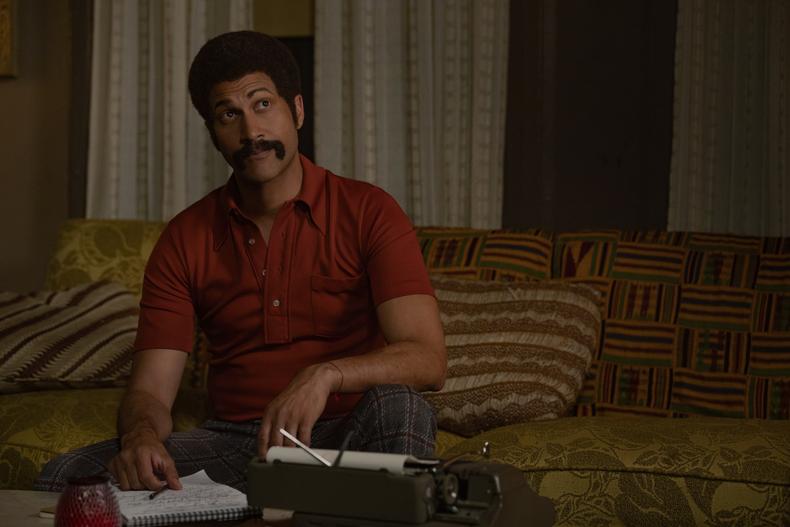 “Dolemite Is My Name” Credit: François Duhamel/Netflix
Shrivastava says she worked on “Wedding Season,” which is partly inspired by the dynamics in her Indian-American family, for about 10 years. It’s her first script, technically, “but I often joke that it’s my first, second and third script because it changed so many times.” Each round of notes that she received, whether from screenwriting contests, friends, or classes, helped sculpt her narrative. “When I look back on the first version, I think the essence is the same. The characters are the same in many ways. The story is the same, but if you look at it page by page, three-quarters of it [has] been rewritten.”
She urges writers to try and avoid getting defensive about feedback, and instead look at it as an opportunity to try something else. “If something’s not working for somebody, or people don’t get what you’re saying, then you haven’t done your job as a writer,” she says. “You have to take a step back and say, OK, maybe I don’t like the solution they propose. But I have to understand why this isn’t working and propose something that makes it click. And I think when you realize that you get less defensive and it starts becoming like, no, it’s not good or bad, but just figuring out what isn’t working.”
 GalacticDreamer/Shutterstock
Don’t stress so much about “the market,” and just focus on getting your script made and ready, Shrivastava advises. She didn’t let the omnipresent think pieces heralding the “death of the rom-com” stop her from what she wanted to write: a rom-com—one with Indian-American main characters, being an even rarer bird. Over the years, things started changing, first with the rise of Mindy Kaling and her commitment to bringing diverse characters to screens, and with mainstream movies like 2004’s “Harold & Kumar Go to White Castle.”
“I remember thinking it felt like times were changing,” she says. “When I saw these brown faces on TV, I thought, now is really the time I want to be a part of this.”
“If I had tried to write what was popular then, by the time it saw the light of day, that would have been old news,” she says about trying to follow the trends that were moving away from rom-coms. “I think if you try to chase market trends you’re fighting this losing battle. You just have to say, what do I really want to see? What’s the void I can fill? And if you write that, I think there are ultimately people who want to see it.”
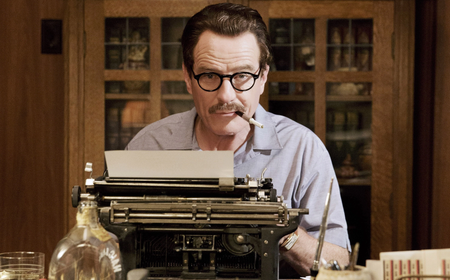 How to Become a Screenwriter
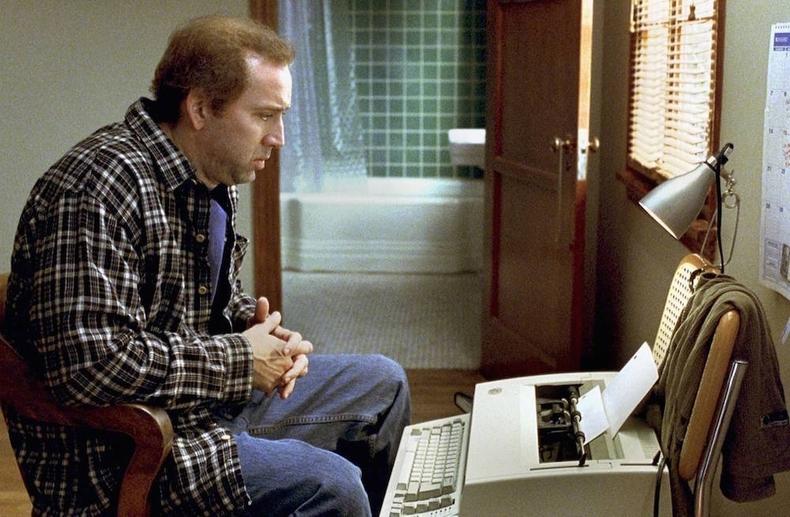 “Adaptation.” Courtesy of Sony Pictures
To push through writer’s block, Srivastava relies on a toolbox of self-imposed deadlines and productivity methods. She uses these main methods to meet her writing goals.
Setting deadlines + utilizing writing sprints
When she was taking screenwriting classes all those years ago, the expectation of turning 10 pages a week in for feedback forced her to write regularly. Now, she’ll set those deadlines for herself. The first half of the day is typically writing-focused, with 25-minute Pomodoro sprints with shorter breaks in between; and the second half is focused on admin, both personal and business, which could mean organizing her kids’ doctors appointments or working on the pitch materials for her projects.
Crafting a focused story description before getting started
It also helps her, she says, to come up with tight, compelling descriptions for her stories, then fill in the blanks from there. It’s something to work off of, but also a great tool for getting started and answering the age-old “is this something?” question.
“One of the things I do right away, if I’m thinking I’m serious about developing ideas, is write the logline…a two-sentence version of what the story is where you have to set up the story, explain the conflict, and say why it’s interesting in like two or three sentences,” she explains. “Sometimes I don’t find that in an idea and that means maybe it’s not a movie, or maybe it’s just not a movie yet, and I need to put some more time into it. But it helps me figure out what’s missing from the idea, or what’s good about an idea, so I try to actually do that pretty quickly just to see if there’s something there.”
 Tenkorys/Shutterstock
They say to write what you know, but that’s not the only thing you should write. A lifelong fan of Nora Ephron, Shrivastava says she definitely believes in the writer’s “everything is copy” credo. She loved rom-coms like “When Harry Met Sally,” but, “I felt like an element of detachment… It didn’t really reflect my life.”
So she found a way to take the things she felt an appreciation for (rom-coms, mother-daughter stories like “Gilmore Girls” and witty banter for example), and connect it to her own experience.
“I wanted to show immigrant families and the way that we really are in that light,’ she says. “We talk about pop culture and I think it was sort of this wake up call that there was an avenue for me to tell my stories in that same way.” She cautions against feeling beholden to writing only what you know, though. It’s about taking the interesting elements and emotional truths and giving them to your fictional characters.
“I actually have a fairly functional relationship with my family, but there’s lots of their seeds of lots of like funny arguments we’ve had here. They’re really, you know, recurring themes we revisit and that has made it into all my work.”
 VGstockstudio/Shutterstock
Most importantly, a screenwriter needs to understand that though the first draft process is a solo event, revision and production are team sports. After making “Wedding Season,” Srivastava realized that her collaborators were just as invested in making a great movie as she was.
“Everybody’s just trying to make a movie that people will love and nobody knows for sure going through the process if they’re going to do it,” she says. “We’re all figuring it out. And then you kind of realize that you’re actually collaborators. You’re partners in crime, and you’re trying to help each other through this. I think that gives me a lot more confidence because I realize they want this to be good as badly as I do.”