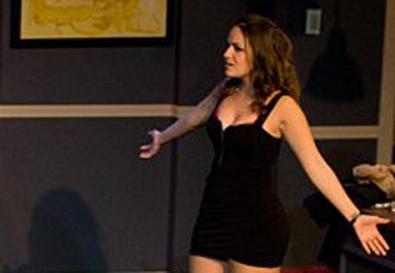
There are exceptional performances from James McAndrew, Daniel Kash, and Alexis Boozer—actors able to take Rebeck's dated dialogue and situations and make them real. But Georgie is the heart of this play, and Groppa hasn't quite reached the point in her work where she can relax once in a while and find the character's inner Carrie Bradshaw. The actor succeeds at creating a sweetly endearing and often wonderfully ballsy Georgie but is effective only when she stops working so hard, on the odd occasion spent sitting and listening to her co-stars. Then the choice lines come around again, and she's up on her feet, playing every important moment and joke directly out front to the audience. Why her otherwise capable director Robert Marra didn't stop her grandstanding—or at least restrain her frequent wildly presentational Momma Rose arm movements—is a conundrum.
Still, the major problem with this 20-year-old play is the same thing that made "Hair" fail in the 1980s yet achieve a triumphant resurrection today: It will take that long to be able to appreciate it as a viable example of the dastardly singles scene in the late 20th century. At this point, the play feels like a latter-day "Barefoot in the Park" with about 250 F-bombs added for shock value—something we have become desensitized to. "I realize relations between the sexes are confused nowadays," says one of Rebeck's characters. My dear, from the privileged perspective of 20 years hence, you ain't seen nothin' yet.
Presented by and at Theatre 68, 5419 W. Sunset Blvd., L.A. May 21–June 27. Fri.–Sat., 8 p.m.; Sun., 3 p.m. www.plays411.net/spikeheels.