It’s only natural to picture your name in lights, but what do you do when your role puts your name…just on the periphery of the lights? Playing a supporting character may not be anyone’s childhood dream, but it’s what you’ll statistically spend most of your acting career doing (and honestly, likely loving it). Let’s dive into the best ways to approach supporting roles, and ways to make characters that are supposed to be “less” important end up the most memorable.
A supporting character is any character of importance apart from the main character. Supporting characters generally further the plot in some way, and usually have character arcs of their own; without an arc, the character may be considered more of a tertiary character or cameo role. Though supporting characters are always relevant to the overall plot, they sometimes occupy entire subplots alone, only becoming relevant to the main character by the end of the story.
Supporting characters could be infinitely divided into subcategories of archetypes, but most seem to fall into three main categories:
- Allies are friends, peers, or lovers who support the protagonist through a personal relationship.
- Teachers are parents or mentors who support the protagonist through imparting wisdom or life lessons.
- Antagonists are villains or mere plot obstacles who work directly against the protagonist.
 Stock Characters: How to Spice Up the Usual Suspects as an Actor
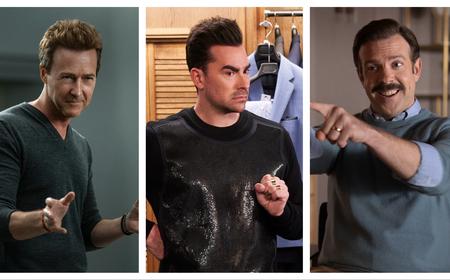
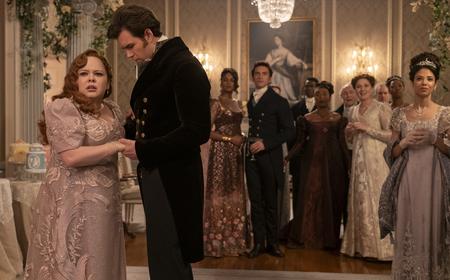
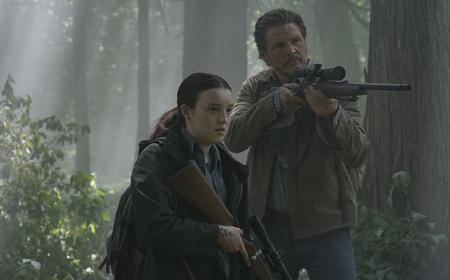
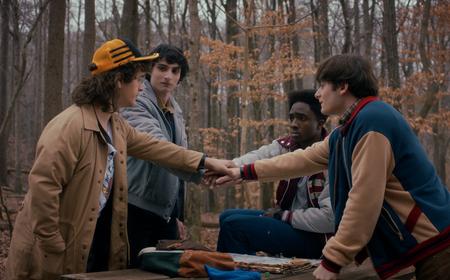
Since most roles across media are supporting roles (there’s usually only one protagonist in a handful of characters, after all), it would be impossible to even scratch the surface of highlighting all of them. Here are just a smattering.
- Barney Fife (Don Knotts), “The Andy Griffith Show” (1960-1968)
- Yoda (Frank Oz, most famously) “Star Wars” franchise (1980-)
- Cliff Clavin (John Ratzenberger), “Cheers” (1982-1993)
- Neville Longbottom (Matthew Lewis), “Harry Potter” series (2001-2011)
- Jayne Cobb (Adam Baldwin), “Firefly” (2002-2003)
- Dwight Schrute (Rainn Wilson), “The Office” (2005-2013)
- Uncle Jimmy (Oliver Platt), “The Bear” (2022-)
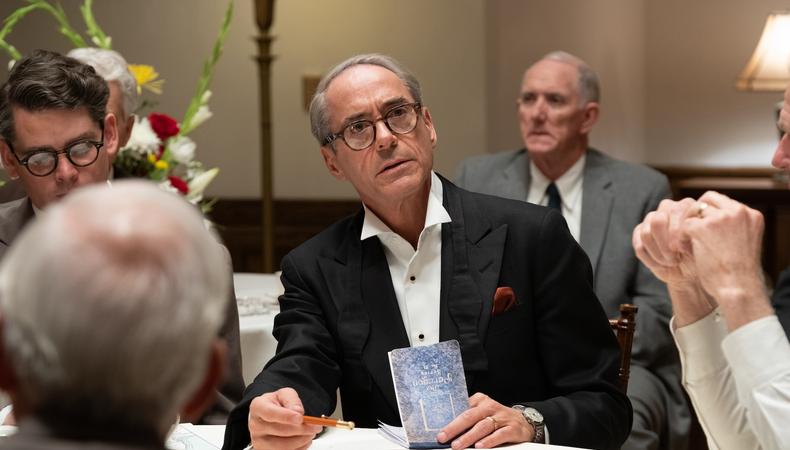
- Lewis Strauss (Robert Downey Jr.), “Oppenheimer” (2023)
- Gloria (America Ferrera), “Barbie” (2023)
Best supporting characters—Tony Awards edition
And here are some of the best supporting roles on Broadway in recent memory—roles that won their actors a Tony for best featured actor or actress in a musical.
Jamie/Amy, “Company” (1970, music and lyrics by Stephen Sondheim, book by George Furth)
When “Company” first premiered on Broadway, Amy was the main character Robert’s deeply neurotic friend. In the final scene of Act 1, confirmed bachelor Robert earnestly asks bride-to-be Amy to marry him. She gently turns him down, which eventually helps her to get over her cold feet about getting married, and Robert to analyze his feelings about love.
The musical was revived on the West End in 2018 through a reimagined gender-bending lens. Robert was renamed Bobbie and portrayed by a woman, and Amy was reimagined as Jamie, a neurotic groom on the precipice of marrying another groom. Amy/Jamie is an interesting supporting character intertextually; in the original, Amy is both a friend and a potential love interest for Robert, while in the revival, Jamie is just Bobbie’s friend. In this version, the “marry me, Amy/Jamie” scene is played for laughs. Matt Doyle won a Tony Award for his portrayal of Jamie on Broadway in 2022.
Joanne, “Company”
The second on this list from “Company” (fair enough, it’s a true ensemble show) is also probably the most complex inclusion from a plot standpoint. For all the changes the aforementioned Amy/Jamie went through, very little differs about Joanne in any given version of the musical. While no one could accuse Joanne of falling strictly into the antagonist category, for a supporter, she can be awfully challenging. It’s Bobby’s final interaction with old friend Joanne that pushes them into the piece’s thesis statement, “Being Alive.” Patti LuPone’s portrayal of Joanne earned her a Tony Award in 2022. Joanne’s original actress, Elaine Stritch, was also nominated for the role in 1971—interestingly in the leading actress category.
Charley Kringas, “Merrily We Roll Along” (1981, music and lyrics by Stephen Sondheim, book by George Furth)
The famously told-backward musical follows three friends Frank, Mary, and Charley, from their middle age falling-out back to when they first met. Charley is the stereotypical supporting character friend (an Old Friend, if you will). Both he and Mary, his counterpart, exist to support, challenge, and hold up a mirror to main character Frank and what he has become. First played on Broadway in 1981 by Lonny Price, the portrayal of Charley won Daniel Radcliffe a Tony in 2024.
Miss Liza Jane, “Hell’s Kitchen” (2023; music and lyrics by Alicia Keys, book by Kristoffer Diaz)
The poster child for the mentor category, Miss Liza Jane is a wise and occasionally harsh teacher—an immediately recognizable figure that most artists have encountered if they’ve studied long enough. It’s Miss Liza Jane who inspires the troubled Ali to pursue music, all while providing solace and stability in her otherwise wild teenage existence in 1990s New York City. Kecia Lewis won a well-deserved Tony Award for her portrayal of the role in 2024.
Lulu, “Shucked” (2023, music and lyrics by Brandy Clark and Shane McAnally, book by Robert Horn)
This original musical features the supporting character Lulu, a no-nonsense Southern girl with a quick wit. Comfortably filling both the supporter and mentor niches (though technically main character Maizy’s cousin), her song “Independently Owned” was easily the show’s breakout performance. Lulu’s stage time may be middle of the road, but her impact rivals that of the leading characters—as demonstrated when Alex Newell won a Tony for portraying Lulu in 2023.
Aunt Debra, “Kimberly Akimbo” (2022; music by Jeanine Tesori, book and lyrics by David Lindsay-Abaire)
A play about a teenage girl with a fatal disorder doesn’t really sound like the kind of show that would feature a wacky aunt, but it (thankfully) does. While clearly mainly included as comedic relief in a show that would otherwise run the risk of being painfully bleak, Aunt Deb serves as a mentor figure to main character Kim. Her support is unexpected, mainly because she’s a criminal who’s mostly interested in roping Kim and her friends into a check-washing scheme. Nonetheless, Deb teaches Kim about embracing the opportunity for everyday adventure. Bonnie Milligan won a Tony Award for her portrayal of Aunt Debra in 2023.
So you’re ready to take on a supporting part—congrats! These steps can help ensure that you make the most of your stage time while still sticking to the parameters the role can place on you.
- Provide support (it’s in the name!). Ultimately, as a supporting actor, you are in service to the overall plot, so keep that in mind. Make sure you understand not only your character’s individual arc but also their overall purpose to the story’s narrative.
- Own the B-Plot. Just because you have to serve your narrative purpose doesn’t mean you can’t enjoy your individual version of the show as well! Secondary characters often get the benefit of being comic relief, or getting caught up in their own goofy side plots. Give this secondary plot the same importance and stakes as you would any leading plot.
- Make the most of your time. Secondary characters’ stage or screen time may be limited, but that doesn’t stop them from often being the most memorable characters in the story, so give it your all! It only takes a few moments to make a huge impact.