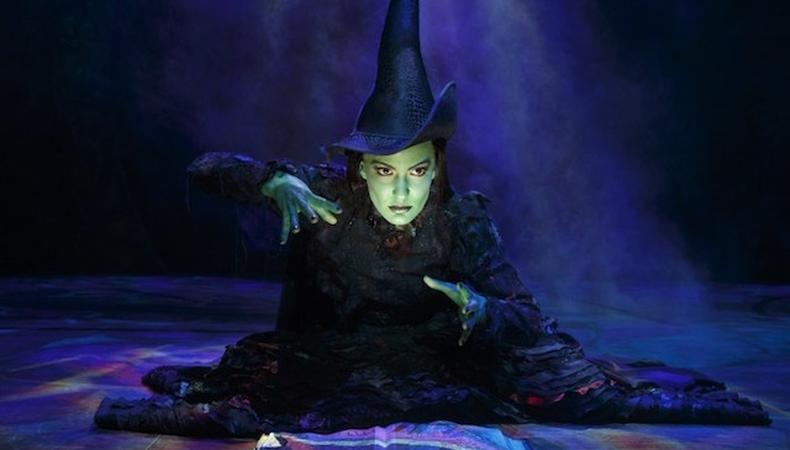
While Stephen Schwartz’s 70th birthday was just over a month ago, stars of the stage and screen are descending onto the Hudson Theatre this evening, April 23, to toast the legendary composer behind hit Broadway shows like “Godspell,” “Pippin,” and “Wicked” with the help of the Dramatists Guild Foundation. The winner of three Academy Awards and three Grammys (not to mention a six-time Tony nominee), few names and respective songbooks are as synonymous in contemporary musical theater as Schwartz’s, which is why joining him and DGF with a handful of special performances are Alan Menken, Ben Platt, Darren Criss, Renée Fleming, Alex Newell, Lindsay Mendez, and many, many others. Prior to the 70th birthday celebration (the details of which are being kept under wraps from its guest of honor), Schwartz jumped on the phone with Backstage to offer his best performance and theater-making advice for artists at all stages in their careers.
Well, I suppose a happy birthday is in order!
Thank you, thank you. It was a bit ago, but I guess this is the official celebration.
You must be excited to celebrate with the Dramatists Guild Foundation.
Yeah, I’m looking forward to it. You know you’re not allowed to tell me anything about it, right? I decided that since they’re doing this, I’m just going to be surprised and show up and find out who’s there when I get there. You probably know that I’ve been involved with the Dramatists Guild for a long time. I was the president for a few years and I’m on the council. So when various organizations talked to me last year about my round-number birthday coming up and [asked if] could they do something, I felt that the best organization that I would most want to benefit was the Dramatists Guild Foundation, so Andrew Lippa, who runs the foundation, talked to me about it and I just said, ‘Well, OK. If you wanna do this, go ahead and have a gala and I will show up!’ ”
The proceeds from this event are going towards the foundation. From your perspective, how important is it for theater artists and patrons to support this organization in particular?
It’s great, and I’m really looking forward to the evening. I’m sure it’ll be fun for me knowing Andrew and the other people involved with putting this together. I expect it’ll be a good show. I’m planning to enjoy it anyway. And I’m really pleased that it worked out that what the event we were going to do was for this particular organization.
READ: ‘Wicked’ Composer Stephen Schwartz Talks Music for Stage and Screen
Now, I’m calling in today, of course, for Backstage. Are you familiar with Backstage?
Of course! They’ve just been around for so long that I remember from when I was a kid.
Did you ever use us when you were first getting your start?
Well, I didn’t because I wasn’t a performer, but I certainly know a lot of people who did who would check on what auditions were coming up. That was pretty much the go-to place, was to check it out in Backstage.
Right, certainly. I was thinking perhaps you cast with us for some early-career projects.
Oh, absolutely! Of course.
With our working actor and young creatives readership in mind, what is one piece of advice that you would give your younger self?
What I [tell those] that I’m in contact with who are aspiring writers is to make sure that you have some demo of your work that you can readily show to someone. I was actually just in a situation the other day where I was at dinner with a composer friend of mine, and [a producer friend] came up to me and was talking about someone. And my [composer] friend said, ‘Oh, are you familiar with my work, thus and so?’ And the producer was not, so he whipped out a CD and gave it to him. Maybe that will lead to something. I’ve seen that over and over again. It’s important to be able to have some demo available for when situations present themselves so that you can familiarize somebody with your work who doesn’t know.
Any career in the arts has its ups and downs. How have you pushed through dry spells or more difficult periods in your 40-year career?
I had a very long time, a period where shows that I had done were not successful or not initially successful, and, you know, it was depressing and frustrating. But the most important trait that one can have in this business is perseverance. You just have to know that some things are going to work and some things aren’t, and sometimes that’s completely out of your control, and you just have to keep going. I’ve been around long enough to learn that along with downs come subsequent ups, so you just have to keep going and wait for the wheel to turn again.
You have found yourself in the audition room on the other side of the casting table countless times. What are some good practices for actors to leave a positive impression on you?
It’s always good when a performer knows who he or she is if you know what I mean. What special qualities—and every single person, of course, is unique—what are the special qualities that he or she can bring into the room? [To] not try and second guess what people are looking for, but come in and be the best them that they can. I find more often than not, that’s what pays off than when people try to guess what other people are looking for; that doesn’t work.
READ: What It’s Like to Make Your Broadway Debut By Bubble as Glinda in ‘Wicked’
Among the many actors you’ve worked with, does anyone especially standout out for having embodied that self-assurance in the audition room?
The best example that I can give of is from years and years ago when we were casting “The Baker’s Wife,” and the casting people had suggested a guy I hadn’t heard of who was playing a small role in a comedy on Broadway, in which he was playing this sort of goofy character. And I said, “He’s talented, but he doesn’t seem right for this romantic lead.” And they said, “Well, we think we’ll bring him in any way.” And he came in, and he was so incredibly self-assured and blew everybody out of the room—and that was Richard Gere. He subsequently didn’t do the show because he went off to Hollywood to become a movie star, but I always remember that audition when he came in. And it’s exactly what you’re saying: His sort of self-assurance and being centered in himself just impressed everybody in the room so much.
I guess that’s a case of you-knew-him-when; you know him before the movie star Richard Gere.
Completely. He was in an Alan Ayckbourn comedy playing a small role in which he played this sort of goofy, nerdy character. And so, as I say, he didn’t seem at all when I went to see him in that as a potential romantic lead in “Baker’s Wife” until he walked into his audition and just brought the thing that made him a movie star. He just brought it into the room with him.
When it comes to musical theater auditions, in particular, your songbook boasts some of the theater’s most iconic songs, so I’m sure that you’ve seen various iterations—some good, some bad. What is something that a singer can do to make these songs that are so well known their own without mimicking what’s been done in the past?
You are sort of defining the thing to do. Obviously, there are technical demands that each song makes and if you’re going to audition with the song, you have to make sure that you’ve mastered those technical issues in terms of breath control and placement and being able to hit the notes effectively, et cetera. But then I think it’s very important to really understand what the song is about, what story are you telling and [to] act the song as fully as possible. In other words, have the technical quality be a given, and then really understand the content of the song.
Is there any musical theater performance or musical in general currently on Broadway that especially excites you?
Yeah, there are a few! This season, I really admired “The Band’s Visit” very much, and I thought the performances in that were astoundingly well acted. And like everybody else, I was a big fan last year of “Come From Away” and “Dear Evan Hansen.”
Last question for you: The “Wicked” movie is coming up in a few years. What are you most excited about in regards to bringing that to the big screen?
We’ve just had so much fun working on it, Winnie Holzman and I, in terms of being able to go back to that story and that world and figure out how to tell the story. Using the techniques that are available in cinema, there are so many things that we can do that we weren’t able to do onstage, and conversely, there are some things that work on the stage that won’t work in the film. So we’ve been figuring out how to readdress those. And it’s really been exciting and stimulating to be back in that world but thinking of it as a movie.
And when it comes to casting, do you imagine looking for new talent, or are you looking to a pool of actors who’ve played the roles onstage?
You know, we haven’t really gotten into discussing casting yet because we’re still working on the screenplay and figuring it out. But I think the casting process will be pretty wide open. Once we get into it, there’s nobody that we’re really thinking of in advance.
Want to sing, dance, and act onstage? Check out Backstage’s theater audition listings!