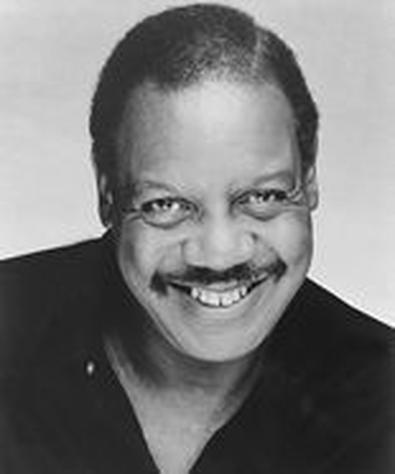
"I've been told that I'm a great storyteller, but no groundbreaking playwright-and that's just fine with me." So asserts John Henry Redwood during a phone interview from his home in South Orange, NJ "People are looking for old-fashioned plays. There's nothing negative about 'old-fashioned.' I want to say what I want and make it clear so that audiences can leave the theatre discussing what they've heard and seen. Hopefully, the plays I write will serve as a catalyst for change." His current play is "No Niggers, No Jews, No Dogs."
"I personally don't understand characters talking to light bulbs," continues the Brooklyn-born, 60-ish actor-cum-playwright, stressing that he doesn't much cotton to an experimental aesthetic. "Look, you can only be who you are. When you try to be someone else, you'll be second best."
Doubtless, Redwood is who he is, an unabashedly realistic-perhaps even naturalistic-playwright. In Redwood's new work, the ubiquitous kitchen sink (identified with realism) is nowhere to be seen, but there is a pump that spews forth real water. "No N," which bowed Off-Broadway at the Primary Stages April 2, considers the lives and evolving relationships between and among members of a poor black family and a Jewish sociologist who has come to study them.
The scene is rural North Carolina and the year is 1949. It's not a pretty time or place. When the young black husband takes a job as a gravedigger in another town, his wife is raped by a white man and becomes pregnant. Instead of telling her husband who the culprit is for fear of what her husband might do, which in turn would probably lead to his being lynched, she pretends she has had an affair with some unnamed man.
In the meantime, tensions build between the Jewish sociologist, Yaveni Aaronsohn, and the family who doesn't fully appreciate the pain he has suffered. He, too, has horrific secrets because of his ethnicity and, like them, has had to take a journey towards self-acceptance and pride.
"I wanted to show a parallel between anti-Semitism and racism," says Redwood. "The lynching of African-Americans and the lynching of the Jew Leo Frank, for example. And there are parallels that take place in the play as well. But in the end [despite the differences between blacks and Jews], there is a coming together."
A former theology student who dropped out of divinity school-"because I saw theatre as my ministry and pulpit"-Redwood insists he "writes from a foundation of love [that celebrates] the triumph of the human spirit. I don't want to be a preacher, but I am a spiritual playwright and all my plays have spiritual themes. This play is a departure from my others because, for the first time, I am looking at another culture besides African-Americans."
Nonetheless, he concedes, "When I write, I think about my black audiences. I write in the language they understand. But the second audience I think about are Jews. No, not because they make up a large part of the New York theatre audience, but because I grew up in Brownsville with Jews. My closest friend, Mark [on whom Yaveni is based] was a Jew. The high school I went to was 85% Jewish, the faculty was 90% Jewish. My father worked in a garage owned by a Jew. And I was the shabbos goy." The latter is a non-Jew who performs secular chores-like turning on lights-which observant Jews are not allowed to do on the Sabbath.
Despite Redwood's early association with Jews, he remarks he never recognized the experiences Jews shared with African-Americans until he saw a sign in the South that read: "No Niggers, No Jews, No Dogs."
"I had seen, of course, 'colored' water fountains. But this was different. To see yourself clumped together with people who were white." Redwood seems stunned even in retrospect. "I didn't know that people had problems with Jews. And then to see both groups [blacks and Jews] clumped together with animals. We were all viewed as dogs!"