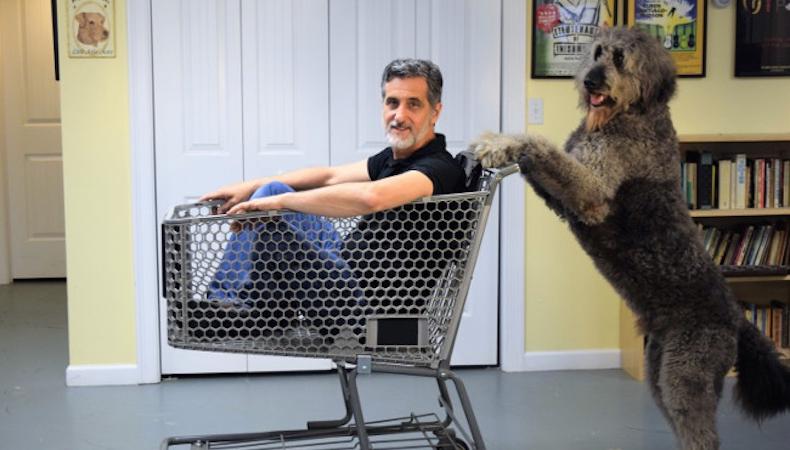
William Berloni got his Equity card as incentive for training the first dog to play Sandy in the original Broadway production of “Annie,” and he’s been nurturing animals-as-actors ever since.
Animals can read actors’ energy.
“I come in at an early level of production, and one thing I’ll say [to the team] is, ‘Please cast an actor who truly likes animals.’ I’ve seen over my years, when a person is allergic or inherently afraid, they may act like they like them, but animals sense that. How would you like to work with someone who didn’t want to be near you?”
READ: Backstage Experts Answer: The Top Skills That Make Actors Castable
Animal training is a discipline.
“If my dog is trained to do one thing and you decide to do another, you’re gonna confuse it. You would never do that with a fight director. You’d never do that with choreography. But people seem to have this idea, like, I had a dog and my dog would do this if I did this. What I do is a science, and at the level we’re at, it has to be treated [seriously].”
Be honest about your ability to handle animals.
“You know when two actors hate each other onstage. If you’re not good with animals and you know the role has to interact with them, don’t go up for it. All you’re doing is hurting the production and ultimately hurting your career, because you will disappoint the director and the casting director by not having been truthful in your audition.”
Animals and improvisation do not mix.
“Actors should never do anything the trainer doesn’t say. We have to turn [actors] into complete trainers. They have to have the same skills as my trainers and I, so they’ll come in on the first day of rehearsal and we’ll put them through an intense course. Onstage, I am not in control of the animals—they are. If you don’t get the right cue, if you alter your lines or your inflection, if you don’t have the treat onstage where you’re supposed to, the animals are going to turn and just upstage you. So actors have to have the same skill and connection as I do. They’re going to learn a whole new language and a whole new way of thinking with animals, in addition to everything else they have to learn in a show.”
Animals are reliable actors.
“The humans onstage will make more mistakes than the animals during a run, because animals look for patterns and want to do them every time—they just need the right cues. Not only do we come up with the pattern, but we come up with what I call the ‘what ifs.’ What if a behavior doesn’t happen, what do you do? If an animal makes a mistake, you’re in charge. You’re two steps ahead of the animal and it’s your responsibility to keep the story going and keep everybody safe. Again, I’m teaching the actors and everybody else—the stage hands, the stage managers—the what ifs. This is what we’re going to do if this doesn’t happen so that nobody panics, nobody freaks.”
The original Sandy in ‘Annie’ was a ham.
“When ‘Annie’ opened it was like ‘Hamilton.’ For the first six months, every time Sandy came onstage to [original Annie] Andrea McArdle, he got entrance applause. It was a Thursday night and it was pouring rain. The audience was soaked and we had to hold the curtain, so everybody was miserable. They weren’t as generous as they normally were. Sandy came out and he goes out about six feet and he stops. He turns his head to the right and he looks at the audience. The whole time Andrea’s going, ‘Come here boy,’ and he’s looking and the audience starts to titter. And then they start to laugh. And then they start to applaud. And then he turned his head and he went on. Now, it made the New York Times that Sandy held the show waiting for applause, but in reality, his cue was this noise from the right, and when that noise wasn’t there he didn’t know what to do. That’s how attuned animals are to the environment.”
Looking to get cast? Apply to casting calls on Backstage.