This Thursday, April 30 kicks off the 6th annual New York City International Film Festival with an opening ceremony taking place at the Directors Guild of America headquarters in NYC. Featuring over 30 short and feature length films and documentaries, the film fest aims to bring the world’s films to the Big Apple. In 2014, two films, one short and one feature, were submitted to the Academy for consideration.
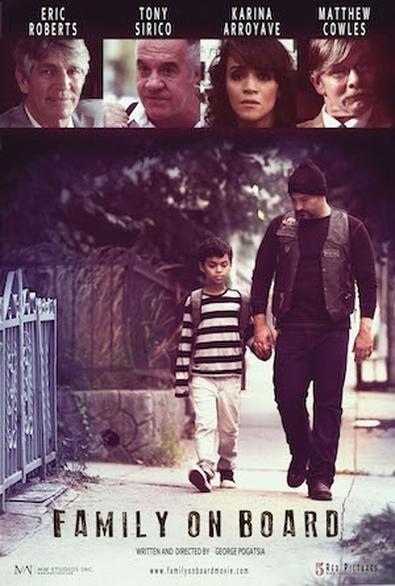
This year, among the nominees in the best USA short narrative and best USA director in a short narrative categories is “Family on Board,” a drama penned and directed by NY-based actor-acting coach George Pogatsia about the loose interpretation of heroism.
Centered on biker and family man Mike Petito (Pogatsia), the short traces the repercussions of a perceived act of self-defense in the aftermath of a burglary. The film also stars Oscar nominee Eric Roberts, Karina Arroyave (“Crash”), Tony Sirico (“The Sopranos”), and the late Matthew Cowles (“All My Children,” “Shutter Island”).
Nominated for best actor in a leading role in a short film, Pogatsia sat down with Backstage to chat about his creative process and to offer advice to actors on both sides of the camera.
On juggling directing and acting.
“A director’s job is being a truth barometer and as an actor you strive to be truthful,” he says. “The jobs are similar in the sense that you’re there to tell a story.”
Ensuring the overarching story was being served, as opposed to a singular performance or scene, was what Pogatsia found most challenging in the post-production and editing process. “Taking this film and cutting it down from 36 minutes to 28 to 22 to 19 to 15, making it tighter and losing things that are good,” were the biggest hurdles for the first-time director. “When you tell an emotional story, sometimes too much is too much. It was a fine line between telling people how to feel and letting them feel on their own. Trusting that [process] took some time.”
The actor in Pogatsia also allowed him to trust his cast and give them freedom to play during the six-day shoot. “I don’t like over-directing. Allowing an artist to be free is important.”
On his approach to coaching.
A sense of safety and freedom is essential in the classroom as well. “I start each one of my classes with a series of relaxation exercises,” he explains. “It’s important so people are open to giving and receiving information, being affected by what other people are saying.”
To bring that emotion into the room, Pogatsia says actors must be fearless in making strong, personalized choices, and be sure to keep specificity at the forefront of their craft. It’s about “using your own life experiences combined with your imagination” to bring the most out of the creation and performance process.
On staying grounded in storytelling technique.
When it comes to compelling narratives, actors must remain true to their character and to do so, one must not forget square one: “It all starts with the script,” says Pogatsia. “You can have the best actors and the best performances, locations, cinematographer, but if the script’s not right or the dialogue is too on the nose, ya got nothing.”
NYCIFF will run from April 30—May 7. In addition to film screenings throughout, there will also be a “Star Trek” event centered around “Chaos on the Bridge, a new documentary created by William Shatner centered on the creation of “Star Trek: The Next Generation.”
For tickets to NYCIFF and a full schedule, click here.
Like this advice? Check out some from our Backstage Experts!