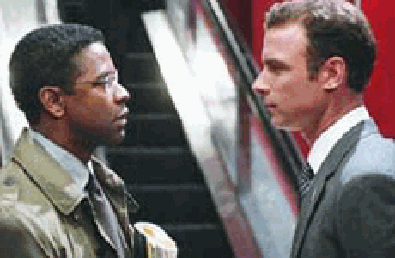
In selecting the Top 20 Casting Directors for the Films of 2004, Ross Reports took into effect both popular and critically-acclaimed films. We considered casts, genres, and challenges that each film presented. Although we made mention of select past films, the following casting directors were honored for films released in 2004. The list includes both individuals and teams, vets and newcomers, film casting directors of dramas, comedies, thrillers, adventures, studio releases, independents and everything else in between. Wherever possible, we have included some of their thoughts on the casting profession, experience with the films they've worked on, and advice on what they look for when auditioning actors they never met.
ELLEN PARKS*, JOHN JACKSON (NEW YORK)
2004 Critical Pick
Sideways
Select Past Films
Secretary, Songcatcher, Flirting with Disaster, Spanking the Monkey, Manny & Lo, XX/XY
Upcoming Film:
Fur
* Ellen Parks spoke with us for this interview.
How did you get started in the casting business?
I studied acting at a very nice liberal arts college. When I graduated, I only did theatre, no movies or television. I was able to last in the business for about 15 years -- until I was 35, then I made a transition to casting. It helps me a lot, having been an actress, because it allows me talk to actors in a meaningful way, helps me to guide their performances, and has helped me to develop insight into who has range and the kind of hidden talent that is sometimes missed. After my acting career, I was an intern at a casting office and worked my way up. It was Warner Bros. East Coast Television Division, but we were also working on independent feature films, with the Coen Brothers in their early days, as well as on studio movies. We also did the casting for the Manhattan Theatre Club and Playwrights Horizons at that time. It was a very busy office, and we really became very effective at fishing in the New York talent pool.
What do you most enjoy about casting, and particularly the casting of films?
I'm New York-based, so films that appeal to me are the kind that often shoot here, and which allow a greater latitude in discovering new talent. That's what intrigues me the most because, honestly, anyone can make a list of the top film stars in the world -- your aunt can do that, your grandmother, your nephew, your niece. But in order to search for new talent -- for emerging talent, it takes experience, insight, sensitivity, as well as a lot of good luck. and that's what keeps things exciting. That's where I and my brilliant associate Amelia are finding our niche. It's where we've been most effective professionally. We have established a reputation for doing somewhat unusual casting that often starts careers.
What was the experience like in casting Sideways?
It was quite remarkable and quite a lot to jump into. I did the New York casting, and also covered Canada, and the United Kingdom. Alexander [Payne] wanted a full search, although the roles did fall to Americans, because it's essentially an all-American story. John (Jackson) handled the massive talent pool in Los Angeles, while I covered lesser known talent in on the east coast and abroad, and we both just threw ourselves into finding these characters. We dodged around well-known talent, which was a wonderful concept of Alexander's that I think paid off beautifully in terms of telling the story the way it was meant. I found it delightful to work with Alexander. He knows exactly what he wants, and he wrote such a brilliant and eloquent script. It was all there on the page -- he treated these characters so tenderly, with such good humor, and gave us such a beautiful and precise template for exactly what ended up on screen. And he gave us a lot of wonderful notes about the look of it, the sound of it, and who these people were and weren't. He truly empowered us to look for just the right people for the roles, with no other consideration, because stars were not the key to this casting process. That's a wonderful freedom for a casting director to have. It was kind of bliss to work in that way.
How do you select the projects you work on? What do you look for in a good script?
A script will speak to me because the subject matter is unusual, because the story is beautifully rendered, or it really has something to say that I care about, or that I feel others should care about. Sometimes the subject matter is not one I know much about. Secretary, for instance, was about sadomasochism. I know nothing about that subject, nor do I have any personal interest in it. But I'm willing to travel imaginatively to areas about which I know nothing, because that's part of the excitement of being in our business -- to learn things we don't know. That's what film should do for us, have us think and feel more deeply and in a new way.
What do you look for when you watch a film that was cast by another casting director?
I really appreciate when a cast is beautifully balanced. By that, I mean that the actors really inhabit the world of the story perfectly, they belong together in the world of the story. I also appreciate it when they have the skills to work together well, instead of being just a conglomerate of personalities or stars lumped together who really don't have much in common with each other or the material. And I love when I see new faces and or when familiar actors being used in a new and effective way. That's when a casting director has done their work especially well.
Do you think that casting is overlooked as part of the creative process of filmmaking?
Practically every director I've worked with has come to me at the very beginning and said, "you know, we feel that casting is 98% of this project -- we are entering an area of such critical decision making!" But in the end, we're lucky if they remember to invite us to the opening, because they've forgotten we had anything much to do with it! Of course the film is often not finished for a couple of years, so that's understandable, but at the beginning of the process much less is going on, so most of the focus is on casting. Once the actors are in place we are out of the loop for the most part, because there are so many other things to be done.
I think the reason we, as professionals, sometimes feel overlooked, is due to the lack of formal acknowledgement given by the industry for our part in the collaborative process. There very few awards given for what we do. I've sat in a awards ceremonies where an award was given for Best Ensemble Cast. The director gets up and names a few of the actors, and humbly thanks himself for being such a good director, but no mention of who put that cast together, as if it miraculously assembled its self. What's left out is the acknowledgment of the casting people who brought those actors to the director, worked with them, helped polish their work, fought for them, and oftentimes got them the roles. Yes, that process is certainly in collaboration with the director, but our knowledge and expertise is key, and it's an extremely important contribution to be made.
How do you seek new talent?
All sorts of different ways. First of all you need a director, and a set of producers who are interested in discovering new talent, willing to take a chance. That's often a process in itself. They usually want to offer the important roles to talent that is well-established or meaningful at the box office. But in my business, as a case in point, we've discovered actors like Scarlet Johansson, Maggie Gyllenhaal and Emmy Rossum to name a few. And they become "name value" because of the quality of their work.
What advice would you give an actor who might have the opportunity to audition for you?
Really use your brain in preparing material. Anybody can do a generic version of the role. It's your particular psychology, emotional life, and instinct that can make your audition special and distinctive, and that will distinguish it from the crowd. It takes not only connecting emotionally, but also making choices -- intellectual choices, smart choices, imaginative choices, and specific choices. That is what I think most actors sometimes forget to do. If they're feeling it, they think the job is done.
It's a lot more than that, especially in our business, and particularly with independent film. In the areas of television production, for instance, the director may only have a day, or sometimes a couple of hours to get to know the actor, and give them direction to work with. We have to find actors, therefore, who are capable of bringing themselves fully loaded to this situation. That gives the actor far more power, a far more important role in the collaborative process than they often believe they have. Their contribution is tremendously important if they're willing to step up and really be the craftsman and the artisan that we expect them to be.
What are you working on next?
I am starting work on Fur, which I will be doing exclusively through June. -- B.B.M.
KATHLEEN CHOPIN*, LAURA ROSENTHAL (NEW YORK)
2004 Critical Pick
The Manchurian Candidate
Select Past Films
(Kathleen): Along Came Polly, Sweet Home Alabama, Arlington Road. (Laura): Chicago, The Stepford Wives, Analyze This
Upcoming Film:
(Laura): Saving Grace
* Kathleen Chopin spoke with us for this interview.
How did you get started in the casting business?
I started out as a dramaturg working at the Actors Theatre of Louisville, where the Humana Festival of New American Plays takes place. It was a great opportunity because as a dramaturg you go through every step of development for a new play -- from initial work with the playwrights to production. This included being involved with the casting process, and I became intrigued by it. When I left Louisville and headed back to New York, I tried to get into casting and was lucky enough to become an assistant for some really great people, and it all started from there.
What do you most enjoy about casting, and particularly the casting of films?
I like the fact that it's sort of doing crossword puzzles with people, to bring the script to life. The thing about casting is that every time you put in another actor it changes the entire picture in a certain way. Also, in film you're often able to work more closely and in greater depth with the director, because it's a longer format. Working in that way with a director to help him fulfill his or her vision is not unlike how I started out, as a dramaturg.
What was the experience like in casting The Manchurian Candidate?
We (myself and Laura Rosenthal) had a great time. Jonathan (Demme) is an incredible and brilliant man (and filmmaker), and working with him was a great experience. One thing that made it more interesting was that as soon as anyone signed on to work on the project, Jonathan requested that we not watch the original film; if we hadn't seen it recently, he asked us to not watch it again until after we were finished with the project. He thought of it (the movie), as something that was inspired by the original film, but he wanted this film to be something that was a stand-alone work. He wanted us to focus on the script we had. The original version was a great film. But he wanted us to concentrate on this really great film.
What obstacles does a casting director encounter when having to cast a film that is a remake of an earlier one (in this case, 43 years ago)?
Just simply the fact that even if the director asks you not to refer back to the original film that you work on, everyone else has preconceived ideas [about the film]. It's sometimes hard to get people to realize that these are new characters, and not the same ones that were in the older draft. Because the script was so good, in the end it was not that difficult to make people realize that, especially since Jonathan made it relevant for our particular time and climate. People keyed into that pretty quickly. Beyond the initial conversation about the original cast members, and who was going to be who, we needed people to see these characters as completely new. Refer back to enrich the experience after you've seen it, not before.
Were there any characters in the film that you found challenging, or extremely difficult to cast? If so, whom, and why?
There's always a challenge in working on a big project like this. I wouldn't say there were any that were harder or easier. There were some that were interesting. I would say casting the character of Delp, which Bruno Ganz played, was one, because that was a character whom we weren't sure what kind of guy he really was. In a way those [characters] can be the most fun to cast, because you have a huge amount of latitude. Originally Jonathan was thinking about it being more of an American hippie, burned-out character. In the end we went with Bruno, and it turned out to be a journey of finding the most fascinating actor that would make the role pop out the most. That one [character] was really fun to work on and we were really thrilled Bruno ended up being in the movie because he's such a brilliant actor, and he's been in so few American films. Everyone was very excited when that worked out.
How do you select the projects you work on? What do you look for in a good script?
I choose any project that resonates with me. It's sort of different in every case. I spent so much time reading scripts as a dramaturg and literary manager, that I read them a little differently than the average casting director, so that's more of a complicated question for me.
What do you look for when you watch a film that was cast by another casting director?
I just try very hard to just watch the movie as a civilian, because I think I owe it to the filmmaker to just allow myself to be pulled in by the story and what's going on. I try not to separate it out and critique the casting while I'm watching it. If I find myself consciously thinking about an individual casting choice, then that usually means I'm not as involved in the movie as I might want to be.
Do you think that casting is overlooked as part of the creative process of filmmaking?
It depends on what angle you look at it from. I don't think there is a good director out there who doesn't realize how incredibly important casting is. On the other hand, we are involved at such an early part of the process that once the train really gets rolling, it's easy for people to sometimes forget we were there. I think the general public, in a way, feels we are important, because they understand the process less. Talk to someone who knows nothing about the business, and they put us higher on the food chain, than people who are in the business. I certainly think it would be a welcome addition if we had more recognition for the role that we play. It would be nice having an Academy Award, for example, but directors realize how important we are, while they're working with us. The good directors get it.
How do you seek new talent?
Its just part of my job every day. I try to do as many auditions as possible. When I see something, whether it's a play, a movie, or a television show, or even a commercial, I try to notice new people. You are always looking for people. It's a question of the bubble rising to the surface at the right moment.
What advice would you give an actor who might have the opportunity to audition for you?
Concentrate on the character and the scene, and be prepared. I think actors get too concerned about their relationship with the casting director. It's certainly understandable when you're trying to get into the room, trying to get the audition, but once you get in there, you've already done that part. Don't worry about us anymore. Worry about the scene, and your character. Think about your material and don't be concerned with the person sitting next to the camera. We are not important in that moment except to be helpful to you. -- B.B.M.
JEN RUDIN, MATTHEW JON BECK, MARY HIDALGO (LOS ANGELES)
2004 Critical Pick
The Incredibles
Select Past Film
Brother Bear
Upcoming Film
Chicken Little (Cast by Jen Rudin and Matthew Jon Beck)
It's often said that three's a crowd, but in the case of feature animation projects, three seems to be just the right number of casting directors needed to find the proper voices for boys who turn into bears, ancient underwater civilizations, a lost fish and his friends, or yes...even an incredibly dysfunctional family of superheroes.
Matthew Jon Beck, Mary Hidalgo, and Jen Rudin did not come into the Oscar-winning animated feature, The Incredibles, as strangers. They have all worked together, in some combination, for several years. All three were involved in the casting for Brother Bear, featured in the Ross Reports 2003 Animation issue. And Hidalgo and Beck had previously joined forces to cast The Emperor's New Groove (with Ruth Lambert, 2000), Atlantis: The Lost Empire (with Lambert, 2001), Monsters, Inc. (with Lambert, 2001), Treasure Planet (with Lambert, 2002) Lilo & Stitch (with Lambert, 2002), and Finding Nemo (with Kevin Reher, 2003).
Voice casting is a particular art unto itself. When Rudin was interviewed for the Brother Bear feature two years ago, she talked about what elements make up a strong voice-over actor.
"Your voice is very important," says Rudin, in describing the art of character voice work for animals, " but you must also have texture, storytelling ability, and personality within your voice in order to fully be in the skull of the animal you are inhabiting. We're not based on appearance. We're really based on what is believable; what is the most realistic voice. It's my feeling that the best people to do animation are actors with a theatre background, who know how to use their voice, who can sit in the booth and know how to tell a story without the external hair or makeup or co-star next to them (because you are recording alone.) There are specific actors who are really good at it, and others who need to have the hair and the makeup and the co-star and the camera. It is truly a craft, and it is very different from doing a voice-over for Dunkin' Donuts."
"I think a lot of people think it's easy; that just because you have a good voice means you could be an animated character in a movie. But it really is a craft, and it definitely is not 'everyone's cup of tea'."
Last year, Ross Reports included Beck and Hidalgo in the Top 20 Film Casting Directors issue for their part in the big splash made by a little fish in Finding Nemo. Beck, who moved into casting for animation after working in live action, explained that there were more similarities in casting between the two forms that one would think.
"Much of the process is amazingly similar," he said in that interview. "There's lots of list-making for all the roles, and plenty of research and auditions. Actors, and sometimes agents, are surprised that we ask for a resume and headshot, instead of say, a voiceover tape. Here at Disney, it's really about the acting. If there's any one thing I look for in casting -- apart from color and nuance and the other things that make a performance interesting -- it's honesty. An honest performance is just as attractive in a voiceover as it is in a live action film. We can have the most imaginative or ludicrous character conceivable, but there still must be an emotional honesty at the core.
"The actors need to be able to channel their entire performance through their voice. That takes a real gift. Back in the '30's and '40's, radio performers often did the voiceovers for animated films because they were used to doing that specific kind of acting in radio comedies and dramas. That's sort of a lost art now, but we still have these wonderfully talented people coming in who are great actors, great storytellers in their own right, and they do a phenomenal job for us."
And although neither Beck, Hidalgo nor Rudin were mentioned by name, their successful casting efforts were even acknowledged on a recent AOL Moviefone link to The Incredibles, entitled "10 Things You Didn't Know About Pixar's Smash Hit." One of the ten listings read, "While Hollywood's elite seem to show up in animated form more and more these days, being a megastar won't necessarily earn you a spot in a Pixar picture. 'They get the idea of a celebrity they think would be good in the film, somebody that will have marquee value or look good on a talk show,' (writer/director Brad) Bird says about unimaginative voice casting (Sinbad, anyone?), and they build their characters around that." At Pixar, Bird explains, "the character's the star, and then we find the right voice." That explains such creative casting as public radio's This American Life host Sarah Vowell as Violet Parr, and character designer Rick Dicker as government agent Rick Dickey. And of course, in the lead, there's former Coach star Craig T. Nelson, who's worked primarily in TV for the last several years -- not that there's anything wrong with that."
Up next for Beck and Rudin is Chicken Little, scheduled for release later this year. Also in the works for Rudin in 2006 are A Day with Wilbur Robinson, The Wild, and American Dog, and, in 2007, Toy Story 3 and Rapunzel Unbraided. -- T.R.
Academy Awards
The 77th Annual Academy Awards were presented on Sunday, February 27th, and several of the films mentioned in the preceding pages were honored.
They are as follows:
Million Dollar Baby won for Best Motion Picture of the Year
Jamie Foxx won Best Performance By An Actor in a Leading Role
for Ray
Hilary Swank won Best Performance By An Actress in a Leading Role
for Million Dollar Baby
Morgan Freeman won Best Performance By An Actor in a Supporting Role
for Million Dollar Baby
Clint Eastwood won Best Achievement in Directing for Million Dollar Baby
Alexander Payne & Jim Taylor won Best Adapted Screenplay for Sideways
Charlie Kaufman (screenplay); Charlie Kaufman & Michel Gondry
& Pierre Bismuth (story) won Best Original Screenplay for
Eternal Sunshine of the Spotless Mind
Scott Millan, Greg Orloff, Bob Beemer and Steve Cantamessa
won Best Achievement in Sound Mixing for Ray
Michael Silvers and Randy Thom won Best Achievement in Sound Editing
for The Incredibles
Brad Bird won Best Animated Film of the Year for The Incredibles
-- B.B.M.