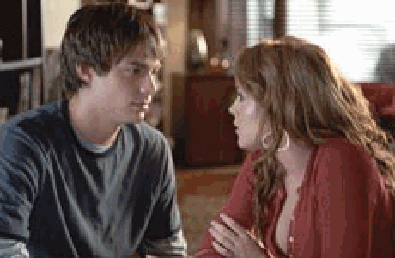
In selecting the Top 20 Casting Directors for the Films of 2004, Ross Reports took into effect both popular and critically-acclaimed films. We considered casts, genres, and challenges that each film presented. Although we made mention of select past films, the following casting directors were honored for films released in 2004. The list includes both individuals and teams, vets and newcomers, film casting directors of dramas, comedies, thrillers, adventures, studio releases, independents and everything else in between. Wherever possible, we have included some of their thoughts on the casting profession, experience with the films they've worked on, and advice on what they look for when auditioning actors they never met.
PHYLLIS HUFFMAN (NEW YORK)
2004 Critical Pick
Million Dollar Baby
Select Past Films
Mystic River, Unforgiven
Upcoming Films
Flags of Our Fathers, Lonely Hearts
How did you get started in casting or become a casting director?
When I was 26 or 27, I began working at [talent agent] Susan Smith's office answering telephones. I did that for about five years, and another job opened up as an assistant in the commercial department, and eventually, I moved into the theatrical department. In 1975, we moved out to California, because my husband was always working out there. I had two children, and worked on and off in a casting office answering telephones again. At this point, I didn't want to work full-time because my children were so little. Then a friend of mine from New York, Juliet Taylor, called me and said Marion Dougherty needed an assistant over at Paramount Studios. I went over there and worked with her, and she was later hired at Warner Bros. to head up their feature film department. She asked me to come with her, which I did, and worked on her staff.
It was there that I met Clint Eastwood. He had a deal at Warner Bros. at the time, and I became an assistant when he was doing Every Which Way You Can. Of course, as any assistant, I worked harder than anybody. I started a working relationship with him, which has lasted to this day -- 25 years. After two years of doing features at Warners, Alan Shayne, who was the president of Warner Bros. Television at the time, needed someone to head up the television talent department, so he asked me.
Television and film casting were totally separate departments. It was a fantastic job -- an enormous step in my career. One thing I notice today is young people are in such a hurry career wise that they feel if they're not on the really fast track at 25, it's over. Nothing can be farther from the truth. Before I worked in an agent's office, I was an international flight attendant, and a reporter for a small town newspaper.
I did a million things, and I think it's important. There was no job too low in entry level. I always tell that to kids who are in their twenties who are like "Oooohhhh!!!!" I say, "Oh, just calm down! This adds to your life experience that you bring to this business. Do the jobs that show up in front of you. Whatever job anybody asks you to do, be first in line to say "yes!" It doesn't matter how lowly it is or how much it pays. If it's something that's interesting, you just do it.
What was the experience like casting Million Dollar Baby?
Since I've been working with Clint for 25 years, it's gotten to the point that the script just shows up and we get rolling. He [Clint] has a reputation of sticking with the people he's worked with for a long time. His editor, art director, producer -- we've all been there for years and years and years. That's just the way it is now. Believe me, I am so thrilled, and delighted, I can't even begin to tell you.
Were there any particular roles that were difficult to cast? I assume Hilary [Swank] was attached to the project?
She [Hilary] was recommended, but it wasn't finalized yet. Obviously, when Clint comes on the scene with a film, it's his, and can do whatever he wants to -- everybody knows that. Nobody imposes. There are other producers who may have been attached to that project, but everyone's so thrilled when they learn Clint's going to do it, that everybody gets out of the way. But Clint is very generous. He always includes the others. Hilary certainly was suggested by the other producers, but it was not an ultimatum.
We met with her and it was love at first sight. She was just so open to doing this movie and would have done anything. Clint asked me to meet her in New York first, and I was so taken with her. Then she went out to California to meet him, and his feeling was exactly the same. Morgan and Clint have been very good friends since Unforgiven, and that was the voice that Clint heard in his head for Morgan's character, Eddie "Scrap-Iron" Dupris.
I thought the part that was really hard to cast was Danger -- the 100 lb weakling played by Jay Baruchel? He did an extraordinary job. Also, the family of Hilary's character. We had to be really careful that they weren't caricatures, and didn't turn out to be just hillbillies. Margo Martindale is the consummate actress. Ricky [Lindhome], the girl who played Hilary's sister, is part of The Actors Gang, Tim Robbins' company in LA. They came to New York last spring with a play called Embedded. Ricky was new, and my son, who's also part of The Actor's Gang, told me about her. I thought she was remarkable for such a young girl. She came in and Clint loved her instantly. He loved her face, and everything about her.
What do you find enjoyable and most challenging about casting?
I really like interacting with people, and we see hundreds. That's the part I like most -- we are sort of arm-chair psychologists in our job. When somebody comes in, you really have to get a sense about them, and that's so much a part of who the actor is. I recently read an article in Vanity Fair where some very well-known actor was cast for his essence, and not what he appeared to be at first. I think the actor was Paul Newman, and they were referring to Butch Cassidy and the Sundance Kid. I can't remember who that was, but when I was reading that, I thought, "Oh, there's so much to that -- not just what an actor/person appears to be, but you get a sense of their essence and their core. To me, that makes really good casting.
How do you select the projects you work on?
If I can get past page ten, that means I'm really enjoying the story. There are a lot of scripts that I can't get past page ten, and I often say, "why am I still reading this?" On the other hand, there are things that I just won't do. For example, anything that is really coarse.
Do you feel the industry undervalues, the importance of casting directors as part of the creative process?
When you're in the process of casting, and working so closely [sometimes months or weeks] with your director, and producer, it's a very intense process. I [personally] feel valued, and so much a part of it, and that the producers and directors, are so dependent on me, and so interested in my opinions. I think what happens is, when the movie starts filming, it's almost like everybody goes to the prom except us. The film is in place, we feel very territorial, protective, and very proud of our contribution, but when the movie starts rolling it's all over for us, and it's just beginning for them. It's a long process from the start of filming until they're finished editing it.
In many cases, it takes much longer before it even gets out to the public. For our part we are so removed from it by that time -- the cast has bonded with the director, and the producer, they [the cast and crew] have lived together, and we're not a part of that any longer. During the process I think we're extremely valued, but I think the recognition is changing too. We're a fairly new part of this business -- maybe the past thirty, forty years, and I see things changing enormously. We are getting credit in the main title, things like that.
What do you look for when watching a film that was cast by another casting director?
Usually I'm just involved in watching the movie. But I have one thing that distracts me a little bit, and makes me really careful when I'm doing my casting. It's an occasion when I see two actors who sort of resemble each other physically. I find it annoying, because I say, "wait, who was that?" So I'm very careful about that, unless, of course, when I'm casting, they are supposed to look alike. But I don't think I spend a lot of time dissecting the casting on a film I'm watching. I would say 99% of what is cast is done very well. Once in a while you'll see something that's drastically miscast. But you'll notice it right away because it stands out.
How do you find new talent?
I'm thrilled to be living in New York. Many, many young people still come here before they go to LA. I have a fantastic assistant, Geoff Miclat, who prowls through the Off-Off-Broadway scene, and tells me when I should go and see someone. I did it for many years, but I trust Geoff to do that now. I also rely heavily on the agents, who are absolutely great. They will call you instantly when somebody new comes to them. They're usually there in the front with the new kids. We also go to all of the showcases from the schools, because I don't think it's changed much from when Marion Dougherty was casting. It's just a matter of having your ear to the ground.
What advice would you give to actors wanting to audition for you?
Be prepared if you're coming in to read for me, as opposed to just a general audition. If I'm not working on a film, I will talk to them and see who they are. When I say, "prepared," I don't mean memorizing, because I feel a lot of actors make that mistake of trying to memorize the scene that I've given them. Unless you've had the scene for a long time, it's really hard. It's especially true for young actors. It's hard to have it memorized, and not get thrown by your nerves. I always say, "be prepared with the scene, but hang onto it in your hand." It makes me more comfortable if I know they're holding onto it. This way I don't have to worry that they're going to forget a line or get lost. It's essential [being prepared], because if I really like their performance, and feel they're right for the part, I will ask them to do it in a different way. The ones that are prepared can do that.
What upcoming projects are you working on?
I'm working on a movie called Lonely Hearts, with John Travolta and James Gandolfini, and written and directed by Todd Robinson. It's a true story about serial killers in the 1950's. The script is terrific, and I love it when I have movies like this, because everybody in the world wants to come in on it. The take on the script, in addition to the events of the serial killings, was the effect this kind of life has on a detective. In addition, I don't think it's any secret at this time that Clint is starting another movie called Flags of Our Fathers -- produced by Stephen Spielberg, so we'll probably start casting the film in the spring. I'm also working on a documentary film on Hemingway, which I love. I've worked with this producer before. His name is DeWitt Sage. He's known for another documentary he did on F. Scott Fitzgerald, which won the Peabody Award. It's a totally different genre for me, and done very much in the way Ken Burns does his -- with pictures. So we're doing voice-overs for all the characters. -- B.B.M.
NANCY KLOPPER (LOS ANGELES)
2004 Critical Pick
Ray
Select Past Films
Cheaper By The Dozen; Office Space; An Officer and a Gentleman
Upcoming Films
Fantastic Four, The Perfect Man
How did you get started in casting?
My first job was with Lynn Stalmaster when I was about 19 years old. It was a one-day temp job answering phones for him that turned into six years. That office was a real spawning ground for a lot of casting directors. It was a really busy place -- we did tons of features and series and pilots and movies-of-the-week, and we had a lot going at once. So it was a great growing experience. I had cast a lot of films while I was there, and by the time I left, I was casting on my own. The first thing I did after I left was Eddie and the Cruisers, and the next was Risky Business. So that kind of started things off with a bang.
But it was while I was working for Lynn that I worked on An Officer and a Gentleman. That's how I met Taylor Hackford, and I went on to cast all of his films from then on, through to Ray.
What are the most enjoyable, and the most challenging, aspects of casting?
Most satisfying and enjoyable is when you discover new talent, and they emerge. That's really fun! And it's also really enjoyable when you're working with a director who loves casting and loves the whole experience. It's so rewarding when you find the right people, when your work comes to fruition and you see it in a way that's just how you hoped it might be.
The most difficult‌well, there's always those instances where there's something that seems really hard to find or there's a filmmaker who's really hard to please. There are always challenging experiences. Every film has something within it that makes it difficult -- a role that's hard to cast, etc.
What was most challenging with Ray?
The little boy was challenging, and we wound up finding him down South. I felt like it wasn't going to be a California kid; I just felt we probably weren't going to find him in L.A., and we didn't. He came from Tennessee. It seemed like the role was going to need an authentic child, rather than a Hollywood kid. He's since moved to Los Angeles where he has quite an acting career going. He's a great little kid.
Was Jamie Foxx already attached to Ray when you came on board?
No. We started with a clean slate. Taylor Hackford was living in England then, and I got an email from him saying that he was thinking about making this film about Ray Charles' life, and that I should start thinking about who might play him. And of course I said, "Well, what about Denzel?" And he had just done something that made Taylor say, "I don't think he'll do another biopic right now." It must have been the movie about the boxer who went to prison, The Hurricane, so we didn't even go there.
And I said, "The next guy who's going to emerge is Jamie Foxx." I had seen him in Any Given Sunday and I thought he was great, and Ali hadn't been released yet, but there was already terrific word of mouth about him in it. So Taylor started to talk to the producers about Jamie. Then, subsequently, Taylor left the film for a little while because Phil Anschutz, the founder of Crusader Entertainment (the film's sole financier), insisted that the film have a PG rating -- or at least a PG-13 rating.
And Taylor didn't think he could tell the story of drugs and all the infidelity and 17 years of heroin addiction without an R-rating, so he left the film. And during that time, the filmmakers got together with Jamie and brought him into the project. Shortly after that, Taylor came back to the project and decided he could do it. (Editor's Note: the film was released with a PG-13 rating.)
Because this was a biopic, and so somewhat of a different animal, were you looking for actors who fit those roles specifically, or did you have any lee way in adjusting the characters based on the strengths of the actors you auditioned?
Well, you always want to go for the best actor, but you're right, we were dealing with real people, and some of them were still alive, so you want to be respectful. When it came to Ray's wife, Della Bea, we went with Kerry Washington who wasn't physically like her at all. Della Bea, who is still alive, is a very tall, big woman, while Kerry is very petite and didn't really resemble her. But we did a screen test and she just popped. She's a great beauty, and you just can't take your eyes off her. So yes, we were trying to go for some authenticity, but you really do have to go for the best actor and you have to remind yourself that you're not making a documentary. It's filmed entertainment, and so you want to cast the people you think would be the most engaging for the audience to watch.
Now Margie, the character Regina King played, died of an overdose, so I looked at a lot of pictures of her, and footage of her, and I listened to stories about her and what she was like. I've always been an admirer of Regina King's work. I remember the day she came in. Before she entered the room, I said to Taylor, "This next actress will get the role." Some things you know just instinctively. She read for us, was great, and came back to read with Jamie. We had all the final candidates for each role come back to read with him so we could be certain the chemistry was right. Don't forget, by now I'd cast so many films for Taylor that we talk shorthand. I can anticipate his likes and dislikes with great ease. We both love the process of casting.
Quincy Jones is very much alive and was a very integral person in Ray Charles' life, much more so than the film reflects. In fact, they did meet when they were 14 and 16, and continued to be very close friends up until the time that Ray died. I don't really think that Larenz Tate is very much like Quincy, or even resembles him -- I just think he was the best actor we saw for the role. And Quincy was very generous and spent some time with him, and with Jamie, too. He was very gracious and generous about all of his experiences.
You mentioned that you now cast all of Taylor Hackford's films‌
Yes, I have ever since An Officer and a Gentleman. I did Against All Odds, White Nights, Everybody's All American, Dolores Claiborne, Devil's Advocate, Proof of Life, and now Ray.
So how do you and Taylor work together?
I read the script and we sit down and we talk. I listen to what he's thinking about, and the direction that he's headed, then I come up with ideas of my own and we sit down and hash them out. I make lists of the stars and he lets me know who he's interested in, and we check their availability and take it from there. Then we meet with all the actors. Usually they read, and sometimes we screen test them -- Taylor's a big advocate of screen tests. He likes seeing actors up there on the big screen; it helps him to know if they're going to work or not.
How do you select your other projects? What's your process?
I start by reading the material, and either I connect to it or I don't. So sometimes I feel like I get it, I respond to it, and I think I can bring something to the party, and then other times I think I'm not the best person for the project. If I don't connect to the material in some way, then I don't think I can serve it well. So I look for something that holds some interest for me.
How do you go about finding new talent, like the little boy in Ray?
On Ray we had a fantastic location casting director named Mark Fincannon. He was very helpful, and he was traveling a lot in the South when I had to be in Los Angeles. He's the one who found our little C.J. Sanders (who played young Ray Robinson). But really, the way to do it is by meeting lots and lots of new actors all the time, and having a real open door policy. You meet them through the agencies, you see them in plays, you see every single movie, etc. You're constantly meeting new people and trying new talent so that the films stay fresh.
What advice would you give to actors who want to audition for you?
Just be yourself. Really try to keep the readings and interpretations and performances as close to yourself as possible. Try not to be nervous; just be natural. Bring as much of yourself to the reading as possible.
What projects do you have coming up next?
I did a film for 20th Century Fox called The Fantastic Four. It's a Marvel comic strip movie like Superman, Spiderman, one of those. So that's just finished shooting and I think it's out on the 4th of July. And then I'm looking for my next something!
It's very hard when you do something that's as well-received as Ray; you really want to follow it up with something special. When you have a great experience, you want to have another great experience. So I'm looking for something that will get me excited, that will make me feel like something good will come out of it: a good relationship, an interesting director, a good piece of material, etc. So that's all I need, really, is to feel excited about something. -- T.R.
MARCI LIROFF (LOS ANGELES)
2004 Critical Pick
Mean Girls
Select Past Films
Gothika, Freaky Friday
Upcoming Films
Just Like Heaven
When films you've cast are nominated for, or win, any prestigious awards (i.e., the Golden Globe, AFI, Oscar), how does that affect future casting jobs?
Sometimes it helps attract attention to your work, and sometimes there's hardly a blip on the radar. It all depends on what the upcoming projects are in development, and whether something has "your name" on it. Casting is a highly competitive business and there are suddenly lots of casting directors in the field, all of them vying for the same jobs.
What is your general casting process for feature films?
I usually read the script a few times and let it digest in my psyche. I then break it down, role by role and go over my thoughts with the director. He/she and I talk about our thoughts and ideas and general direction for each part. Strangely enough, my best ideas come to me as I'm falling asleep, so I keep a pad by the bed! I make up my own lists of ideas, along with going over the submissions from agents and managers. Then either we go down a list (if we're just going to make offers), or we start having auditions. If we have auditions, we usually bring people back a second or third time before we have a test. Sometimes we need to mix and match people up with each other to see the chemistry between them. Then we send our final picks to the studio executives to get their input and try to come to a decision as a group. Once we've chosen an actor, I then try to negotiate the deal with their agent/manager/lawyer. That's when the real fun begins!
How much of a role does the studio play in casting, in general, and specifically, with
Mean Girls?
The studio plays a large role in casting because that's who is financing the production. How influential they are typically depends on whether you're working with a first-time director, or a seasoned director who tends to have more "clout". With Mean Girls, the director had just done Freaky Friday to great success, and the studio trusted him in his decisions. We had one particular role where the studio disagreed with him on his choice, and made us look a little further. In the end, we found just the right person for the role and I'm glad that I went back and searched a little deeper.
When you began casting for Mean Girls, were you looking for actors who fit the specifications of the script, or were you open to different interpretations? Did your perception of the roles change based on the energy and quality of the actors you
auditioned?
Usually, when a character is described in a certain way in a screenplay, I take that as a loose blueprint and then go off and hopefully enhance that with my own ideas. Because Mean Girls was such a succinct and well-written script, and the characters were very rich and well-drawn, I used it as a bible and looked for the characters exactly as written. The only thing that I can remember that was different was a kid who was written as Vietnamese, and we found a kid of Indian descent.
Did anyone come pre-attached to Mean Girls? How does a pre-attached actor(s) affect the rest of the casting process?
No one came pre-attached, although we were thinking of Lindsay Lohan from the beginning. We actually were going to have her play the Regina part and find a newcomer for the Cady role. After reading a few girls for Cady, we felt we should switch Lindsay over to Cady, and try to cast Regina.
A pre-attached actor(s) affects the casting process in many ways. If it's a hot actor, it helps bring other interesting actors to the table. It also sets the tone as to what kind of movie you're making and what other types of actors I need to surround him/her with. It can also negatively affect casting because most high-priced actors take a very high salary, which significantly cuts the casting budget. Sometimes the high-priced actor will get his fee, and then everyone else will be budgeted at scale + 10%.
Who were the most difficult characters to cast in Mean Girls, and why?
For me, the most difficult characters were the two outcast kids: Damian, her gay best friend, and Janis Ian. We had a hard time finding just the right mix of physicality, comedy timing, and world-weary qualities they both had to have. Also, the part of Gretchen Weiners proved to be hard for some reason. I needed to find a young girl with really good comedy timing, and a certain desperation about her to fit in with these mean girls. Lacey Chabert just got the sensibility the moment she came in to read for me. I gave her a little direction, taped her audition, and just knew she'd be perfect. I called the director in Toronto and told him I'd found her and that he would love her. He watched the video and was very excited to have her come back to test with the other finalist girls. We really needed to see everybody together to see if they all "fit" with each other.
Was there any local casting for these films? If so, how did you work with the local CD?
The whole movie shot in Toronto, so yes, there was a lot of local casting. There were roughly 80 speaking parts in the movie. I cast the leads and we cast everyone else from Toronto. Robin Cook was the Toronto casting director and she did an incredible job. She did extensive searches for some of the minority characters, the role of the little person, the girl in the wheelchair, and all the other smaller speaking parts. It was a lot of work, and she did a great job. We have since worked on another movie and may be starting another one together.
What were your favorite memories from working on Mean Girls?
Working with Mark Waters has been a dream. He is so knowledgeable about actors, even lesser-known actors who you can't imagine he'd know. He's very respectful of actors, really loves the casting process, and is very articulate in his direction. We have a lot of fun through this grueling process. Believe it or not, this is not the norm. Many directors I work with are uncomfortable with this process; they don't know what to say to the actors when they come in, and generally don't do a lot of research in terms of who's who.
What's coming up next for you?
I recently finished Just Like Heaven with Reese Witherspoon and Mark Ruffalo directed by.....yes......Mark Waters! -- T.R.
FRANCINE MAISLER (LOS ANGELES)
2004 Critical Picks
Meet the Fockers, Collateral
Select Past Films
Spider-Man, Bewitched
Upcoming Films
Miami Vice, Babel
Some casting directors find they are best suited to either comedies or dramas, but Francine Maisler has proven over and over again that she is equally adept in both worlds. Case in point: her inclusion in this year's Top 20 Film Casting Directors issue for her versatility in casting both the hilarious Robert DeNiro/Ben Stiller comedy, Meet the Fockers, and the thrilling Tom Cruise/Jamie Foxx hostage drama, Collateral.
Though now based in Los Angeles, casting director Maisler first got into the biz in New York by working at Actors' Equity Association. From there she landed a job at a talent agency, then a gig with casting director Mary Colquhoun. Then it was on to NBC casting, followed by work with CD Lynn Kressel before finally striking out on her own.
Along the way, Maisler has cast both film and television and racked up some pretty impressive credits. For the small screen, she did the original casting for The Larry Sanders Shows (1993 Artios Award for Best Casting for TV, Pilot, shared with Meg Lieberman and Marc Hirschfeld) and The John Larroquette Show (1994 Artios nomination for Best Casting for TV, Pilot). She also received Artios nominations for a trio of TV miniseries -- Trial: The Price of Passion (1992), Cruel Doubt (1992), and Buffalo Girls (1995) -- and won for Cruel Doubt.
Her Artios Award-winning feature film work in the drama category includes The Usual Suspects (1995), The People vs. Larry Flynt (1996), and Finding Forrester (2000, shared with Bernard Telsey); she was also nominated for Out of Sight (1998) and 21 Grams (2003). In comedy, she has been nominated for As Good As It Gets (1997), Man on the Moon (1999), A Knight's Tale (2001), and Spider-Man (2002, shared with Lynn Kressel).
In addition to casting, Maisler has also waded into producing waters. She served as a co-producer on last year's quirky Adam Sandler comedy, Spanglish.
Maisler first appeared in the 2000 Ross Reports Top 20 Film Casting Directors issue for her outstanding work on the critically acclaimed Andy Kaufman bio-pic, Man on the Moon. In that interview, she explained that, "I love reading scripts, getting to know the characters, and working with such talented people in making it all fit together."
Upcoming films Maisler has helped to "fit together" include Bewitched, directed by Nora Ephron and starring Nicole Kidman, Will Ferrell, Michael Caine, and Shirley MacLaine, The New World, written and directed by Terrence Malick and starring Christian Bale and Colin Farrell, and Memoirs of a Geisha, directed by Rob Marshall and starring Zhang Ziyi, Ken Watanabe, Koji Yakusho, Michelle Yeoh, and Gong Li. All three films are scheduled for release this year. Stranger Than Fiction, directed by Marc Forster and starring Will Ferrell, Dustin Hoffman, Emma Thompson, Kristin Chenoweth, Maggie Gyllenhaal, and Queen Latifah, is scheduled for release in 2006. Maisler is currently at work casting Babel, directed by Alejandro Gonzalez-Inarritu, and Miami Vice, directed by Michael Mann and starring Jamie Foxx and Colin Farrell. -- T.R.
Editor's Note: Francine Maisler was not available for an interview. Information for this story was gathered from Ross Reports and imdb.com.
JEANNE McCARTHY, JUEL BESTROP (LOS ANGELES)
2004 Critical Pick
Starsky & Hutch, (Cast by both)
Eternal Sunshine of the Spotless Mind (Cast by Jeanne McCarthy)
Select Past Films
Austin Powers: The Spy Who Shagged Me, Sweet Home Alabama
Upcoming Films
The Shaggy Dog; Kicking & Screaming
In looking through the individual and combined resumes of Los Angeles-based casting directors Juel Bestrop and Jeanne McCarthy, certain names seem to repeat themselves and a pattern begins to emerge. Ben Stiller, Anthony Bregman, Charlie Kaufman, Ted Hope, Michael Gondry...these names not only go back years in the womens' credits, but they also appear in connection with the two films the pair are being recognized for in this year's Top 20 Film Casting Director's issue.
Juel Bestrop initially worked with Ben Stiller when she cast his first big budget directing feature, The Cable Guy (1996). Later, she and McCarthy cast two other directing projects of his: a never-aired 1999 television pilot called Heat Vision and Jack, and the 2001 goofball comedy, Zoolander, which Stiller also co-wrote and starred in. The women reunited with Stiller again on two more films from 2004: the zany Dodgeball: A True Underdog Story, and the big screen adaptation of the small screen '70's buddy-cop show, Starsky and Hutch.
Jeanne McCarthy cast the 2001 comedy Human Nature, which was directed by Michael Gondry, and was produced by Anthony Bregman, Ted Hope, and Charlie Kaufman, who also wrote the screenplay. She joined Gondry, Bregman and Kaufman again to cast last year's multi-award winning romantic fantasy, Eternal Sunshine of the Spotless Mind. Along with Megann Ratzow, she also cast the upcoming comedy Thumbsucker, produced by Bregman and executive produced by Hope, which is scheduled for release later this year. And she teamed up with Bregman and Hope yet again for the romantic drama Friends with Money, scheduled for a 2006 release.
Bestrop and McCarthy shared a 2003 Emmy nomination with Candice Elzinga and Bette Chadwick for Outstanding Casting for a Miniseries, Movie or a Special for the critically-acclaimed 2002 television movie, Door to Door, starring William H. Macy as a man with cerebral palsy who is determined to become a salesman. Bestrop also won a 1999 Emmy for Outstanding Casting for a Miniseries or a Made for Television Movie for her work on the HBO biopic Winchell, for which she also received an Artios nomination. Other Artios nominations include: Best Casting for Feature Film, Drama for Primary Colors (1998, shared with Juliet Taylor and Ellen Lewis); Best Casting for TV Movie of the Week for The Heidi Chronicles (1995); and Best Casting for TV, Dramatic Episodic for Birdland (1994, shared with Risa Bramon Garcia). -- T.R.