 A few years ago, I was casting a film and a teenage girl came in to read for the lead character. I knew she was somewhat green because she didn’t have many credits and had minimal training, but she had an intriguing look. Since I had spent quite a lot of time with the director in the weeks prior, I knew what we were looking for based on his feedback and the feedback of the producers who’d watched all the auditions thus far.
She and I worked on the scenes in a very thorough way. When I work with an actor in a preread or coaching, not only do we break down the character and go through the script for clues, we also talk specifically about what to do in the audition room to help the filmmakers see him or her as the role. We talk about questions to ask, what to wear, and, for the women, hair, makeup, and clothing choices. This role was a very physical one, and we had chosen a physical training scene to see how the actor could move by showing us simple sparring moves while reading the dialogue.
When we rehearsed the scene in the initial audition, I could tell that she was coming from the wrong place emotionally—at least for what we were looking for. I redirected her and shaped the performance and her objectives so that it would be more in line with what the filmmakers were looking for. She had worked out an elaborate routine to show off her kickboxing skills, but I told her we simply wanted to see her spar—if she got the part, we’d train her for the fight scenes.
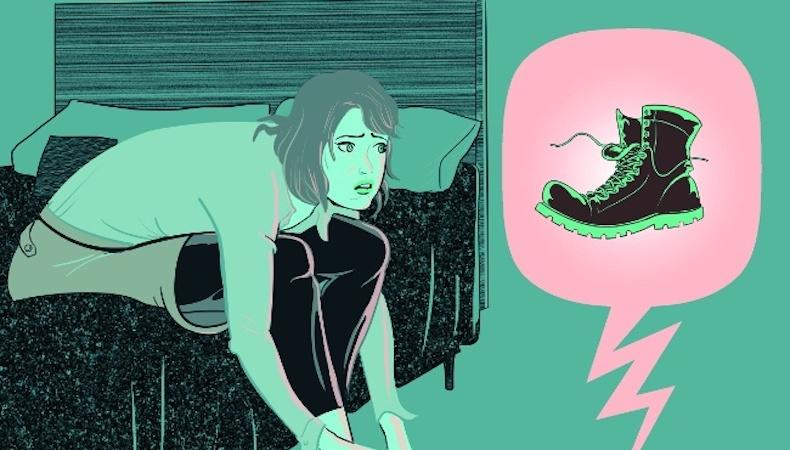
The day of the audition she came in looking like a teen version of a Bond girl. Hair coiffed and curled, makeup just so, and high-heeled boots (we specifically said no high heels). She wanted the role so badly that she had worked herself up into a nervous frenzy, going through the scenes and doing exactly what I’d told her not to do. Her objectives and choices were the exact opposite of what we’d worked on.
When we got to the sparring scene, the director and I instructed her to show us some simple sparring moves, no elaborate physicality. Instead, she went into the kickboxing routine. The scene was about the dialogue and the relationship between the two characters, not about a choreographed routine. The director was less than pleased and I was disappointed that she didn’t follow my directions from our earlier session.
She begged to come back, pleading that she was this character and knew it in her bones. Because I love that sort of passion from an actor, I said I’d read her again—without the director this time. I worked with her again and told her exactly what to wear: leather jacket, flat boots, jeans, and a sleeveless top to show her arms. I was so excited to see what she would do now that she had another chance. She came back wearing a loose, long-sleeved blouse, thigh-high boots with heels, and very long false eyelashes. Not the look of this character at all. Not what I had explicitly requested based on the director’s wishes. Again, her reading was off.
When we talked it over a week later she told me that she had also been going to her acting coach, who was giving her info that directly contradicted what we were looking for and basically undid all the work that she and I had done together.
I’m not saying you shouldn’t go to your acting coach for your auditions; after all, I’m an acting coach, too. But when you get specific notes and direction from a casting director at your initial audition, make sure to integrate that into your coaching sessions and alert your coach if he’s sending you in the wrong direction. Otherwise, you’re wasting everyone’s time.
Like this advice? Check out more of Marci Liroff's articles!
Known for her work in film and television, producer and casting director Marci Liroff has worked with some of the most successful directors in the world such as Steven Spielberg, Ridley Scott, Mark Waters, Christopher Nolan, Brad Bird, and Herbert Ross. While working at Fenton-Feinberg Casting, she, along with Mike Fenton, cast such films as “A Christmas Story," “Poltergeist," “E.T. – The Extra Terrestrial," “Indiana Jones and the Temple of Doom," and “Blade Runner." After establishing her own casting company in 1983, Liroff cast “Footloose," “St. Elmo's Fire," “Pretty in Pink," “The Iron Giant," “The Spitfire Grill," “Untamed Heart," “Freaky Friday," “Mean Girls," “Ghosts of Girlfriends Past," “Mr. Popper’s Penguins,” “Vampire Academy,” and the upcoming “The Sublime and Beautiful,” which she produced as well.
Liroff is also an acting coach, and her three-night Audition Bootcamp has empowered actors to view the audition process in a new light. The class spawned an online course available at Udemy entitled "How To Audition For Film and Television: Audition Bootcamp".
Visit Liroff online at marciliroff.com, follow her on Twitter @marciliroff and Facebook, and watch her advice videos on YouTube. You can also read her blog.