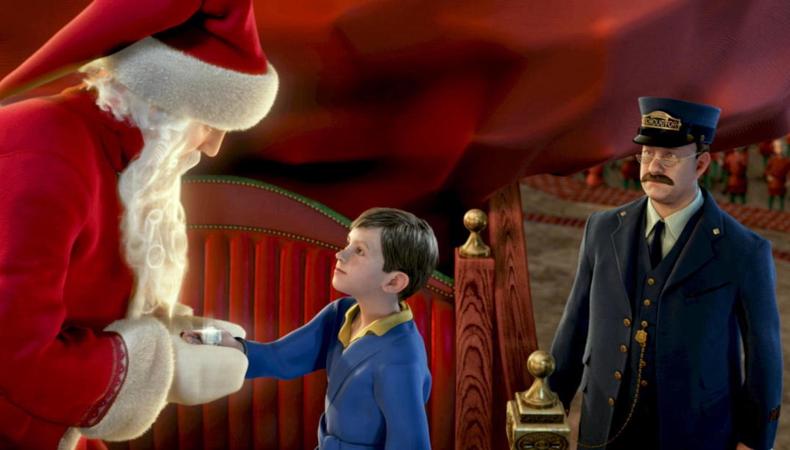
When Tom Hanks boarded “The Polar Express” (2004), audiences were promised holiday magic; a fair number got the creeps instead. Welcome to the uncanny valley—which, to the uninformed, might sound like the name of a horrible vacation spot. We promise it isn’t, though you’d be right to assume it isn’t the kind of place you’d want to go by accident. Here’s everything you need to know about the uncanny valley and how artists can use this unsettling phenomenon to their advantage.
The uncanny valley is the name given to the feeling people get when they look at things that seem almost human…but aren’t. While it can sometimes be hard to pinpoint exactly what is wrong with something that belongs in the uncanny valley, many people find that looking at one makes them feel uncomfortable or creeped out. So why does the uncanny valley happen? It’s hard to know exactly, but a common theory is that it plays into the survival instinct to fear sick or dead people.
What kind of things can evoke the uncanny valley?
Apart from very talented human actors working hard to make themselves seem just a little bit off (more on that later), there are several things that commonly trigger the uncanny valley for people, including:
- AI images and video: If you’re trying to experience the uncanny valley, look no further than AI-generated images. Though AI gets better every day at rendering people, many of us can spot a synthetic picture pretty quickly, even when nothing is obviously wrong with it. And although the uncanny valley usually refers to a visual phenomenon, it doesn’t have to: Plenty of people find the way that AI chatbots speak to be uncanny valley–inducing.
- Animation and CGI: Though rarely the intent of animated films, animating humans can hit a little too close to home visually, resulting in something audiences find off-putting. The most infamous example is “The Polar Express,” which promised holiday magic, cutting-edge motion capture, and the chance to watch Hanks play not one but several different roles. What viewers got was something many found unsettling. A New York Times review said the film was “filled with creepily unlifelike beings.”
- Human-like robots: Whether it’s a hospital training dummy screaming in pain or a lifelike android who says she wants to destroy humans a little too casually for comfort, many people report experiencing the uncanny valley when looking at robots designed to look like us.
1. “Pluribus” (2025—present)
If you want to see dozens of actors summon the uncanny valley simultaneously, this is the show for you. In Apple TV’s “Pluribus,” Carol Sturka (Rhea Seehorn) finds herself one of the few people left on Earth who is still an individual: Everyone else has been infected with an alien virus that folds them into a peaceful, personality-devoid hive mind. Everything about that hive mind induces the uncanny valley. Its members are (overly) friendly, don’t react at all to Carol’s growing frustration, and are stripped of individual wants, needs, or emotions. In the scene linked above, when Carol asks them to reinstate her beloved Sprouts grocery store, the writing, direction, and performances converge into something truly unnerving as otherwise ordinary people efficiently and systematically put the store back together—all without exchanging a word or breaking a sweat. Here, it isn’t any physical feature that evokes the uncanny valley but a behavior. It turns out that seeing humans without any of the emotions that define humanity can be pretty unnerving.
2. “Severance” (2022—present)
“Severance” has toyed with the uncanny valley several times across its two seasons, which isn’t particularly surprising: It only seems right that a show about the emotional and moral implications of splitting yourself into two personalities would also be interested in accentuating the unnaturalness of that premise. The series has staged several obvious uses of the device: the creepy Kier Eagan animatronic that hosts Mark’s (Adam Scott) celebration, the mysterious, unmoving body doubles in the ORTBO, and the watermelon carved into the shape of Irving’s head. Even the show’s opening credits might trigger the sensation for some, with an animated version of Mark lurching unnaturally across the screen.
3. “Obsession” (2026)
If you’re trying to experience the uncanny valley on film, look no further than the genre where it fits most easily: horror. In Curry Barker’s “Obsession,” audiences were captivated by an unforgettably creepy scene in which Nikki (Inde Navarrette) lurks in the corner of Bear’s (Michael Johnston) bedroom. The moment is undoubtedly unsettling, but eagle-eyed viewers may have noticed that Nikki’s face looked subtly, wrongly rearranged, which took the creep factor to the next level. While it would be easy to assume the effect was created in post-production, it was actually achieved with carefully designed makeup. Freaky Nikki, indeed.
1. Learn how to spot it.
The uncanny valley can be a powerful tool if you’re trying to create a specific (usually unsettling) feeling in your art. But it exists whether or not you mean to evoke it. Because the effect is so off-putting to viewers when it turns up uninvited, anyone making art should be able to recognize when something has slipped into it so they can remedy what doesn’t belong.
2. Understand humanity.
Remember that the uncanny valley appears when things are vaguely un-human. So before you can decide how to make something not human, you have to identify what’s quintessentially human: ways of displaying emotion, ways of moving, reflexes like blinking and flinching. Once you have a firmer grasp of what normal is, you can better decide what it isn’t.
3. Keep your changes subtle.
While it’s usually good for actors to make bold choices, that’s not the case if you’re chasing an uncanny valley–worthy performance. Subtlety is the name of the game here—go too weird and you may find yourself out of the valley entirely and into something far more overt. Part of what makes the effect land is that it’s almost imperceptibly off. Robotics professor Masahiro Mori, who coined the term “uncanny valley,” found that the dip is steepest right before something reads as fully human. If you’re an actor trying to evoke it, focus on small, specific choices rather than big, broad ones.
4. A creepy effect doesn’t require creepy choices.
Just because the goal of using the uncanny valley is usually to unnerve doesn’t mean the choices you make have to be creepy in a vacuum—see the aforementioned hive mind in “Pluribus.” They just have to be effective in the context of the overall piece.