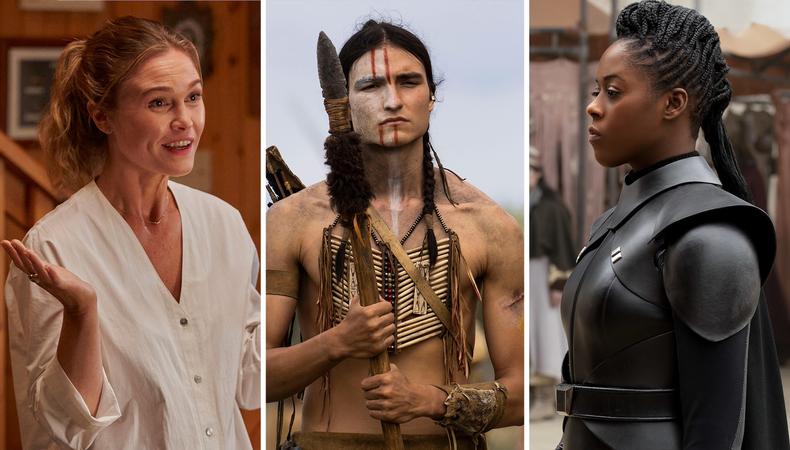
The story of awards season is often about the frontrunners. But we can’t let the year come to a close without spotlighting a few of our favorite under-the-radar performances that moved, wowed, and exhilarated us—even if they don’t end up getting the accolades to match.
From an alien-hunting Comanche warrior to a lovesick vampire, here are 11 film and TV performances that deserve more love.
JUMP TO
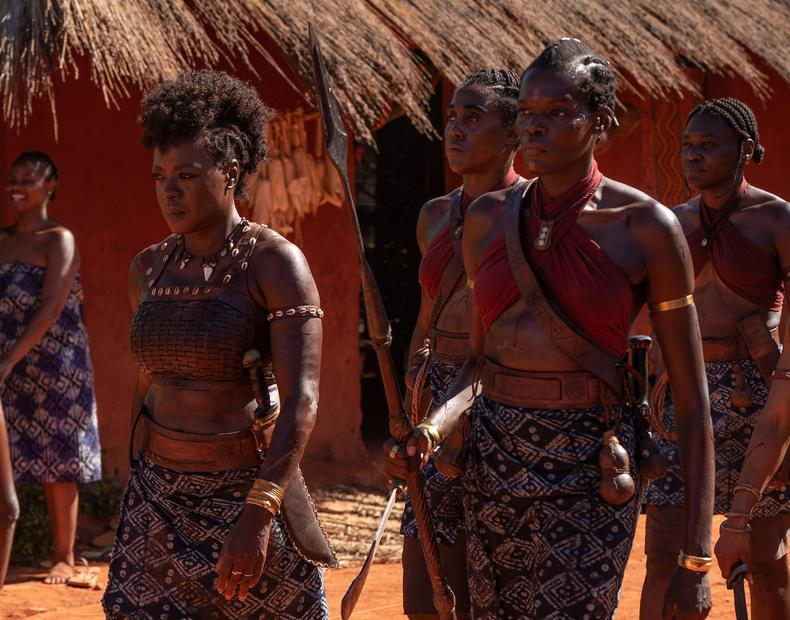 “The Woman King” Credit: Ilze Kitshoff
Sheila Atim, “The Woman King”
The women warriors of Gina Prince-Bythewood’s historical epic embody the weapons they wield. Viola Davis’ General Nanisca carries a machete that’s as solid and imposing as she is. Lashana Lynch’s wily Izogie is deadly with both knives and sharpened fingernails. And then there’s Atim as Amenza, who’s as graceful and sturdy as the long spear she carries into battle. As Nanisca’s trusted second in command, Amenza is both a sounding board and a source of emotional support for the general. It’s hard work to be the most subtle character in an ensemble this large; but Atim is up to the challenge, using her Olivier Award–winning talents to craft a moving performance that’s as hard-edged as it is warm. —Vinnie Mancuso
Dakota Beavers, “Prey”
An actor in their first ever role shouldn’t be able to command the camera the way Beavers does in Dan Trachtenberg’s creature feature. But the Indigenous performer has the kind of presence you can’t teach; it’s a weapon as sharp as anything the Predator (Dane DiLiegro) pulls out. Beavers glides into the supporting role of Taabe, a Comanche hunter who helps his younger sister, Naru (Amber Midthunder), go toe-to-toe with an extraterrestrial killer.
In a wonderful contrast to Arnold Schwarzenegger’s tank-like presence in the original “Predator,” Beavers moves with a dancer’s grace. It’s a quality that tells you more about Taabe than expository dialogue ever could. His performance calls to mind the work of history’s more delicate action stars: shades of Bruce Lee in the balletic way he hangs from a horse, echoes of Keanu Reeves in how still he holds himself on a hunt.
But Taabe is not an entirely physical role, and Beavers shines just as brightly in quieter moments. The bloody sci-fi action is the centerpiece, but the heart of the movie is the familial relationship between Taabe and Naru. To make that dynamic work, Beavers has to juggle two truths at once: the traditions of his tribe and a fierce love for a sister who rebels against them. The actor plays those competing loyalties with small sighs, with a hint of amusement underneath the frustration, all deeply relatable to anyone with a younger sibling.
It’s an electric, multi-layered performance that should ensure Beavers isn’t hunting for roles in the years to come.—VM
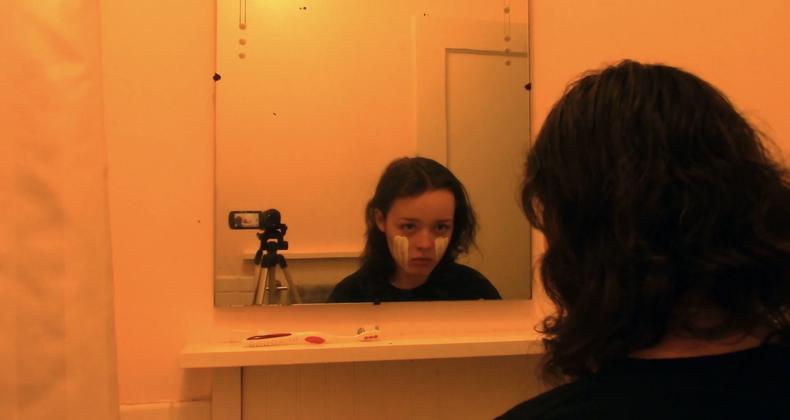 “We're All Going to the World's Fair” Courtesy Utopia
Anna Cobb, “We’re All Going to the World’s Fair”
In her screen debut, Cobb carries the entire weight of Jane Schoenbrun’s claustrophobic Creepypasta horror film. The young actor plays Casey, a teen who gets caught up in a mysterious viral phenomenon called the World’s Fair Challenge and loses her grip on reality in the process. We see the story almost entirely from Casey’s point of view, whether through her laptop webcam or via the vlogs she films in her snowy, middle-of-nowhere hometown. We’re never quite sure whether we’re watching a teenager falling prey to supernatural forces or hormones. Throughout, Cobb’s wide-eyed naiveté evokes the intense loneliness of the digital age. Thanks to her deeply-felt performance, the computer screen becomes an obstacle for the audience; you find yourself wishing you could reach through it and save her. —VM
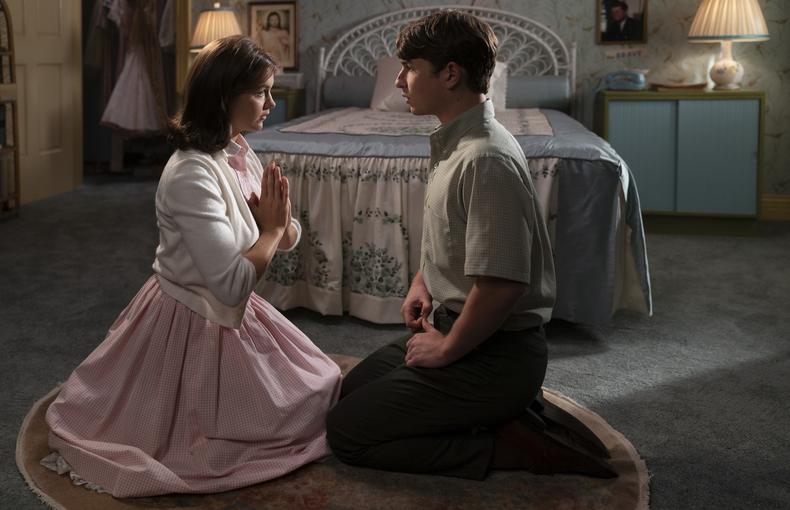 “The Fabelmans” Credit: Merie Weismiller Wallace/Universal Pictures and Amblin Entertainment
Chloe East, “The Fabelmans”
There’s no better vehicle for a breakout role than a Steven Spielberg film—particularly this semi-autobiographical epic that’s been decades in the making. East plays devout Catholic teen Monica Sherwood, the high school sweetheart of Spielberg avatar Sammy Fabelman (Gabriel LaBelle). Monica’s love for Jesus has all the hallmarks of a teenage crush, and East uses her character’s manic devotion to power her way through the film’s funniest scenes. But she never lets Monica become more joke than person, rounding out her performance with warmth and relatability. Like all the characters in “The Fabelmans,” Monica has the slightly fantastical tinge of a memory; what East does with the role is nothing short of movie magic. —VM
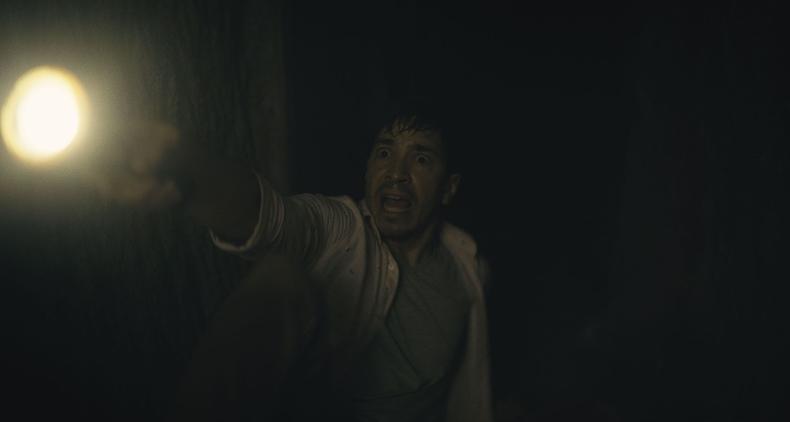 “Barbarian” Courtesy 20th Century Studios
Justin Long, “Barbarian”
Zach Cregger’s indie horror begins as a two-hander about a sinister Airbnb mix-up. But about one-third of the way through the film, the director cuts to Long as AJ Gilbride, driving a convertible down a sunny road and jamming out to Donovan. What’s going on? It doesn’t matter if you’re momentarily confused, because the actor quickly sucks you in with his spot-on interpretation of a toxic Hollywood power player. Over the course of his career, from rom-coms to Mac ads, Long has cultivated a “good guy” persona that he undermines here in delicious fashion.
Sitcom star AJ is the kind of person who thinks he’s a decent guy; but in reality, he’s cluelessly selfish in a way that can turn abusive at a moment's notice. When he falls into the trap “Barbarian” has laid for him, you root for the film to give him his just desserts; but you also hope he’ll stay alive simply because Long is so much fun to watch. —Esther Zuckerman
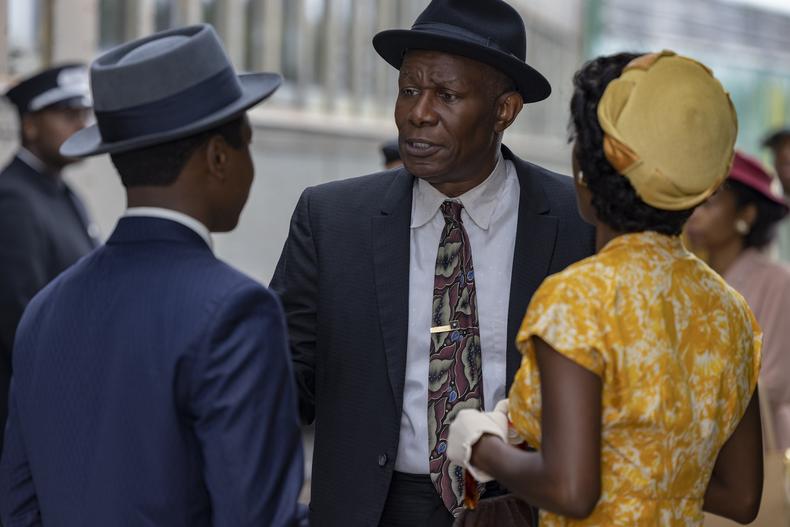 “Till” Credit: Lynsey Weatherspoon/Orion Pictures
John Douglas Thompson, “Till”
In Chinonye Chukwu’s biopic about mother and activist Mamie Till-Mobley, Thompson portrays a lesser-known figure in one of the best-known chapters of the civil rights movement. The actor plays Moses Wright, the uncle whom Emmett Till visited in the leadup to his murder. Thompson attempts to answer an impossible question with his performance in the film: How do you stand up for someone else when you yourself are oppressed?
“Till” exposes the chasm between what’s expected of Wright as a traditional patriarch and what he can actually deliver as a Black man in 1950s America. Thompson’s performance combines stoicism with a vulnerability as his character grapples with regret and anger—at his oppressors and the system, but mostly at himself.
Later on, when Wright is called on to identify his nephew’s murderers, Thompson gives the film a jolt of righteous fury. The actor evokes strength and courage as his character gains a newfound sense of agency. His performance is transcendent. —Murtada Elfadl
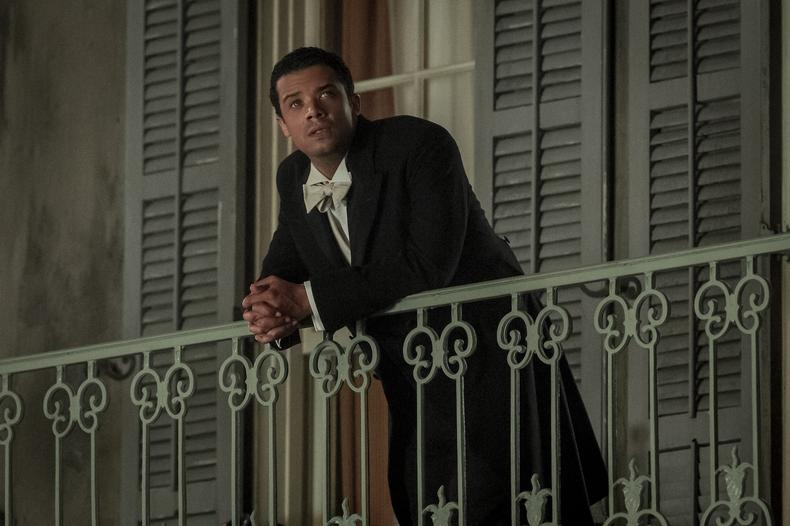 “Interview With the Vampire” Credit: Alfonso Bresciani/AMC
Jacob Anderson, “Interview With the Vampire”
You’d be forgiven for assuming that a TV adaptation of Anne Rice’s gothic horror novel would be little more than steamy, campy fun. But Rolin Jones’ AMC series is a thoughtful meditation on Blackness, queerness, toxic relationships, and the ethics of violence. It explores these thorny issues with humor and panache—and, yes, a healthy dose of sexy vampire romance.
The show lives and dies on the shoulders of Anderson as undead interviewee Louis de Pointe du Lac. The actor was previously best known for supporting roles on shows like “Game of Thrones” and “Doctor Who”—and for his music career as rapper Raleigh Ritchie. But with “Interview,” he proves that he was born to be a leading man.
Diverging from Rice’s novel, Jones turns his protagonist from a straight white plantation owner to a queer Black brothel owner. Louis’ life changes for better and worse when he’s wooed—and, finally, turned—by charismatic vampire Lestat de Lioncourt (Sam Reid). On one hand, he’s now free to embark on a full-fledged gay relationship and defend himself against racist violence. On the other, he loses his beloved family and struggles to curb his murderous cravings.
“Interview” calls on Anderson to play three very different versions of Louis: the closeted human man, the lovesick young vampire, and the century-old immortal recounting his story to a sardonic journalist (Eric Bogosian). The actor slips between these personas with ease, specificity, and attentive care. He’s magnetic with all of his scene partners, whether he’s playing live-wire chemistry with Reid’s Lestat, moral ping-pong with Bogosian’s Daniel, or paternal love with teen bloodsucker Claudia (Bailey Bass).
Whether or not you’re a fan of vampire bodice-rippers, trust us when we say that this is no “Twilight,” or even “True Blood.” That’s largely thanks to Anderson, who never shies away from complexity—even when he’s making us swoon. —Jenna Scherer
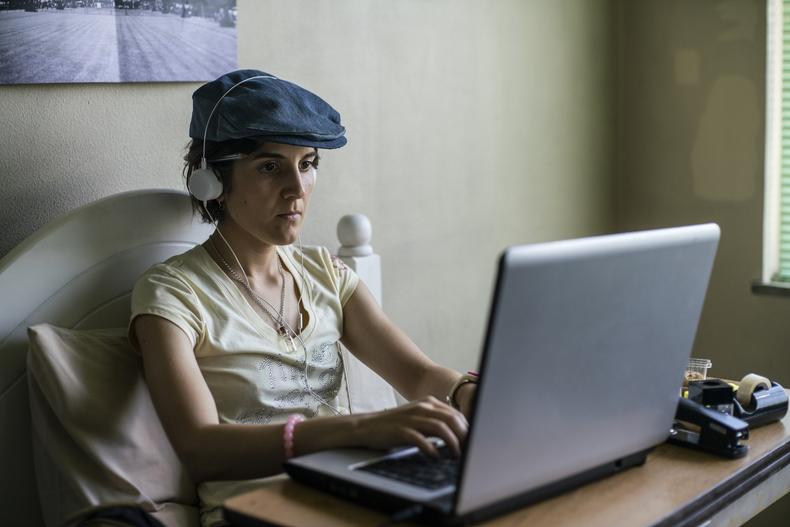 “Los Espookys” Courtesy HBO
Ana Fabrega, “Los Espookys”
HBO’s absurdist bilingual comedy feels like a trip to goth weirdo heaven—or hell, as the case may be—skewering the status quo while celebrating being an outcast in a world of normies. Set in an unnamed Latin American country, the series from Fred Armisen, Fabrega, and Julio Torres centers on four 20-somethings who corner an untapped market: staging fake paranormal happenings for clients in need. (Think “Ghostbusters,” but in reverse.)
Though each Espooky brings their own brand of strangeness to the table, no one defines the show’s eccentric spirit more than Fabrega’s Tati, a slippery chameleon who is so innocent and self-assured that her naiveté becomes its own kind of wisdom. She stumbles from experience to experience like an eager puppy, whether she’s hiring herself out to break in strangers’ shoes or penning “original” novels like “Don Quixote: Tati’s Version.”
There’s never been a character quite like Tati in the history of television—which makes the show’s recent cancellation even more gut-wrenching. She’s a distillation of Fabrega’s extremely specific sensibility, both as a writer and actor. It’s a performance untainted by irony or winking self-awareness; though we, the viewers, know that Tati is a fool, Fabrega plays her as a woman completely convinced of her own skewed reality. This makes her delivery of lines like “I still don’t know which color I’m supposed to use; they all taste the same to me” so funny. Tati is a cryptozoological phenomenon as rare as an owl in a wig. —JS
Moses Ingram, “Obi-Wan Kenobi”
His name is in the title; he’s won an Emmy; and his performance in the much-maligned “Star Wars” prequels has been lauded by fans and critics alike. So it isn’t surprising that Ewan McGregor offers up a soulful, captivating turn as the titular Jedi on Joby Harold’s “Obi-Wan Kenobi.”
What is surprising, however, is the introduction of Reva Sevander (Ingram), a new character so captivating that her mere presence in a scene makes viewers sit up and pay attention. Also called Third Sister, Reva is an Inquisitor for the Galactic Empire who sets out to capture Darth Vader’s elusive former mentor. She often does so in direct defiance of her superiors, who wish she’d let go of her lofty, ill-advised goals—all of which makes her a new kind of character in this galaxy far, far away.
For the most part, “Star Wars” villains have served as mere foils for the protagonists—negative forces that only exist to illustrate the franchise’s dark/light imagery. Yet from the start, it’s clear that Third Sister is a murkier character, one whose zeal hides as much as it reveals about her inner life. Over the course of the Disney+ miniseries’ six installments, audiences witness Ingram slowly bare the childhood wounds that drove Reva to become such a craven, cruel person in league with the dark side. With her empathetic, graceful performance, Ingram creates an instantly iconic character worthy of this long-running space opera. —Manuel Betancourt
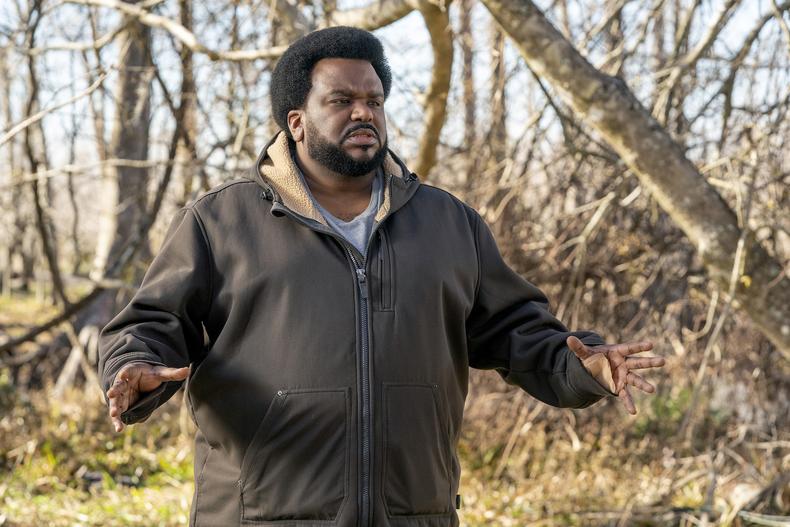 “Killing It” Courtesy Peacock
Craig Robinson, “Killing It”
Among the series scattered hither and yon on Peacock is “Killing It,” a comedy that follows a pair of Floridians who team up to enter a snake-killing contest. The elevator pitch alone might have condemned it, but Luke Del Tredici and Dan Goor’s comedy is genuinely interested in exploring what it takes to make it in America in the cruel, unforgiving world of gig work.
A generation ago, the entrepreneur Robinson plays would likely have found success. But in 2022, believing in the American dream is an exercise in futility; so Craig (Robinson) ends up living out of his gym and hunting snakes with his Uber driver (the impeccable Claudia O’Doherty). He even spends an entire episode waiting in line to vote. “Killing It” is a cringe comedy, sure; but there’s a bleakness to the laughs as the series chronicles the grim fate awaiting anyone who dares to step off the well-trodden road.
Each episode is a treatise on the ways in which enterprising people who lack generational wealth or connections can be exploited or destroyed. Featuring set pieces including a cultish self-help seminar and a humiliating reunion with an ex and her prosperous boyfriend, “Killing It” can be a nerve-wracking watch. Robinson leans into this sense of desperation as Craig struggles to maintain even a semblance of personal responsibility, his can-do zeal giving way to dangerous tunnel vision. It’s an uncomfortable, unforgettable comedic performance that deserves more eyeballs. —Mark Peikert
Julia Stiles, “The Lake”
Stiles’ comedic work was ubiquitous in the late ’90s and early 2000s in rom-coms and teen Shakespeare adaptations alike. The actor’s sardonic demeanor made her a welcome screen presence and a perfect avatar for the aloof coolness that Y2K-era girls aspired to. In the decades since, Stiles has mostly taken on bit parts in films like “Silver Linings Playbook” and “Hustlers.” But this year, a role finally came around that gave the actor the chance to deploy the coolness that made her the aughts’ “it” girl.
Don’t let the simple title fool you; “The Lake” is a breezy delight. Julian Doucet’s Prime Video comedy focuses on Maisy-May (Stiles) and Justin (Jordan Gavaris), a pair of feuding stepsiblings who reunite after years of estrangement. Over the course of a summer, they’re brought together to litigate the fate of their late father’s beloved vacation cabin.
Stiles plays an uptight, grown-up queen bee who lords over her lakeside community like a suburban dictator. Sporting a series of well-pressed linen shirts, the actor makes every arched eyebrow and cutting one-liner count. Maisy-May is easily the MVP of the show; she’s the kind of delectable would-be villain you can’t help but root for. —MB
This story originally appeared in the Dec. 29 issue of Backstage Magazine.