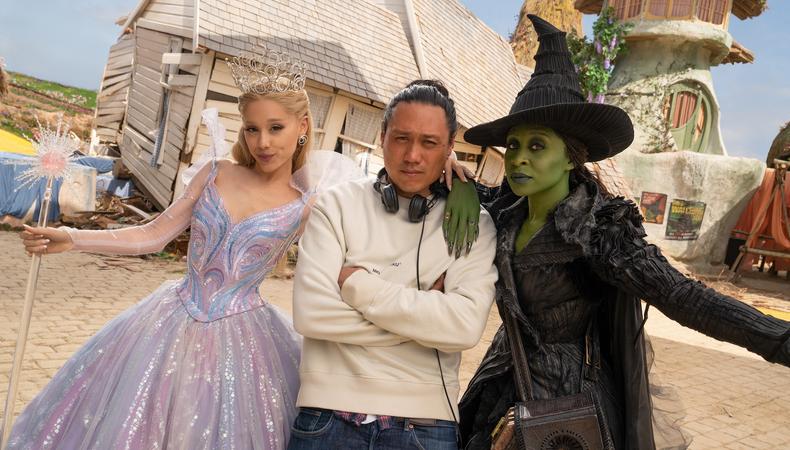
Nothing about “Wicked” feels small—except for those emotionally charged, intimate moments that matter most. Director Jon M. Chu, whose credits include “Crazy Rich Asians” and “In the Heights,” spent eight months filming the two-part adaptation of the beloved Broadway musical, always aiming for connection over spectacle.
“When you have a big studio and a lot of money and days spent and things built, you feel the pressure to show it all,” Chu says. “The most difficult thing you can ask from a movie is that intimacy or the feeling that those little moments are almost like an independent movie choice.”
Released in November 2024, the Oscar-winning musical blockbuster introduced the origin story of future Wicked Witch of the West, Elphaba (Cynthia Erivo), and her rival-turned-friend Glinda (Ariana Grande). The sequel, “Wicked: For Good,” finds the two farther apart than ever, just as the action catches up with the events of “The Wizard of Oz.”
In conversation alongside his Oscar-nominated editor Myron Kerstein, Chu reveals the intention behind the films and his approach to digging deep with Grande and Erivo.
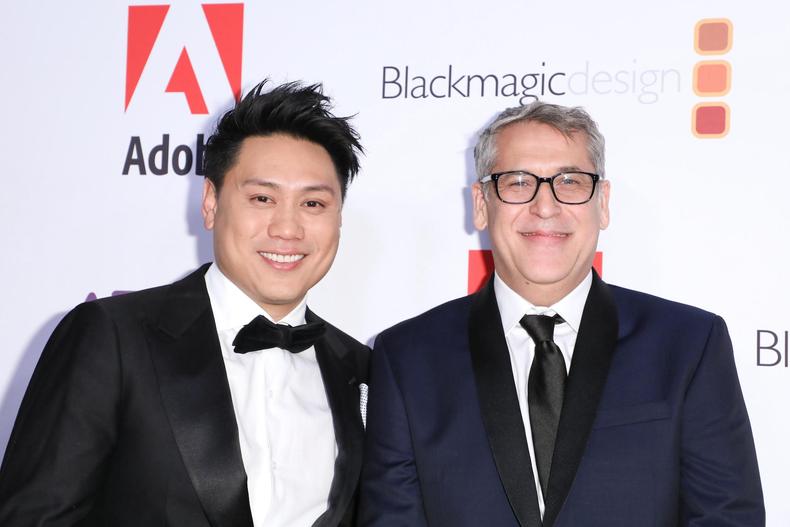
Jon M. Chu and Myron Kerstein Credit: Credit: Sheri Determan/WENN.com/Alamy
What do you recall about your early conversations about how you wanted to step into this world?
Myron Kerstein: From the get-go, Jon said, “I want to make ‘Lord of the Rings’ meets the greatest love story that’s ever been told.” Early on, we said, it’s about the girls. As much as we want to make it epic and delightful and whimsical, we also wanted it to feel grounded. All that other stuff doesn’t matter if we don’t believe in this relationship between Elphaba and Glinda—if we don’t feel them bond, if we don’t feel heartache when they are torn apart. How do we find the little nuances with their performance in the 250 hours of footage I had between the two movies?
Jon M. Chu: The most technical part for us was the intention. When you come into “Wicked,” there’s a lot of ways you can do it—they’d spent 20 years trying to develop how. We were in COVID lockdown, and I thought, Why are we telling this story now? We’re telling two stories: the fairy tale of what it means for someone to step out of the fairy tale and become their own person. Then the second movie is really, that fairy tale is now on the ground shattered. If the first movie is a sane person in an insane world, movie two is the whole world is becoming sane. Where does each character ask their first sane question? Where do they decide to engage with the sanity? For us, that is technical because we had to go searching.
How has your process with actors evolved, and what was your approach to working with Ariana and Cynthia?
Chu: What I’ve learned from “Crazy Rich Asians” to “In the Heights” to this movie is the power of the actor. I’ve worked with visual effects, dance, music, comedy, drama, but what I had to really hone in on is understanding what actors are actually bringing to a scene. What kind of truth are they digging at?
In my conversations with the girls, it was always, “Let’s dig into the truth of the material. Not what the material means to us, but where did it move us? What else can we dig from that?” People think it’s called loathing, but it’s actually you resist the person that’s going to change the rest of your life. Oh, that means they’re acting differently.
It’s the same thing for “For Good.” It’s the end of a two-movie saga; how big do we make it? For them it was, “But all I’m doing is sort of whispering to my friend to give them confidence, like, ‘I’m gonna be OK. You’re gonna be OK.’ ” Those conversations change the way we shoot it and they give a different type of performance. When I’m talking with Myron, it is very much continuing the conversation I had with the actors. So the acting conversations go all the way through.
Kerstein: At the end of the day, it’s about two movie stars acting the shit out of a scene and connecting emotionally. At first you’re like, “Oh, that’s a cool shot, let’s do this,” and then you’re like, no, it’s about the actors, the characters, the emotion.
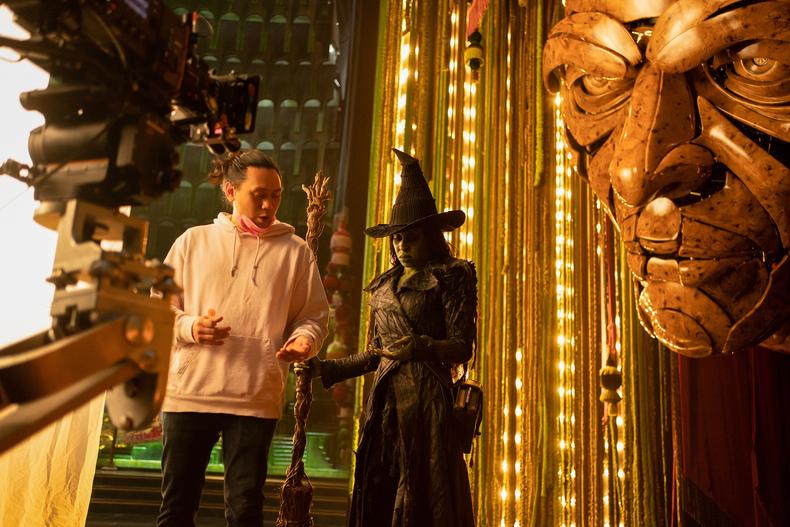
Director Jon M. Chu and Cynthia Erivo on the set of “Wicked For Good” Credit: Giles Keyte/Universal Pictures
“Wicked” and “Wicked: For Good” were shot together, and then there was a first pass edit done on both, before you put “For Good” away for a year. As a filmmaker, how hard was it to basically not touch a film for so long?
Chu: It’s very lonely sometimes when you carry the whole movie in your head. Our experience was like, no, we got something; the girls go deeper here. Now we’ve got to make sure that movie one lives up to that so audiences will come back. We have to get people hooked, and they have to believe in the choice that Elphaba made. If you’re just doing movie one and don’t know where your movie two is going, it’s very easy to cut strings that are needed in movie two.
Is there anything you learned from “Wicked” or the reaction to it that affected how you put together the final version of “For Good”?
Chu: For me, it was doubling down on character. Could rooting for Elphaba be that strong? And 100%, I felt that. So movie two, we need to make sure we’re selling those things: What is Elphaba going through? Where was [Glinda] as a little girl? Do they earn “For Good,” where we don’t have to do spectacle? Tonally, we could go to these places emotionally because I knew that you cared about these women. If you’re crying at “Defying Gravity,” then you’re in.
Kerstein: Tonally, I felt we could go more dramatic. We could just lean into that, and lean into quiet and silence and do something completely still and dramatic in these scenes and hold the audience. That being said, the first one was so different that you don’t know until you’re screening the second film whether or not that works.
Chu: We also learned a valuable lesson that in scenes where the girls are apart from each other—and we have a whole act where they’re not together—it has to be about the lack of the other one or the gaining of what they learned from the other that affects this scene. And even when you have a scene where you don’t have either of the girls, that scene better be about one of them not being there or their influence. Each of those scenes has to have some meat on the bones that leads up to them coming together again.
This interview has been edited for clarity and length.