It's not that women's theatre companies have gone all warm and fuzzy. But they're certainly more genial in tone, less dogmatic (not to mention less programmatic), and a whole lot more inclusive of men in their writing and directing stables. To what extent this evolution reflects a shift in feminist politics or a wising up on the business front is arguable. Nonetheless, a change of sorts has occurred.
On the occasion of Women's History Month (March), Back Stage decided to check out a handful of New York City-based women's theatre companies -- and there is no shortage of them -- to see what they're up to and how they've moved forward -- or, at least, reinvented themselves -- with the times.
Consider New Georges, a women's theatre company that has been around since 1992 and, like many such operations, was born in response to a lack of interesting roles for women. Its artistic director, Susan Bernfield, admits frankly, "I was an actress and I was looking for good parts for myself and then I became interested in the plays" for their own intrinsic worth.
Still, she concedes, New Georges' central mission has always been to forge a community of women artists, and in the beginning "we were very concerned with the play's subject matter," says Bernfield, suggesting that there was a greater concern with political correctness in the topics dramatized and their treatment.
"Today, we're much freer and less content-based. We've moved beyond theatre that either presents traditional women's subjects -- the very personal -- or political theatre that is trying to make a social point of one sort or another."
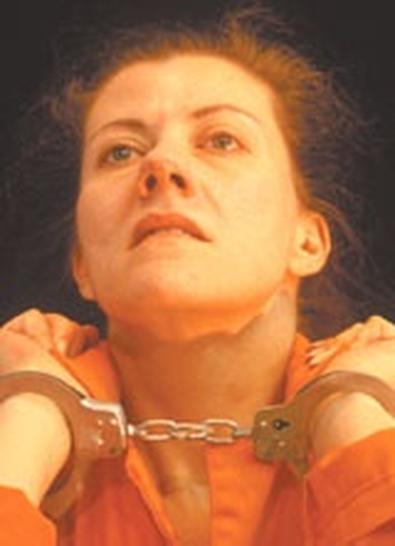
As Bernfield tells it, the company's plays embrace larger issues that manage to combine the private and public. Nonetheless, a social consciousness of the world is also evident in the work they mount. "We've always been interested in plays about the experiences of young women, which is rarely done anywhere. But we also produced 'Self-Defense or Death of Some Salesman,' which looked at the world of female serial killer Aileen Wuornos years before the current movie on the same topic, 'Monster.'
"The play, written by Carson Kreitzer, had a large scope," adds Bernfield. "In addition to acknowledging that abhorrence of what Wuornos did, the play also considered her motivation, and such issues as how women criminals are treated by the police and the courts." The play is just one of several that Kreitzer has written about women killers.
Bernfield admits that she has become concerned with possible backlash. "I don't want the company to be seen as a ghettoized women's theatre, where good playwrights might not want to be produced." New Georges is more committed than ever to producing high-level work with more broad-based appeal. (Interestingly, it is now commissioning works for "Menfest," a festival of plays by women about men, which will likely expand its audience with many more men in attendance). And the work is more mature on many levels, including stylistically, she says. "We've always liked experimental work, but now we also want good storytelling along with interesting forms."
Shotgun Productions, a women's theatre group that has been around since 1989, is also broadening its original mission. "In the beginning we just did plays," recalls Co-Artistic Director Patricia Klausner. "Now we're producing in many genres, such as dance, text and movement, text and slides. We're very interested in multimedia projects and we just did an opera in Bulgaria."
More striking, the theatre has always been a home for emerging artists, including men, although "we've been particularly committed to giving women artists a place where they could be heard," she says. "A central mission has been to present plays with strong female characters. We're not interested in showing women as victims, unless there's a way out of their circumstances. What's unexpected is just how many of these plays are being written by men. We're doing fewer plays by women than I would have imagined."
Artistic Director Kim Kefgen of Six Figures, a woman's theatre company formed in 1990, also talks about the new presence of men on board and, more interesting, the new female characters that are emerging in the plays. "We're seeing fewer wives, mothers, and sisters," she says. "Instead, female characters are coming from a place where men and women are friends, collaborators, and peers as opposed to lovers or family members. That's very new. At the same time, the female characters are freer to be sexy and wear glittery nail polish without fear of being pigeonholed as bimbos. They can wear glittery nail polish and be strong powerful women."
She adds, "We are reaping the benefits of a hard-won war launched by women artists who wrote 'women's plays' in quotes that were angry and political. Thanks to them we don't have to write them. We can have fun on stage and do comedy." At one time comedy was not part of -- some would call it anathema to -- the feminist's sensibility in and outside of theatre.
Women's Expressive Theater -- whose moniker is WET -- embodies elements of the old and new women's theatre. It exists "to challenge the paradigm that men's stories are universal and women's stories are personal," says Co-Artistic Director Sasha Eden. "In the media, women are not shown as individuals, but as clichés. By celebrating women who are bold and innovative, we hope we are an antidote to those clichés. We celebrate their strength and diversity -- age, race, and ethnicity. We create opportunities for women, while being inclusive."
During WET's five-year existence, it has become increasingly concerned with a play's production value and fulfilling a playwright's vision. "Many female playwrights are afraid of being produced improperly because frequently they are," notes Co-Artistic Director Victoria Pettibone. "We hope we're an antidote to that paradigm as well."
The subject matter and tone of WET's plays run the gamut -- from comedy to dark material. Regardless, "We're very careful not to be heavy-handed," continues Pettibone. "We try to find something light and inspirational within the bleakest plays. We don't like plays -- or characters -- that have a complaining tone. We look for a positive energy, for solutions. If a woman character is being exploited, we want to see her taking steps to change her situation."
Perhaps one of the most striking women's theatres out there is the four-year-old Queen's Company, an all-female, ethnically diverse theatre (specializing in classics) that "transcends boundaries of sex and gender," says Rebecca Patterson, its founder and co-artistic director. "The character's gender is not changed. An actress is playing a woman or she is playing a man, depending on the character as written. There's an unexpected nuance in these performances, especially in Shakespearean plays whose male leads are much closer to contemporary women than contemporary men, who don't know how to combine emotional openness and power. Concepts of masculinity and femininity have evolved and vary with era and culture." She believes viewing characters without superimposed notions of gender behavior adds a layer of resonance.
Patterson says she created Queen's for two fundamental reasons: a desire to explore and view the classics in a purer light, and to influence contemporary playwrights who continue "accepting the limitations of a [stereotypical] female world, where women are largely seen as mothers, daughters, and wives."
Queen's -- a title referencing drag queens, the royal queens, and the theatre companies of Shakespeare's time, as in the Queen's Company -- is currently writing its own material.
"Our goal now is to create a body of work that will provide opportunities to a racially diverse group of female theatre artists. A lot of women's theatre companies continue to be all white."
Now there's something to think about.