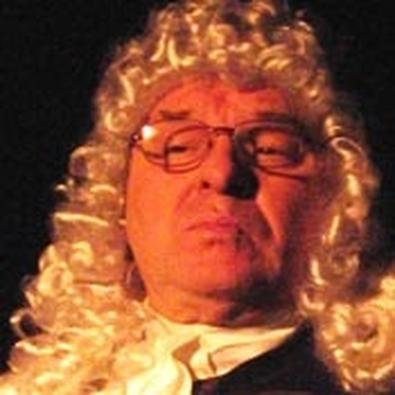
This drama by Australian playwright Andrea James is a heartfelt cry for justice. It concerns the Yorta Yorta people and their unsuccessful fight for title to their ancestral land along the banks of what is now called the Murray River. For probably quite a few in the American audience, the play will provide an interesting introduction to the complex culture of Australia's Aborigines, a culture that predates the Druids. It is a culture that celebrates the natural world, with a history based on oral traditions. As such it clashes immediately with the documented culture and law of the interloping Europeans. The play's title means "Go away! Go away!" -- the cry of the Yorta Yorta as the first white intruders came through their territory in the early 19th century. At the heart of the play is the 1998 case brought by the Yorta Yorta in Australian Federal Court.
James attempts to weave several disparate strands in telling the story. The recent past is represented by an elder uncle (Harold Dean James) who wants to be left alone to fish, while his city nephew (Cezar Williams) pesters him to testify in court. From the historical past, we meet Sir Edward Curr (Tyree Giroux), the first European settler. From the legendary past, there's Munarra (Joy Kelly), a female spirit cast out of the Dreaming with her dingoes, whose consequent tears form the all-important river and whose background story cries out for further clarification for bewildered audience members. The present is the court: the Aborigine witnesses and the European judge. In blending these stories, James engages diverse theatrical devices, with the puppetry of Spica Wobbe and the music of Yukio Tsuji being especially successful.
But despite these devices, the production -- under directors Harold Dean James and Karen Oughtred -- still suffers from awkward shifts as we jump from strand to strand, defusing the play's poetic strain. Presented by an American cast, this very Australian play naturally loses some authenticity in the process. Still, it is given a well-intentioned, sympathetic treatment. The hard-working performers, led by James and by Williams in several versatile characterizations, clearly convey the playwright's message. Yes, the play is a forthright polemic: Those villainous white fellas are never allowed stage time to state their case. Probably the best news is that the story is perhaps not yet over: At the finale, the cast optimistically repeats the chant "We are Yorta Yorta. We are here."
Presented by La MaMa E.T.C. in association with the Australian Aboriginal Theatre Initiative
at La MaMa E.T.C., 74A E. Fourth St., NYC.
Jan. 9–25. Thu.–Sat., 8 p.m.; Sun., 2:30 p.m.
(212) 352-3101, (866) 811-4111, Theatre Mania or La MaMa.