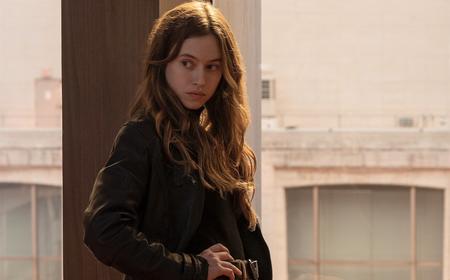
The past six months have been nothing short of monumental for Korean-Australian actor Yerin Ha.
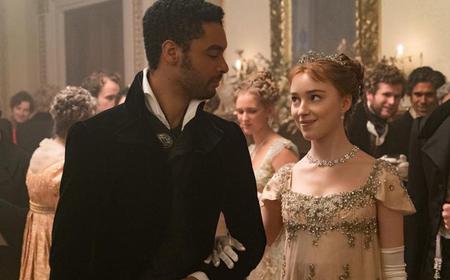
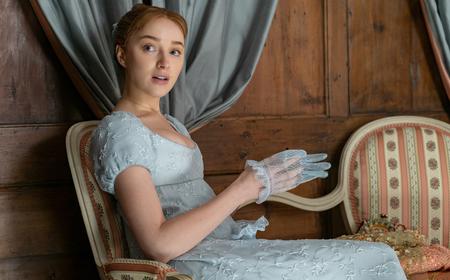
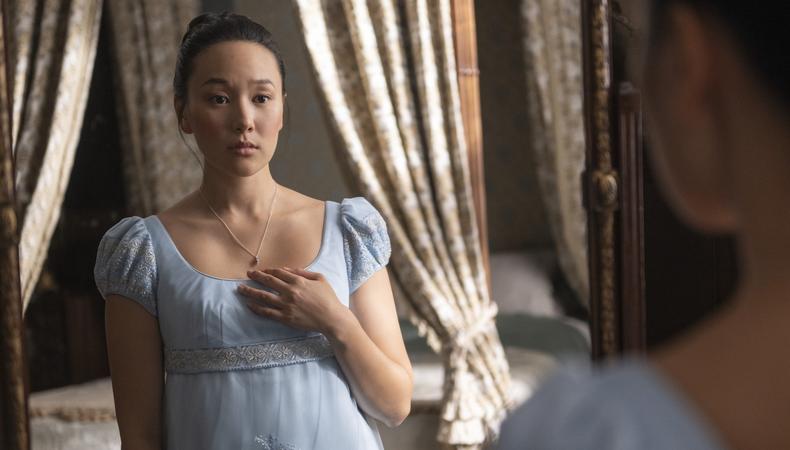
She already had several screen credits under her belt, including playing Young Kasha Jinjo in HBO’s “Dune: Prophecy” and Kwan Ha in the Paramount+ adaptation of “Halo.” But last fall she stepped into the limelight, playing a leading role onstage in a prestigious revival of Jean Genet’s “The Maids” directed by Kip Williams (who’s currently helming Cynthia Erivo’s one-woman “Dracula” in the West End) at London’s Donmar Warehouse. Now she’s been propelled to a household name as the new leading lady on “Bridgerton,” playing Sophie Baek, a maid whose Cinderella-inspired story leads to a romantic entanglement with Luke Thompson’s Benedict after she sneaks into a society ball.
From perfecting her British accent just in time for the gig to tackling her first intimate scenes, Ha talks about her experiences becoming the new face of one of Netflix’s most-watched series.
You’re Australian, but your British accent is flawless. How, and when, did you learn it?
I learned the accent for this job. I didn’t think that I would be able to penetrate into the UK television market, so I always had my eyes set on America. I would practice my American accent, but never my British accent. When I booked “Bridgerton,” it was a quick turnaround. I worked very closely with our amazing dialect coach, Jane Karen, and she just went through every episode with me along the way. Dialect coaches are so, so helpful; I could not have done it without one.
What can you tell us about your experience with the casting process for “Bridgerton” Season 4?
I was in Korea visiting my mum when I got the call to audition via a self-tape. I’d recorded so many of these since the pandemic, so I felt quite comfortable. But I had to send it within 24 hours. I was cast quite late in the process and I think they’d been looking for months before I got my first audition.
A couple days later, I received a callback over Zoom with Kelly Valentine, the casting director, and Tom Verica, the executive producer and director. I read two of my scenes and, after that, I was called back again for a chemistry read on Zoom with Luke Thompson, who plays Benedict. It was my first chemistry read and I didn’t know what to expect. It was also 11 p.m., and I was just so incredibly nervous. I just wanted to be as present as possible; I didn’t want to force anything. Very soon after that, I heard I’d booked the role. I think from the first phone call to the last phone call it was just shy of two weeks—so quick for an audition process.
What was it like to join a pre-existing show like “Bridgerton,” where some of the cast has already been filming together for years?
There’s always a fear that you might not get along or it might not work in person, but I’m a little bit of a sponge; I tend to adapt very quickly to environments. I’ve been in the industry long enough now to think it’ll be great if the work colleagues become friends, but you know it doesn’t have to be that way. I was kind of surrendering to the notion that the work is the work, and personal relationships will come afterwards. Early on, it was clear everyone was just incredibly kind and giving.
With its lavish society balls and frilly drawing rooms, “Bridgerton” paints an opulent picture of Regency Era London. What did you enjoy most about stepping into the world of a show this visually rich?
It felt like stepping through my TV. It was amazing! The director, Tom [Verica], gave me a tour of the sets beforehand, and I remember turning to him and just saying, “Thank you for casting me. Thank you for letting me come into this world, because it’s such a gift.” It takes so many people to create these sets, these worlds, and they help you to focus on exactly what you need to do, which is to act. I think it’s just so wonderful to be surrounded by such creativity, ambition, and drive.… The detail and the specificity, from the type of paint color to the drawings and the vases and kind of flowers, just makes you want to elevate and make sure that you’re bringing the best that you can, so everyone’s work can sing to its fullest degree.
“Bridgerton” is known for its racy scenes, and Season 4 is no exception. Your scenes with Luke Thompson are very tastefully directed, but how did you approach that level of intimacy on screen?
I remember booking the job and very quickly my brain went to, “Oh, crap, I have to do intimate scenes now,” which I’d not done before. I was grateful for intimacy coordinator Lizzy Talbot. She’s so amazing, and the energy and the safety that she provides—not just for me, but for the crew and for Luke—meant being able to choreograph things in a really tasteful way. What feels good doesn’t always look good, and she had tips and tricks up her sleeve to make it look more beautiful and more cinematic.
Many of our readers are still training or early in their careers. How did your formal training shape you, and how did that compare to what you learned on set?
At drama school we were given all these different sets of tools, but never went in depth with any of them. At the time, I remember wishing we could just learn one and be a master of that one tool. But, actually, looking back at it now, I’m so grateful that we did get a taste of different things. Every process is different and every director is going to be different, and what you bring to each project is going to be so unique to that character.… You always have to be so flexible. I am glad that I did have multiple tools in my back pocket, and that I was able to then create my own process or figure out what that might look like for me.
In terms of what I’ve learned on set, for me it’s actually about human relationships. I do my best work when I feel like there is an environment that is created for me to be able to succeed, rather than feeling like there’s people in power and then there’s this hierarchical structure. When you create very strong, healthy relationships and environments on set, you’re able to focus on your work rather than having to tiptoe around egos.
Now that “Bridgerton” has put you firmly on the map, what’s next for you professionally?
I’m not sure yet, and I’m trying to be OK with not knowing. I think so much of being an actor is being OK with rejection and still being able to find the will and the passion for it regardless. I would love to do a film, ideally, and work closely with a director over a condensed amount of time. I would love to do another dark drama, or, I guess, anything that really pushes me and makes me feel a little bit scared. I think I’m always looking for something that’s gonna make me a little bit scared.