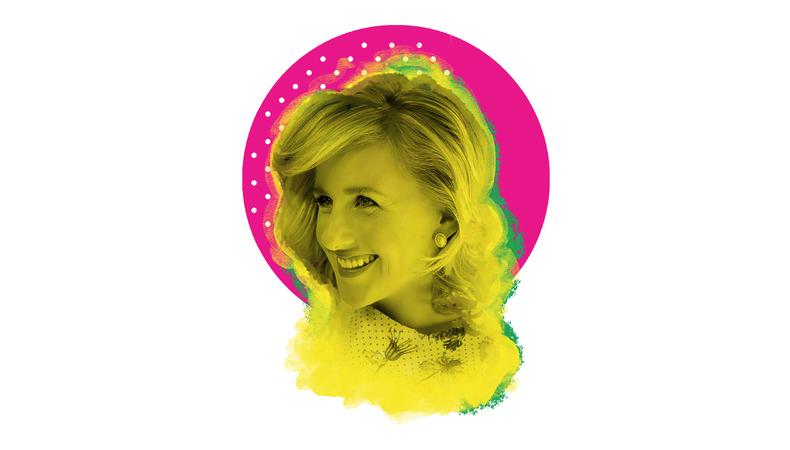
Before originating the titular role of Princess Diana in “Diana: A True Musical Story” on Broadway, Jeanna de Waal was a British transplant attending as many open calls as possible. That time spent waiting in line paid off: Within weeks of settling in New York in 2010, de Waal landed a role as Heather in “American Idiot” and has since continued her dominance of the stage with roles like Glinda in the national touring production of “Wicked,” as well as runs in “Kinky Boots,” “Finding Neverland,” “Waitress,” and “Carrie: The Musical.” Now, de Waal offers the tried-and-true audition technique that’s helped keep her booked.
READ: Everything UK Actors Need to Know About Auditions
What has playing Princess Diana added to your acting skills?
It’s a huge challenge for many reasons. One is she’s a living, breathing human who we all know and immediately recognize. There’s a large amount of work to do to embody her, everything from how she moves to how she speaks to how she reacts. A huge challenge is turning the character into your own body. Then, there’s obviously the challenge of, for lack of a better word, leading a show, which requires a lot of focus—and [there’s] a lot of press on top of everything I do in the show. It’s a huge responsibility that I’m so privileged and grateful for.
You moved to America 10 years ago. What advice do you have for U.K. actors looking to make the jump to the U.S.?
Get a visa sorted. [Laughs] No one’s interested in talking to you unless you have some sort of working permit. There are so many opportunities in New York. I moved without an agent, without a manager, without any contacts. I literally would line up at those Equity open calls, and that’s how I got my first job. America really is the country of possibilities in that way, especially as a musical theater actress. If you’re not in a show, there are still countless readings and workshops—there is so much to get involved with. It really is just about putting yourself out there and going for it. I found, in England, if you didn’t have top representation, there was hardly any way to open doors. Whereas I felt that as soon as I came to America, I’d talk to someone and they’d know someone. You could get yourself involved in countless projects and continue your education that way.
How did you land your first agent?
I moved in September and I very luckily booked two Broadway shows in the first two months through those open calls. It has not been as easy as that. I had an amazing string of beginner’s luck. But because I booked those shows, I could go to agents and say, “Hey, listen: I booked these shows, could you help me negotiate the contract?” And that’s how I got my agent, and I’m still with [them] today, 10 years later.
How did you first get your Equity card?
British Equity is transferable. I don’t know if that’s still the case, but if you had Equity in the U.K., they would give you Equity in the U.S. I had been working for one year in London in a show called “We Will Rock You,” the Queen musical, and my green card came through during that year. So I up and moved within a week of my contract being over, transferred my Equity, and started going to open calls.
Were you combing through Backstage looking for those open calls?
Absolutely! [I used] Backstage and wherever else they were listed. Within the first week, I found myself a bar job that I worked every night, and I would get up early in the morning and line up before the sun came up with 200 other people.
What’s the wildest thing you’ve ever done to get a role?
If they don’t know you, you have to sing your own material; you’re not getting material from the show. So, rather than singing anything from my book, I would be really specific with what I could choose that will make an impact. The two shows I booked were “American Idiot” and “Wonderland.” For “Wonderland,” I sang [Eurythmics’] “Sweet Dreams (Are Made of This),” and I remember I put fake eyelashes on my bottom [lash line] and I looked nuts. I was nervous to do that. I had so many auditions where you risk being laughed at, but you have to make an impression.
READ: 5 Important Audition Song Choices to Make
What’s your go-to audition song?
If it’s on the rock side, I’d do “All Right Now” by Free. But I do tend to change it up. If they’re really asking you [to] prepare a song, I will always take the time and try and choose a song. I don’t tend to rely on my backup song.
What is your worst audition horror story?
It was off-Broadway and in the script it reveals she’s naked, and they were going to do that with amazing staging, but I decided to wear a full-on body Spanx suit. I stripped down, and it just didn’t work. I hadn’t rehearsed it enough, and all of a sudden I was fumbling. They were laughing, and then I went to strip off, and then I saw their eyes fully change: “Oh, no, she’s about to get naked!” I wasn’t, I was wearing a unitard, but by that point I got scared and I was stuck in the middle of the room in this unitard.
But, sometimes, the auditions that have gone the worst are the ones I’ve booked. Because you’re not so set in your choices—you have the right essence of a character and you can just let go. Those are always nice surprises when that happens. [You think,] There’s no way I’m booking this, I’m so wrong for this role, and you let go of it. When you let go is truly when the magic happens. Sometimes, that helps; it almost catapults you into that place where you’re sort of spinning in a way, but it’s easy access to hearing how that line should land to make them laugh. When you have that adrenaline, you’re acutely aware of everything, and it’s allowing yourself to give into that adrenaline rather than letting it shut you down. It feels a bit like jumping off a diving board: I only booked this audition yesterday, I have no idea what the lines are, whoosh! Those are sometimes the best auditions.
What advice would you give your younger self?
I would probably give myself the advice to relax a little bit. I was so focused to a point where I’d timetable myself from 8 a.m.–8 p.m. so I could fit in 40 minutes of piano practice there and I could practice dancing there and attend this lecture from another course there. I packed it in. The moments in my life that really changed my pace and shaped my abilities are the moments that have affected my real life, having real-life experiences. When you’re so focused on “I’ve gotta book that,” you don’t seem like a rounded human being. When you’re living in the moment and having real-life experiences, that input affects art. You have more opinions, [are] more grounded, [have] more emotion to draw from. I probably would’ve told myself to stop treating it like I was trying to go to med school. Stop trying to be the best and slow down and have chats about random things rather than being firm set on “I must get that first job.” It’s tough to learn, because you have to get your technique. It’s a fine balance.
What performance should every actor see and why?
A show I love recently is “Succession” on HBO. The writing is so fleshed out that it’s such a lesson. The given circumstances can be insane, they can be absolutely so far-reaching that you’re like, “How can you ever get to this?” But if the character’s playing it truthfully and finding the reality in it, we as an audience will buy any circumstance. There’s not really a limit on what grounds can be portrayed in a story. We are ready to follow you to new worlds and new ideas of how people communicate—everything—if it’s well-thought.
Ready to get to work? Check out Backstage’s Broadway audition listings!