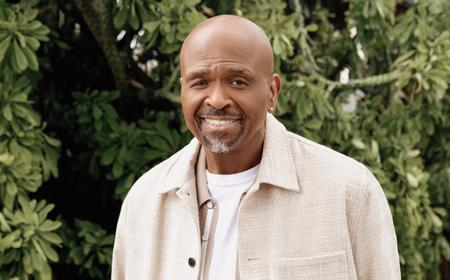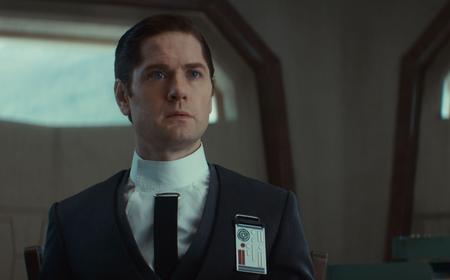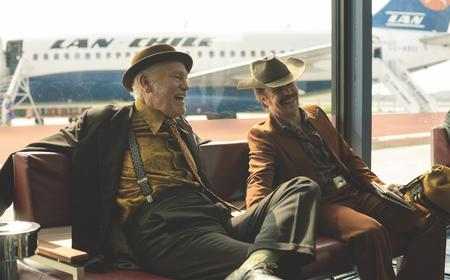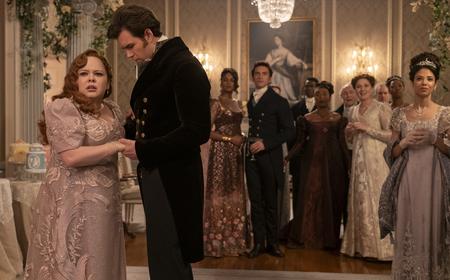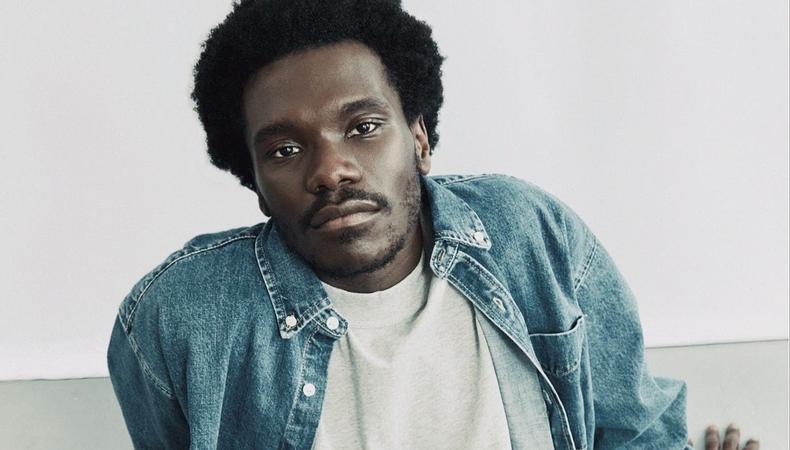
Last month, Michael Ahomka-Lindsay ended his run as Clifford Bradshaw in the West End’s Cabaret. Now, he’s starring in Matthew López’s Reverberation at Bristol Old Vic through Nov. 2. Here, he opens up about his peripatetic childhood, how switching from medicine to acting helped his perspective, and why the rehearsal room can be addictive. This essay was told to Theo Bosanquet and has been edited for clarity and brevity.
Embrace change – it can ease your acting path.
I spent a lot of my young life moving around with my family. This meant I was always adjusting to new environments and wondering what was acceptable, what was safe, and how I could assimilate. If there was a live performance happening at school, I was there. I think that’s because within the performance space you’re allowed to be every version of yourself; you’re even applauded for it. Performing has been a consistent thread throughout my life.
Experience is the best teacher in everything, but especially acting. Meeting lots of different people had the advantage of creating stronger empathy. That has really helped me in this career. It’s made me adaptable.
I studied medicine for three years; for that time, I put my dream of acting to sleep. So for the world of performing to then open up to me meant I never took it for granted. I really value how beautiful it is to be an artist. When things are tough, I’m still able to think, But I’m so happy to be here. Changing my career felt like a huge weight coming off my shoulders. When I left drama school, I questioned my decision and experienced imposter syndrome. But I’ve learned to go toward that fear, and that if I’m scared of something, it’s because I care. If there’s a possibility of something going really wrong, there’s also a possibility of it going really well. I don’t think you ever stop doubting yourself; it’s how you respond to that doubt that changes.
Find your people.
There have been moments in my career when I’ve just felt this incredible connection to people in the rehearsal room. An example would be Choir Boy at Bristol Old Vic, where I’m delighted to be returning for Reverberation. It feels completely comfortable and safe, like you can be every version of yourself. After a project like that, you feel this silence where you’re suddenly left with just your original self again. Then you’re back doing auditions and those emotions come flooding back to the surface. Dealing with that cycle is a huge part of this job.
Giving someone your attention is your most powerful performance tool.
In terms of technique, I’ve learned that the most important thing is listening. You might spend 90% of your time prepping, and that’s a hugely important thing. But all of that means nothing if you get on the stage and you can’t listen. Because if you don’t listen, you’re no longer a person in a moment; you’re more like an academic exercise with arms and legs – and no one will be moved by that. You have to be a living, breathing person.
It’s taken me a long time to learn how powerful it is to be you. It’s important not to try and be anyone else. I remember on my first job, Rent, we did a sing-through at the first rehearsal, which was terrifying. We all started singing, and I realised how unique everyone sounded. It had nothing to do with how high anyone was singing, or that they were performing in a certain way; it stayed with me just how much strength they had in their individuality.
I would tell my younger self to let every part of me just be, and not to worry too much about what’s right or wrong. Don’t hide. The moment you accept yourself, you will fly.