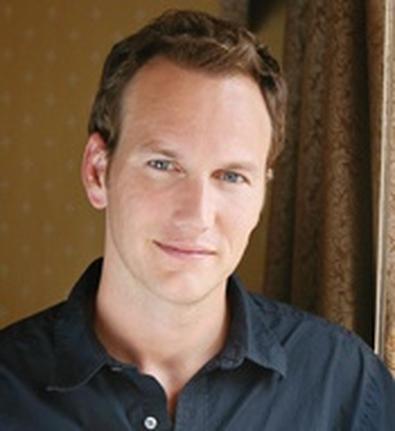
Patrick Wilson was experiencing his first week living in New York City when he and a friend ran into Tom Hanks at a production of Hamlet, starring Ralph Fiennes. It was 1995: Hanks had recently won his second Academy Award for best actor (for Forrest Gump), and Wilson, newly graduated from Carnegie Mellon University, was just starting out. "He was the first famous person we saw, and he was so nice to us," Wilson recalls. "He gave us the time of day and looked us in the eye, and he talked to us. And I remember he told us to just persevere."
A few years later, in 2000, Wilson was starring in the Broadway musical The Full Monty, which earned him his first Tony nomination. Hanks came to see the show, and though Wilson didn't speak to him then, Hanks sent an autographed photo that read, "To Patrick, who persevered."
Wilson kept the photograph in his dressing room with him when he played Curly in the 2002 Broadway revival of Oklahoma! — for which he earned a second Tony nomination — and showed it to Hanks' wife, Rita Wilson (no relation), when she came to visit a friend in the show. "She got very choked up and said he would love the story," Wilson says. But it wasn't until last fall, when both Wilsons were performing at a benefit, that he again met Hanks face-to-face. "He was the greatest," Wilson says. "He came up to me, and he remembered the story. And when you see people like that — and they don't get any more famous — and they're so cool and so talented and so driven at what they do and they don't let anyone walk over them, everybody else pales in comparison. So why be difficult? We just make movies, for God's sake."
Perhaps that's why, when speaking with Wilson's co-stars and directors, one word continually pops up: nice. Joel Schumacher, his director in the musical feature film The Phantom of the Opera, calls him "simply the nicest man in show business." Michael Cunningham, screenwriter and executive producer of Wilson's new ensemble drama, Evening, says there are two things people should know about Wilson: "One, he's a formidable Scrabble player. Two, he's unbelievably nice."
The actor also seems determined not to take himself too seriously. Recently, Wilson has specialized in playing unattainable objects of desire. In 2006's Little Children, he was unfaithful househusband Brad Adamson, known by the neighborhood mothers as "the Prom King." And in Evening, due in theatres June 29, he portrays small-town doctor Harris Arden, pursued by a bride-to-be (Mamie Gummer) and her maid of honor, Ann Grant (Claire Danes). Years later, on her deathbed, Ann (Vanessa Redgrave) is still haunted by the romance. "Harris needed to be somebody with a certain big-star quality," Cunningham explains. "Harris is a character about whom one can imagine still being fixated 50 years later. It had to be an actor who, the moment you first see him, you'd go, 'Oh, yeah. I get that. I'd be thinking about this guy 50 years later, too.'"
Such praise for his appearance makes Wilson visibly uncomfortable. "It's so weird," he says with a laugh. "I just sort of think, 'Well, in this small community, there weren't a lot of options.' It seems so silly. And as an actor, you can't play that. I guess it's flattering you're even considered for such roles, but it is very strange." And though one might think such a pivotal part in Evening would go to a bigger star, Cunningham says Wilson's relative-newcomer status worked in his favor. "One of the things [the filmmakers] talked about was that ideally Harris should be somebody who has that movie-star thing but hasn't been seen a million times before," Cunningham says. "So the first time you see him, he feels revelatory to the viewer as well. You shouldn't be seeing that great beauty for the millionth time."
Little Children writer-director Todd Field had a similar reaction when casting the character of Brad, a former high school athlete who feels emasculated by his successful wife. "As with any role, there were two dominant traits required, the first physical, the second psychological," Field notes. "The character of Brad is first introduced in the story by the women at the park who objectify him in a very particular manner. For them, he is not real but an ideal. They call him 'the Prom King' but could just as easily call him 'the Movie Star.' Whoever ended up playing this role must have that physical quality but not be a movie star. And by movie star I mean someone iconic, like [Paul] Newman or [Robert] Redford."
It's important to note that, genetic gifts notwithstanding, Wilson imbues both characters with a flawed humanity, parlaying what could have been mere pretty-boy roles into almost tragic figures. Continues Field, "The other thing that was important was to find someone who could take this character and embrace his weaknesses and immaturity without editorializing those traits. Clearly, Patrick fulfilled the physical requirements. But the psychological requirement was something he was able to execute in an uncommon way. Whereas a lot of young film actors might have shied away from Brad's almost melodramatic identity crisis, Patrick completely embraced it. I have no doubt his theatre training informed his confidence in taking such a fearless approach."
Hits and Misses
Wilson, the son of a TV anchorman and a voice teacher, grew up in Florida and dabbled in commercials as a child. "I didn't have any dreams of Hollywood, really, because it just seemed so far away to me," he notes. "I didn't know how it worked. I didn't even know if I wanted to do musical theatre; I just wanted to be an actor." It wasn't until attending Carnegie Mellon that he became active in musical theatre and chose to "follow that path." He soon found himself landing juicy roles, such as Billy Bigelow in the touring company of Carousel. And though he hoped for a career in film or TV down the line, he was loath to pass up great roles on the stage for a day's work elsewhere. "I rarely wanted to call in to go from my lead role in The Full Monty or something to go do a couple lines on a TV show," Wilson says. As a result, he jokes, "every actor in New York but me has worked on Law & Order."
As it turned out, his stage work led to his big onscreen break. Director Mike Nichols caught his charismatic turn as an amateur stripper in The Full Monty and called Wilson in for the 2003 HBO miniseries Angels in America. In the adaptation of Tony Kushner's Tony- and Pulitzer Prize-winning play, Wilson landed the plum role of Joe Pitt, a Republican lawyer who happens to be a closeted homosexual. Working alongside Al Pacino, Meryl Streep, and Emma Thompson in the acclaimed program, Wilson not only held his own but earned Emmy and Golden Globe nominations. The actor recognizes that it was a lucky confluence of events that led to him landing the part.
"If it wasn't for Mike Nichols coming to see Full Monty, I wouldn't be here," he says simply. "From an agent's point of view, I would have been a next-to-impossible sell for Angels in America opposite all those people. I wouldn't have been able to even get an audition. If he had not seen me, and if it was any other director, it just wouldn't have happened. It takes somebody with that kind of clout to put their foot down and say, 'This is who I want.'"
It didn't take long for Hollywood to come calling, and Wilson found himself heading into 2004 with two prominent roles in big movies. First up was Disney's The Alamo, starring Dennis Quaid. That was followed by the highly anticipated adaptation of the hit musical The Phantom of the Opera, in which Wilson played the dashing Raoul. Both films bombed in America, failing to make back even half of their budgets.
But Wilson takes it all in stride. Asked if he thought The Alamo was going to be his big break into movies, he hesitates before admitting, "Well, I thought it would do better. But I get it: You're telling a story about people who lose at the end, no matter how you cut it." Nevertheless, making the film was "an amazing experience" and he has no regrets. He feels the same about Phantom, a film he says he takes a lot of pride in. "I know there were high expectations, but by the same token, my expectations were met," he remarks. "I love that movie. Movies either perform or don't perform well; and, a lot of the time, it has so little to do with the quality of the film. Phantom was well-received around the world, and however well it did or didn't do here" — he trails off, then adds — "whatever." He also says he never worried about how the film's reception would affect his career. "I never think, 'Oh, I'm screwed,' " he says. "I haven't done anything that has underperformed and been a huge negative. If anything, it just doesn't make you progress."
Wilson credits his theatre background with helping him remain philosophical about reviews and box office failures. "When you do a show — especially on tour — and you get reviewed every single week, you start to see how some people will love it and some people will hate it," he notes. "You sort of get used to opinions. You have to go out there and perform, knowing you've been either praised or bashed." In comparison, he says, moviemaking is much easier. "There's nothing you can do. You shoot the movie and you're done, outside of talking about it a year later," he says. "And if it fails, you can say, 'I have nothing to do with it. I didn't handle the marketing.' " He pauses before laughing and adding, "Of course, I've never had to carry a movie. Talk to me when I've carried a movie that failed miserably."
Waiting Game
Field spent months trying to cast the role of Brad in Little Children, only to end up giving it to a relative unknown with no audition. Children co-star Kate Winslet first brought up Wilson, having just seen him in Angels in America. "I asked her if she knew him, and she said, 'No. But it's the first film he's ever done, and he holds his own with Streep and Pacino,'" recalls Field, who was instantly impressed. "There was no question he could act it. I met Patrick for a beer in New York and knew in the first five minutes that I would ask him to play the part."
Wilson was — and remains — flattered to have been offered the role but points out that such occurrences are rare and illustrate the strange nature of the movie business. "You'll get a lead role opposite some of the greatest actresses in the world, and you don't have to audition," he observes. "And then there's something you're unsure about, and they want you to come in. And you're like, 'I don't even know if I want to do it. They didn't ask me to audition for this [other role], and it's a much bigger role.' " He adds that at times he's been made aware he's not the first choice for a role. "I've had directors say, 'I think you're great, but the studio won't let me hire you,' " Wilson reveals. "The past two movies I've done have just been a waiting game, where you can't even do anything. You just wait until they go to someone more famous who's busy."
He says he doesn't take it personally. "You can't get caught up in that much ego, because I guarantee you that even for the most famous of actors, a role goes to someone even more famous before them. It's nothing new, but I'm just getting used to it," he says. "You can't get caught up in it, because it's not a talent contest; it's just not. And it can frustrate me sometimes, but I don't beat myself up over it. The role is the role. And it's not going to lessen the role to me to know I wasn't the first choice."
There seems little doubt that Wilson is on the cusp of movie stardom; as Cunningham puts it, "I can't figure out why he isn't a huge star yet. But that will change." Most likely sooner than later, as the actor is attached to a number of high-profile projects: the highly anticipated Watchmen, based on the DC comic, in which Wilson will play Nite Owl; the Neil LaBute thriller Lakeview Terrace, opposite Samuel L. Jackson; and Bryan Singer's Valkyrie, a World War II drama Wilson is rumored to be circling that would pair him with Tom Cruise.
The appeal of such films is obvious, but Wilson will likely also continue to build a standout career based on his more unlikely choices. Take the 2005 film Hard Candy, an uncomfortable thriller in which Wilson played a pedophile who ends up being taken hostage by a would-be victim (played by Ellen Page). In essence a two-person play, the gritty indie offered Wilson a chance to skewer his leading-man image and make a monster human. Many critics praised Wilson for taking the risky role at a time when his career was on the rise, but the actor insists there was no master plan behind it all. "It was only the third feature I'd done, and I really just wanted something as far from Phantom as I could," he admits. "I was coming off The Alamo ($90 million and six months) and Phantom ($70 million in five months), and to be told you're going to do this movie in 18 days for under a million dollars — I was like, 'Really? You can do that?' It was more like an acting exercise to me. 'Let's do something vulnerable and crazy.' " Even those put off by the subject matter admired Wilson's performance. As his wife, actor Dagmara Dominczyk, put it, "You were really good. I never want to see that again."
Business of Show
Back to the nice factor: Remark on how acting can be a hard business, and Wilson quickly interjects, "It's not. I love this business." He continues, "I talk to so many actors starting out, and I understand the sentiment of, 'If you have anything else you can do, do it.' But what career isn't difficult? It's hard because you're based around talent, and talent is subjective. But there's room for everybody in this career, because your goals will shift as you get older." He apologizes for indulging in a sports metaphor, quoting former St. Louis Cardinals manager Whitey Herzog: "He used to say, 'Practice doesn't make perfect. Perfect practice makes perfect.' It was the idea you could control what you can control and you can get good at what you do and you have to make your own opportunities. Not everyone's going to be able to be on Broadway or in movies. But if you really want it bad enough and you love what you do, that's the success." He pauses before flashing that movie-star smile and adding, "So I'll say what Tom Hanks said to me: Persevere."