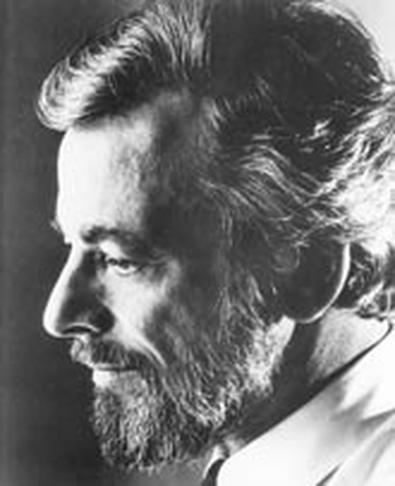
It has been 14 years since a new musical with a Stephen Sondheim score premiered on Broadway. Yet the presence and overwhelming influence of the beloved composer-lyricist, who has been awarded a special 2008 Tony for lifetime achievement in the theatre, remain inescapable.
The same period, for example, saw two revivals, in 2003 and 2008, of Gypsy, the iconic 1959 tuner for which Sondheim contributed lyrics — his first Broadway assignment after writing lyrics for another landmark show, 1957's West Side Story (which will be revived on the Main Stem in 2009). And there were two revivals, in 1995 and 2006, of a third landmark show, 1970's Company, which marked the start of Sondheim's most expansive, impressive period of creativity, during which he won an unprecedented three consecutive Tonys. Not including the special Tony, Sondheim has seven in all.
The same period also saw seven more Sondheim musicals in revival: 1984's Sunday in the Park With George (2008), 1979's Sweeney Todd (2005), 1976's Pacific Overtures (2004), 1991's Assassins (2004), 1987's Into the Woods (2002), 1971's Follies (2001), and 1962's A Funny Thing Happened on the Way to the Forum (1996).
But that wasn't all. In those 14 years, there was rarely a Broadway season without a new revue, concert, or special event honoring or featuring Sondheim's oeuvre. Some have been glorious all-Sondheim sprees, such as the 1999 revue Putting It Together; some have simply featured the master's output prominently, such as extended-run concerts by Barbara Cook, Mandy Patinkin, and Patti LuPone or autobiographical solo shows such as Chita Rivera: The Dancer's Life and Elaine Stritch at Liberty.
There's still more: Sondheim's quirky 1974 musical The Frogs — derived from Aristophanes and originally a collaboration between Sondheim and book writer-director Burt Shevelove, which was first performed in a swimming pool at Yale University — was revived in 2004 by Lincoln Center Theater with additional songs by Sondheim and a new book by Nathan Lane, who romped about as the show's star. The 1956 musical Candide, for which Sondheim wrote additional lyrics for a 1974 Broadway revival, returned in 1997. The year before, with George Furth, his book writer for Company and the 1981 flop-turned-cult-favorite Merrily We Roll Along, Sondheim tried playwriting, penning the unsuccessful Getting Away With Murder. (Todd Haimes, artistic director of Roundabout Theatre Company, responsible for mounting so many Sondheim revivals, has announced plans for a Merrily revival on Broadway during the 2009-10 season.)
No recapitulation of recent Sondheim work could begin or end with Broadway. Including regional theatres and groups and festivals around the globe, Sondheim's musicals are unquestionably among the most performed worldwide. So devoted are his followers, so pervasive is his influence, so beloved is he to the stage that his work, productions, and life are chronicled in a comprehensive quarterly publication, The Sondheim Review.
Clearly the Tony nominating committee has more in mind than Sondheim's busy years since his last new musical to open on Broadway, Passion, earned him a seventh best-score Tony. The committee is looking toward the 78-year-old composer-lyricist's legacy, which is so towering that it is impossible to overstate. Sondheim's gifts have irrevocably changed the American theatre.
For one thing, he has almost single-handedly raised the bar for American musical theatre with his distinctive, infectious, insinuating, bewitching, shimmering music and his crisp, acute, meticulously rhymed, character-driven, and devastatingly funny lyrics. He has opened wide the gates of what the American musical can do and can aspire to. Purists may scoff, and maybe rightly so, at such contemporary trends as songbook musicals, but Sondheim's influence can even be found in tiny traces in such efforts: the way actors deliver lyrics, or the idea that smoothly integrating songs into the story represents the apogee of the musical form. Sondheim too stands for industry service, having been president of the Dramatists Guild of America from 1973 to 1981 and having taught at colleges and universities around the world.
The nominating committee also knows that Sondheim is one of the last living links to the so-called golden age of the American musical. Tutored in lyric writing and other aspects of musical theatre dramaturgy by Oscar Hammerstein II, a friend of Sondheim's parents, he embodies the form's evolution from its earliest 19th-century antecedents to the present day. Sondheim also stands as indispensable barometer of where the American musical may head in the future.
And while some may think of him as the ultimate Broadway baby, those who do would be in error. Last year's release of the brilliant film of Sweeney Todd proved that his work can indeed be adapted for the screen; it can stir the heart, lift the soul, fill the eye, and dazzle the mind all at once. What kind of fortitude must Sondheim have in order to wait more than half a century to see his work done justice by Hollywood?
That's just one of the questions we must ask while we await his acceptance speech at this year's Tonys. Here are some others: What kind of perseverance must one have to work on a piece — such as Bounce, which opens at Off-Broadway's Public Theater this fall after years of workshops and productions, or Saturday Night, which Sondheim wrote in 1954 and finally saw open in New York in 2000 — until it's right? What kind of chops must you have to write an Oscar-winning song for 1990's Dick Tracy ("Sooner or Later," performed by Madonna) or pen moody music for films as wide-ranging as 1973's Stavisky and 1981's Reds? What kind of artist is so nimble, so prodigiously gifted, as to pen scripts for early TV (the sitcom Topper), to share a Pulitzer Prize (with book writer-director James Lapine for Sunday in the Park With George), and to write incidental music (for King Lear at the Public) just because someone asked him to?
Sondheim is more than a consummate theatre artist. He is an enduring, indisputable icon. He could well become the first American theatre artist to win the Nobel Prize in literature since Eugene O'Neill in 1936.