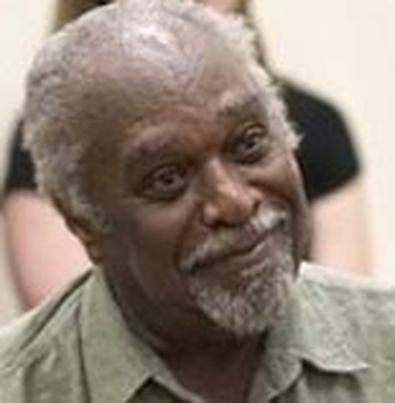
"With all due respect to his excellence," says Douglas Turner Ward, "audiences think that black theatre is August Wilson. That irks me when people feel there is only one black view, one black style, one black spokesman. There is a breadth of black writing." Indeed, from the time Ward co-founded the Negro Ensemble Company in 1967, his mission has been to demonstrate how wide and varied that vision is. In its first 15 years, NEC produced such diverse playwrights as Lonnie Elder, Charles Fuller, and Leslie Lee; the company and its productions have won two Tony Awards and several Obies.
To honor the company's contribution to American theatre, Off-Broadway's Signature Theatre Company is devoting its 2008-09 season to several of NEC's best-known works, including Lee's The First Breeze of Summer, Fuller's Zooman and the Sign, and Samm-Art Williams' Home. There will also be a staged reading of Ward's Day of Absence and readings of three other works. This is the first time that Signature, which usually dedicates each season to the work of a particular playwright, is presenting the plays of a company.
"In the mid-'60s, there were sporadic black productions, but there was nothing that presented black theatre with any regularity," recalls the 78-year-old Ward, who is also an actor and director. "With the NEC, black theatre began to flourish. It was a golden era for 20 to 25 years." The company's primary goal was to reach and address a black public — "a public we were also creating for the theatre," he says — but NEC was never intended to be a separatist theatre. It also produced relevant works by white playwrights — including Peter Weiss, Ray Lawler, and Jean Genet — and "we were reviewed by everyone and all were welcome," Ward says. "The plays proved to have universality."
Nonetheless, he says, "It will be very interesting for me to see them done for a majority white audience. The plays will speak to them, but there might be some difference in terms of the immediacy of response. It's always good to have a few of us in the audience to educate the white folks, especially with humorous moments. The whites are not sure if they should laugh or not. If blacks laugh, it tells them it's okay to laugh."
Most of the plays are serious dramas. The First Breeze of Summer is an intergenerational family story, while Home is a lyrical coming-of-age saga spanning the 1950s and the civil rights era, with three actors portraying 25 characters. Zooman and the Sign is perhaps the most provocative of the three, says Ward: "The figure of Zooman is a singular creation in American theatre — black, white, or green." A young thug, Zooman is at once a menacing outsider and a product of the community, which is now forced to deal with him.
Ward admits he's especially curious about the response to Day of Absence, a satirical and controversial work of his from the mid-'60s, about what happens when all the black citizens disappear from a Southern town. It features a cast of "blacks playing whites in whiteface," he says. "It's a reverse minstrel show." He adds, "It's Brechtian‌. The polemical elements may not be that compelling today, but the aesthetic element is, with its sheer theatricality."
Be an Editor, Not a Dramaturge
A Burnside, La., native, Ward has long been a political activist. He spent three months in jail for draft evasion, a conviction that was ultimately overturned by the U.S. Supreme Court. Early on he wrote for the radical newspaper the Daily Worker in addition to penning satirical sketches. Though he viewed much of life through a political lens, Ward emphasizes that he was not necessarily drawn to mounting political work: "Point of view and topicality have nothing to do with theatre, even if the point of view is morally and ethically correct. My mentors are Brecht and Genet. And it's precisely because I understand the universe of true political expression within drama that I don't accept bad plays. A bad play by nature is counterrevolutionary."
Besides producing more than 200 works, NEC had an extensive theatre training program. "Many of the actors in the training program went well beyond those in the professional company," Ward says. "These included Mary Alice, Richard Roundtree, and Moses Gunn." The actors in the professional company weren't too shabby either, comprising a virtual who's who of prominent African-American actors, including Angela Bassett, Roscoe Lee Browne, Laurence Fishburne, Samuel L. Jackson, Phylicia Rashad, Esther Rolle, and Denzel Washington.
Ward's acting career bankrolled his writing early on and "made me shape my writing with the actor in mind, and that saved me a lot of time," he says. "And because I've been an actor, as a director I can read a play out loud to see what editing is needed. Not to toot my own horn, but I'm an excellent editor, and playwrights trust me. I hate the word dramaturge. It's almost condescending to the writer, as if the writer is too dumb to know what their intentions are. Yes, there may be times when they're unaware of their own subtext, but that's different from superimposing some other shit. Just be a good editor. Don't get fancy."
At the moment, Ward's thoughts are focused on Signature's season, and he's anticipating a positive response. He's also looking to the future and a trilogy of plays he has written on the Haitian revolution. "It's 12 to 15 hours of theatre," he says. "It's two epic plays and a solo piece, which I hope to perform before I'm too old. The first two plays are so vast they're too big to get a staged reading. They're not economical. And though I would have liked to do them in sequence, I'm now going to do the third solo piece, film it, and put it on the Internet or wherever and then see what happens." This will be Ward's first foray online. "I'm glad that possibility exists," he says. "In a couple of years, I won't be able to do eight performances a week. So I want to get it on record now."
The First Breeze of Summer runs through Sept. 28 at Signature Theatre Company, 555 W. 42nd St., NYC. Tickets: (212) 244-7529 or www.signaturetheatre.org.
Bio Briefs
Attended Wilberforce University in Ohio and the University of Michigan, where he played football
Has acted on Broadway in A Raisin in the Sun, The River Niger, The First Breeze of Summer, and Home
A double bill of his plays Happy Ending and Day of Absence ran Off-Broadway for more than 500 performances