When talking about New York Stage and Film, artistic director Johanna Pfaelzer uses words such as "flexible," "fluid," and "nimble" — all necessary traits for what she calls a "relatively small company." That may be, but NYSF has had a significant impact on theatre for close to 25 years. The play-development company has nurtured and shepherded the work of John Patrick Shanley, Beth Henley, and Jon Robin Baitz, among many others.
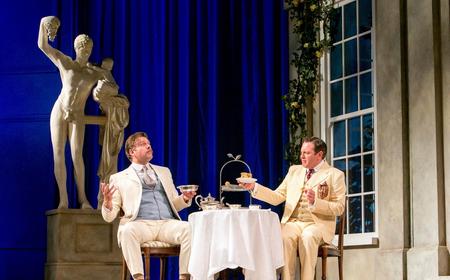
This theatre season, NYSF is making one of its biggest impressions to date, as three works developed at its summer program at Powerhouse Theatre in Poughkeepsie, N.Y., take the stage this fall: Shanley's musical Romantic Poetry; Stephen Belber's Fault Lines, and Daniel Jenkins' Love Child. A fourth, the musical Nerds (book and lyrics by Jordan Allen-Dutton and Erik Weiner and music by Hal Goldberg), is scheduled to open on Broadway this spring.
Founded in 1985 by Mark-Linn Baker, Leslie Urgand, and Max Mayer, the company has played a major role in the development of not only authors, but actors as well. David Straithairn, Dana Delaney, Kevin Bacon, and Kyra Sedgwick have spent time on the Powerhouse stage.
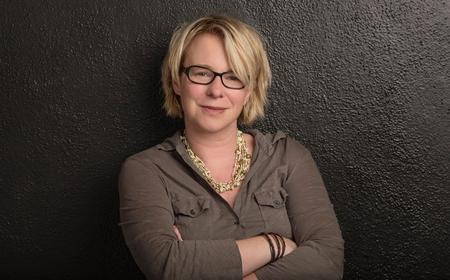
Pfaelzer (pronounced "FEL-zer") has been part of that history, too, serving an earlier tour of duty as a producing director before returning as artistic director in June 2007. She spoke with Back Stage recently about the company, its philosophy, and what actors need to know, whether they work on stage or behind the scenes.
When you returned to New York Stage and Film as artistic director, what was it that you wanted to make sure you maintained?
I don't know of any other company that is able to be as flexible and immediately committed to the needs of the artist. We don't have overhead. We don't have an enormous structure to support. It's the artist who we most want to support and say, "What do you need to move this project forward? What does the project need to find its next phase of being?".... I think theatre needs time and space and a protective environment and the collaboration of other great minds poking at you.
Can you think of a few examples that demonstrate that?
We worked on this amazing musical called Largo. All there was when the project was brought to us was an album. David Henry Hwang and Ethan Silverman brought us this album, Dvorak's Largo From the New World: "There's a musical in here somewhere but we don't know what it is yet." We listened to the album and said, "Well, sure there is." That was about creating a residency for them so that they had time and space to lock themselves in a room and start to kick ideas around.
Did that involve grants?
In that case, it was about making sure they had rehearsal time, being invited into our summer artistic community on the Vassar College campus. The next year they had a draft ready, and then it was about bringing in a company of actors and musicians and pushing.
Where does Largo stand right now?
It's drifting at the moment. It's one of the projects I would most like to return to.
Do you factor that in to the whole process, figuring that you plant some seeds with the understanding that not everything is going to yield something?
It's about accepting that there are different measures of success.... You look at a project like Doubt, which won a Pulitzer, and that has a very tangible measure of success, especially with an artist like Shanley, with whom we've had a long and successful relationship. Then you have other work, where you've had an absolutely electric and amazing moment in a room with an artist and an audience and that may be it.... Sometimes you choose a project because you hear a voice in a script that maybe hasn't found its way yet or is not fully realized, but it's worthy of our time and exploration.
How often do you see that attitude put into practice in other New York theatre institutions?
I think it's what we [in the theatre community] all want. I don't hold us separate in that desire. I think we [at New York Stage and Film] are free from having to satisfy an enormous number of subscribers. We don't need to raise vast sums of money — for better and for worse. There are times that I long for that kind of infrastructure to support the work that we do.... We're all very interdependent. I think it's about looking at New York theatre as ecological system, and we play our role in it.
These days, actors are being encouraged to be more than just actors, and some have formed their own companies. What are the key things they need to know?
When you're running a small company, you should make sure you're doing the work that matters most to you, because that's the joy in it. It's an opportunity to gather your favorite artists around you and build something together; to make something that feels like it's your playground; to gather people close to you who are going to push you hard and make you think and challenge you and respect you.... I think it's really important as young artists to empower yourselves to make your own work, to not wait for someone to come along and say, "Yes, now you are allowed to be an artist."
What are some of the challenges people are going to face when starting a company?
It's a matter of, "How do you balance your own artistic needs with the need to draw an audience? How do you create a structure so you're not just performing for your friends, and yet recognizing that there is nothing wrong with that, either?" I think the exercise is to actually do the work. This may not be the thing that makes you famous, but it's the thing to keep the muscle flexible, and to give that value.
What are some of the things that early-career actors need to keep in mind?
It's about shedding your preconceptions of what a character is. I think it's about being in a place [where] you are prepared enough that you can remain completely open and flexible. How do you bring in everything in your toolbox and have the willingness to chuck it all out? And it's important to listen to the other people in the room. I think that this is an art form that does get handed down from one generation to another, and not necessarily chronologically.
It's a lot of listening and a lot of letting go.
Yeah. How do you invest enough in your own ideas to give them weight and to allow them to propel you forward, and yet know that you should be able to shake free of them at a moment's notice?
A gala for New York Stage and Film will be held Nov. 10, at Capitale (130 Bowery, between Broome and Grand Streets), 6:30 p.m. Honorees will be the actors Kyra Sedgwick and Kevin Bacon and the producer Douglas Harmon. For tickets, call (212) 736-4240.