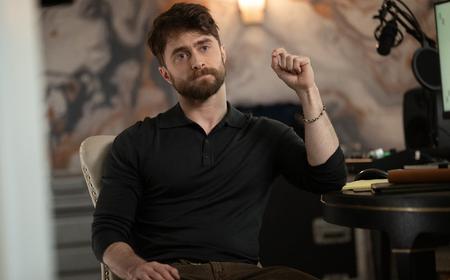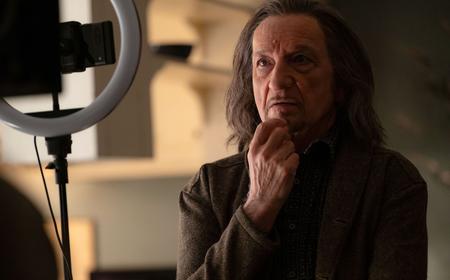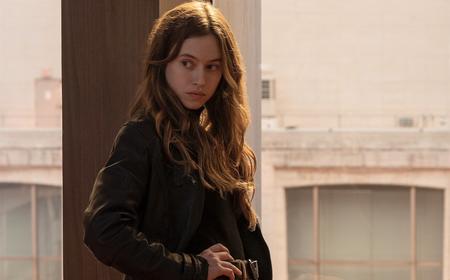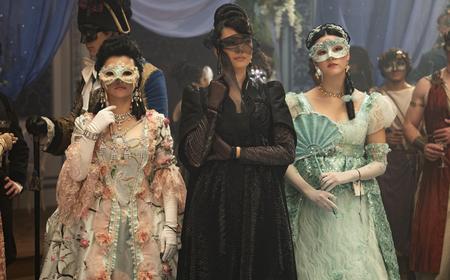
Netflix’s Emmy-winning anthology “Beef” is finally back, with creator Lee Sung Jin, aka Sonny Lee, swapping Season 1’s road rage storyline for a high-stakes generational feud set at an exclusive country club. The chaos ignites when a Gen Z couple (Cailee Spaeny and Charles Melton) witness a blowout between their millennial boss and his wife (Oscar Isaac and Carey Mulligan), triggering a toxic web of blackmail and manipulation. Viewers get to watch the characters spiral out of control trying to win over the club’s Korean billionaire owner (Youn Yuh-jung), who is hiding a massive scandal of her own.
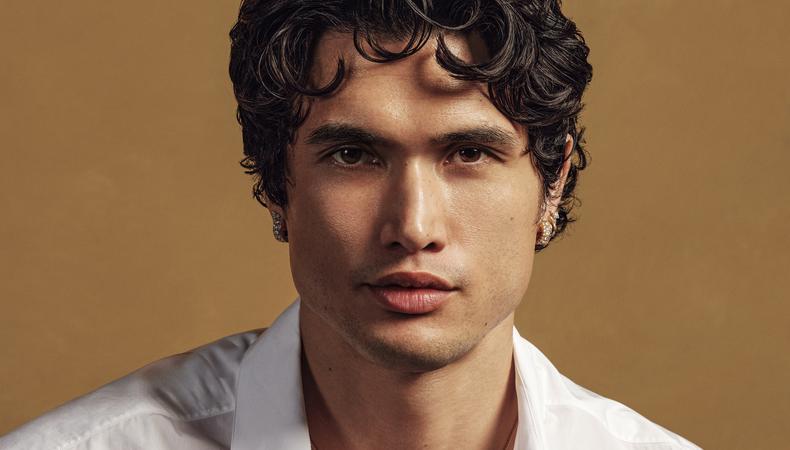
In a series defined by explosive energy, Melton’s character, Austin Davis, offers a striking contrast. Austin is a master of restraint, often saying everything while saying nothing at all. In our interview with Melton, the “Riverdale” breakout–turned–indie darling opens up about his approach to this understated role and the precision required to convey emotion so discreetly. He also shares insight into the chemistry behind the chaos, revealing that his unbreakable bond with Spaeny (who plays Austin’s fiancee, Ashley Miller) was forged long before cameras rolled. “That’s one of my best friends,” he says.
Beyond the craft, Melton reflects on the personal weight of the project, noting how “Beef” provided the opportunity to bridge his professional world with his Korean heritage and family.
Watch the interview here:
I’d love to start off by asking you how you approached Austin’s restrained style, especially coming from the more heightened world of “Riverdale”?
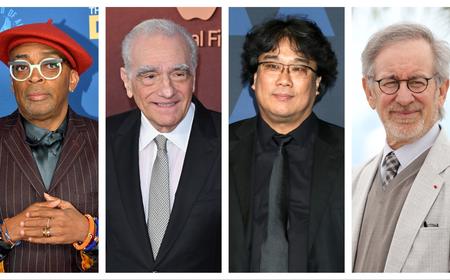
I think it really starts with the filmmaker and the tone of what Sonny achieves, which is so reminiscent of my favorite kinds of films and favorite filmmakers: Park Chan-wook and Bong Joon Ho. When you’re watching “Memories of Murder,” “Parasite,” “No Other Choice,” “Oldboy,” or “The Handmaiden,” there’s so much transcending and blending of genres that it’s not one thing. You’re experiencing so much, and the humor doesn’t come at the sake of slapstick. It’s the reality of the situation and absurd circumstances, which I feel like, whether we’re open to it or not, is so human.
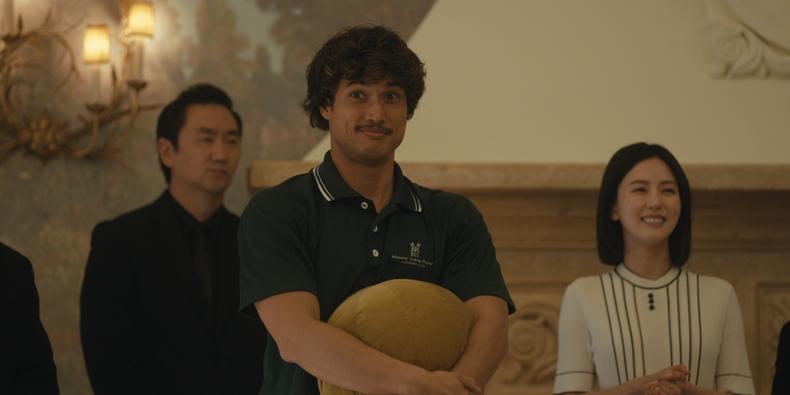
And with Austin, there’s this earnestness, this innate kindness and goodness to do the right thing and put everyone before him, which I feel is so, in ways, admirable, in spite of him maybe people-pleasing so much to the extent that he doesn’t know himself. But what’s interesting, too, is he simultaneously navigates the disintegration of his honeymoon phase [with Ashley], and also is confronted with his identity by being around Koreans, whom he didn’t grow up with, which lives in his epigenetics. And then he slowly realizes or understands that the conviction in his identity is a mask that fits into the social construct of society and capitalism, and how that may have affected who he is. And so that is a lot for someone to navigate.
You mentioned that Austin’s identity is almost like a mask. When that mask finally slips and his rage comes through, how did you shift your energy to show that character development?
It’s amazing when you have incredible scene partners and an incredible filmmaker, creator, and writer. And [director] Jake Schreier, our other filmmaker leading the way with Sonny.
It was just such a collaborative process, and I felt so safe with Sonny and Jake and the crew and my scene partners, where I don’t think I’m consciously aware of all the cracks that the audience sees happening in Austin. I just know there’s a lot of thought and conversation with Sonny and a lot of thoughts I had, consciously or subconsciously, that kind of like were birthed in the moment and not played.
Courtesy Netflix
The chemistry between Austin and Ashley feels so lived-in. How did you build that “us against the world”–type of trust with Cailee Spaeny?
Oh, it was easy. Cailee and I are homies. That’s one of my best friends. Cailee and I got very close before we started filming. During filming, we were rocks for each other. We spent last Thanksgiving together in the U.K. Like, I love her to death. That’s my homie.
But, you know, the creative conversations we would have outside of just personal experiences, knowing that it would feed and inform the [work]. It wasn’t like we had to hang out and do this in order to give a great [performance] or for our work to be great; we just enjoyed each other’s company.
We talked about art, all of it. You know, she’s from the Midwest, I’m from the Midwest. We got our families to go to a Kansas City Chiefs football game together before we started filming. My sister, some of my best friends, and [Cailee] all stayed in this big house, so we lived with each other for, like, two and a half weeks. During that time, we were cooking meals, talking about the work, and doing all that fun stuff. And everything was a part of the [prep work]—the personal and the professional. We spoke about where Austin and Ashley were 10 years from the first page of the script. How did they meet? You know, they were exciting, student-like questions that we would ask, that we would work on, and everything just kind of ended up being what [you see onscreen].
Cailee is so talented; she could just show up and do nothing. But she doesn’t work like that. She’s so diligent and in reverence to the work.
What’s something you learned from “Beef” that you’ll carry into everything you do in the future?
I think about Episode 8—spoiler alert!—where Austin Davis is pooping out the USB. And you hear [Ashley] talking behind this wall. You hear what she’s saying, and she’s acting like everything’s OK. But then if you open your eyes and watch [Cailee’s] performance, it’s a complete contrast to what we’re seeing happen. That’s a technical skill. Because you’re almost aware of what the moment is as an actor going in—like, you have to understand what’s happening in the scene in order to lose yourself in the moment and not overthink it. But it’s a lot of hiding within a scene. You’re exposing and hiding at the same time. It’s very heady; we could talk about that for hours.
What sets your experience on “Beef” apart from everything else you’ve ever worked on?
I came back home. My whole Korean family got to see what I do. Came to set. I came back home.
This interview has been edited for clarity and length.