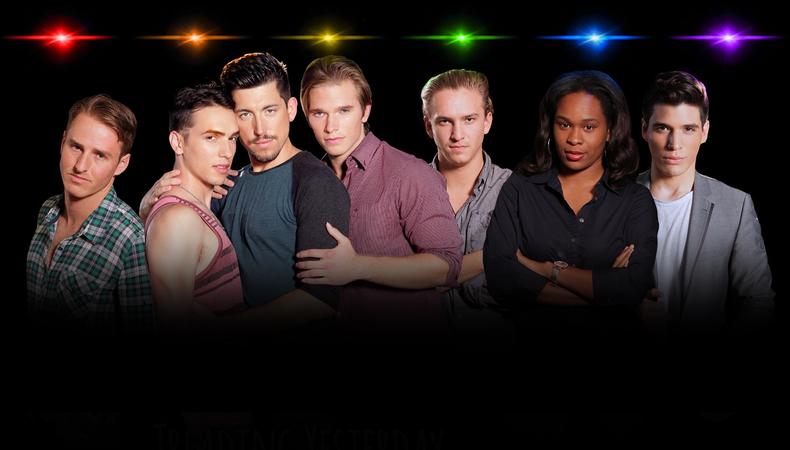
Craig Bettendorf may not have an entertainment industry background, but that didn’t stop him from creating and producing his own web series, “Treading Yesterday,” premiering at Dances with Films in L.A. Bettendorf was involved in LGBT activism during the 1990s, so he was well aware of what came before the Supreme Court’s ruling on same-sex marriage. But with the knowledge that many millennials (including some of his close friends) were not, he created “Treading Yesterday.” Bettendorf was initially shopping the series to producers, but as a self-identified “impatient guy,” Bettendorf sold his home so he could produce it himself. The series, which is set in two timelines (1988-1989 and the present), revolves around Eric Knox going back in time to resolve his biggest regret. The large ensemble cast makes the project more difficult to sell to premium channels or streaming services, but Bettendorf feels that it’s necessary for the story he’s trying to tell. “I think when you’re doing something in two different timelines you have to have 10 or 12 people in each timeline to keep it interesting.”
Having written the episodes, Bettendorf was invested in finding the perfect cast. “I know that in the entertainment industry right now, there’s this huge move to cast people who have large social media followings,” says Bettendorf, but his vision was for a fresh show with fresh faces.
The four leads - Kai Morgan (as Christian O’Neil), Mili Rakic (as Eric Knox), Liam Silbernagel (as Will Morgan), and Jax Buresh (as Robert Fox) - initially came through Backstage, as did the rest of the large ensemble of 20 recurring characters. Morgan, Rakic, Silbernagel, and Buresh worked with Bettendorf as a casting board of sorts. When Bettendorf learned that Morgan had a production background, they started working together on that as well. “It led to just an amazing synergy,” says Bettendorf.
After posting a notice on Backstage, Bettendorf went through two days of initial casting sessions and was able to find about half of the cast in those two days. Bettendorf researched “Queer as Folk” as that project was similar to what he was trying to produce and after reading about their casting struggles, he was surprised that he faced relatively few of his own. “Obviously it’s gotten way easier or way better for people to understand that it’s a role I’m playing and not necessarily playing the orientation that I am in real life, so I was quite pleased that more than 60% of the people that we were in contact with, that we made appointments with and did our audition interviews with, actually came.”
With thousands of submissions, Bettendorf came up with a short list and then did further research on the actors so that by the time he met them in person the casting process was “remarkably easy.” “I had a very principled approach. Because we did so much work prior, we only brought in three individuals for each role. We were able to see only three individuals for each role and get a really good sense for who our #1 and #2 were and then bring them back on a follow-up day to check for chemistry.
He notes that the director, Eric Hensman, “was amazed at how quickly and how well our auditions went using Backstage versus paying somebody to do the work for you.” Even when they needed a last minute replacement for the role of Bryce Avery, they were able to quickly find Ash Uzun, who was on set only days after they posted the casting notice. “The quality of individuals that have come our way has completely exceeded our expectations. It’s been a seamless experience. It’s been terrific.”
Inspired by this post? Check out our Los Angeles audition listings!