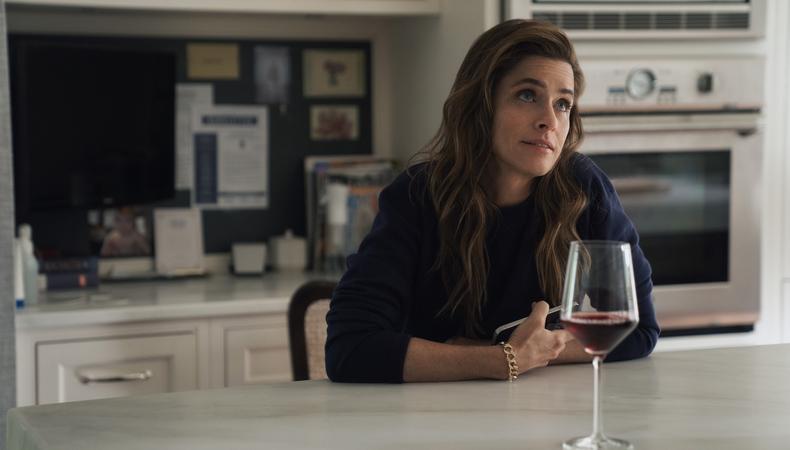
Three decades into her career, Amanda Peet feels like she’s doing some of her best work—something she traces back to her early training with Uta Hagen.
“Thinking about her is really important and present in my mind,” Peet says of the legendary acting teacher, who died in 2004. “She was allergic to the kind of acting in which you are advertising the emotions, conjuring them, or orchestrating something, as opposed to playing the objective. And it still plagues me—but in a good way!”
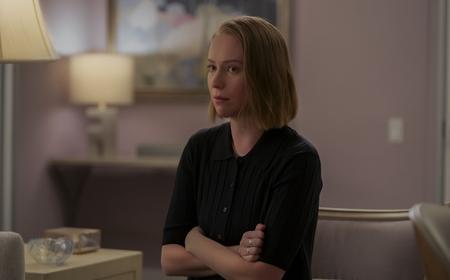
April 3 marks a big moment for Peet with the release of her first film in 10 years, Matthew Shear’s romance “Fantasy Life,” and the second season of “Your Friends & Neighbors.” On Apple TV’s crime dramedy, she stars as Mel Cooper, a therapist recently separated from her husband (Jon Hamm) and juggling her new life as a single mother. For Season 2, Peet was thrilled to put Mel through the wringer.
“I like the intersection of a suburban mom who is trying to keep things normal, get her daughter to college, be presentable,” she says, “and then the raging, psycho part of Mel.”
Ahead of these premieres, we talked to Peet about studying under Hagen and hitting her stride.
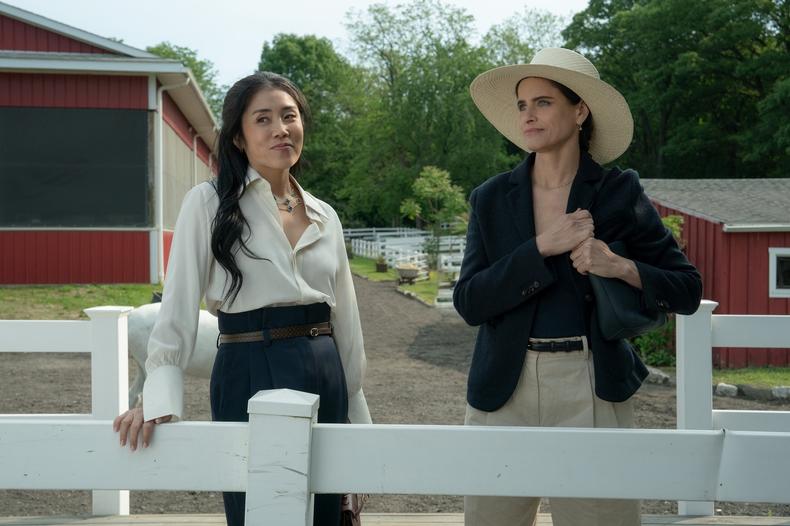
What initially drew you to “Your Friends & Neighbors”?
I had read [creator] Jonathan Tropper’s novels‚ and I knew that he was really good at dialogue. When they said he’s at the helm‚ I was like‚ Well‚ that’s probably a no-brainer. And then if you add Jon Hamm‚ it becomes a super no-brainer. In the first couple of episodes that Tropper sent me‚ Mel is with a patient who is describing keying a car‚ and then she goes and keys a car‚ and I was like‚ This is delicious!
When did you catch the acting bug?
It started in school when I moved to England‚ and I was the first Jewish girl to play Saint George in “Saint George and the Dragon.” I remember being in a kind of flow state‚ and then the play would be over and I’d feel a weird embarrassment about how into it I was. It was waking up and being like‚ Wait‚ it’s not real? That was when I noticed I wasn’t like normal people. [Laughs]
How crucial was your time studying under Hagen?
My mom found me a teen acting class at HB Studio with Trudy Steibl‚ and then after [founder] Herbert Berghof died [in 1990]‚ Trudy was like‚ “You really should study with Uta before she retires.” I auditioned for her my junior year of college‚ and it was a critical moment for me when I started getting good feedback from her. I was one of the youngest people in the class‚ and everyone had headshots and agents‚ and it felt like it made acting into something that wasn’t just frivolous.
What is your worst audition horror story?
I mean‚ there are just so many. I was so neurotic and had stage fright‚ so sometimes I didn’t prepare‚ and I was telling myself: I’ll be more free this way and less fake. But really I was just unprepared. And that’s embarrassing‚ and it kills me to think about.
How were you able to break through those early struggles?
I used Backstage a lot‚ because I was so nervous and trying to find my own way to do exposure therapy. The more I worked‚ the less nervous I got‚ and so my philosophy was to say yes to everything. I needed to deal with my stage fright and fear of failure by just doing it‚ and keep doing it. But I’ve had the most fun since I turned 40. I feel like I’m finally getting it.
This interview has been edited for clarity and length.
This story originally appeared in the Apr. 6 issue of Backstage Magazine.