In the Envelope: The Actor’s Podcast features in-depth conversations with today’s most noteworthy actors and creators. Join host and senior editor Vinnie Mancuso for this guide to living the creative life from those who are doing it every day.
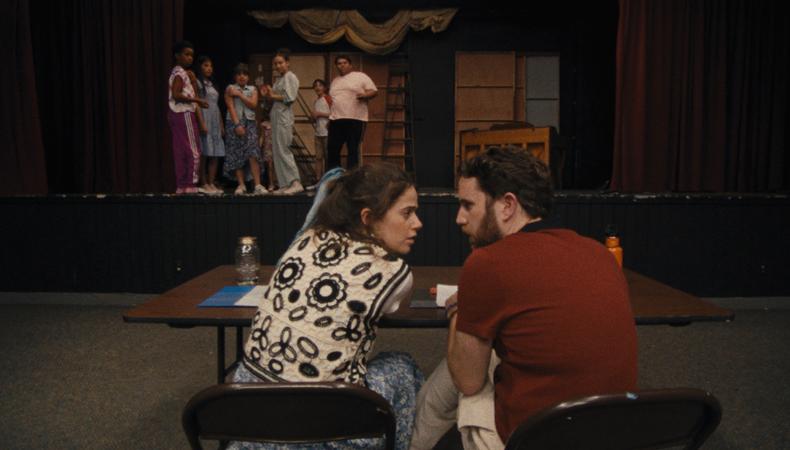
Ben Platt really loves live theater—and he has a Tony, a lead performance in this year’s best musical revival winner “Parade,” and an instantly iconic GIF to prove it. That passion for the stage is on full display in “Theater Camp,” his Christopher Guest–inspired mockumentary premiering on July 14.
In addition to starring, Platt co-wrote the film alongside his longtime friends and collaborators Molly Gordon, Nick Lieberman, and Noah Galvin. Lieberman co-directed the film with Gordon, who also stars alongside Galvin. The project is a true labor of love, shining a spotlight on the importance of spaces like theater camps for any young people who have an interest in the arts.
On his episode of In the Envelope: The Actor’s Podcast, Platt explains what live performance can teach every actor—and what making “Theater Camp” taught him about himself.
Working with the movie’s large cast of child actors was a lesson all its own.
“It just reminds you why you’re doing this in the first place, and what instilled a deep enough love…that you were willing to be in a business that isn’t the easiest or most stable and is certainly quite an anxiety-provoking lifestyle to choose.
The purity of [the kids’] excitement to be there, their raw talent and willingness to jump in—and also how deeply they looked up to all of us and were listening to us—it makes you take a lot of responsibility and pride in the kind of artists and professionals that you are and that you want to inspire them to be.”
Platt’s theater background was the foundation for everything he’s done since.
“I think it’s the purest form [of performance], in a sense. Getting to live a story from start to finish in succession is just, as a storyteller and as an actor, the most fulfilling experience. It’s taught me so much about not just storytelling and art in general, but [also] about creating a character and going on a journey as a character.
“I don’t know that I would have been able to do that when I started doing things on camera if I hadn’t had a background in living and experiencing and creating an arc from start to finish every night. Having to repeat [your performance] and find new things in that and be that honest and authentic repeatedly creates such a foundation of understanding and character-building. It’s just understanding of story and a love of story; I don’t know that I would even have wanted to venture into other things if I hadn’t had [theater] as the backdrop for all of it.”
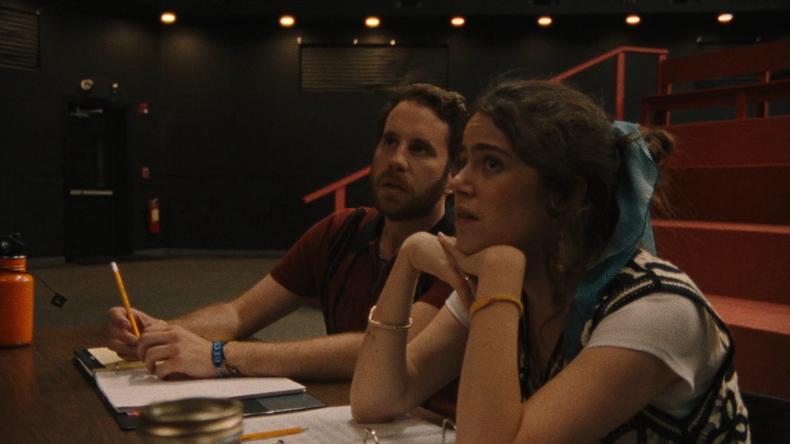
“Theater Camp” Courtesy Searchlight Pictures
The process of crafting “Theater Camp” shone a light on Platt’s own past—and his possible future.
“As we were telling stories and really shaping the characters, the realization was that there was no need to exaggerate, that there is an intensity—and a magical realism, even—to these teachers and these educators.
We also really started to understand, as [adults], what’s underneath that, which is just a real desire to impart something and to change the young people [that real-life acting teachers are] working with and to see some improvement. Those things can coexist; and that’s what makes them delicious characters to play with: They can be abrasive and aggressive, and you can think, Oh, these poor kids.
But at the end of the day, treating a young person as an adult and as a professional and being the first one to see and respect them and expect something from them is so life-changing. I think I realized through this process how informative that was for me. To be honest, I’ve always held an idea or a dream or a desire to, at some point, get to teach in some manner myself or get to work with kids in some way, direct kids, or even work at a camp.”
Platt believes that every actor should get experience in the theater world.
“It’s unbelievably wonderful and fulfilling to have the instant gratification of sharing something with an audience and feeling their reaction,” he says. “Having the energy cycle back and forth in the immediate [moment]—that’s a very unmatched thing.
“As times continue to change—the types of things we see on TV and film and the way they’re made, and obviously with the [WGA] strike…going on—everything seems to be hanging in the balance. Technology changes on the daily, and things continue to morph. But there’s something so unshakable and unchangeable about live theater—telling a story and working on your craft live and in person. I think it’s important to [get] your foot in that door, because it’s one of the only untouchable art forms we have.”
Subscribe to In the Envelope to hear our full conversation with Platt: