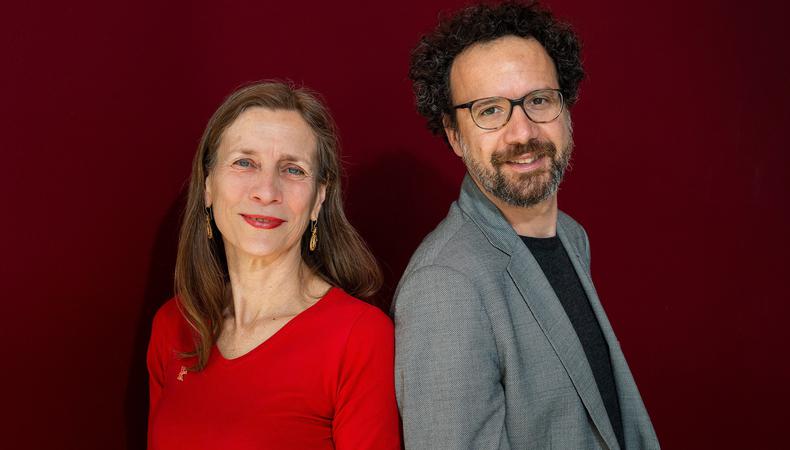
Welcome to Behind the Fest, Backstage’s questionnaire series with film festival figures who want to get your work selected and seen. With behind-the-scenes insight from the men and women at Sundance, TIFF, Cannes, and more, their tips might just hold the key to your indie film success story!
In its 70th year, Germany’s Berlin International Film Festival is still remaining true to its roots. Founded during the Cold War as a “showcase of the free world,” it endures as the most political of the major film festivals, according to its website. In fact, notes executive director Mariette Rissenbeek, the Berlin fest is now working on “raising awareness on climate change, in which the film industry plays a huge role.”
The Berlinale, as it’s more succinctly known, is well-positioned to draw attention to this issue—or any other. The 11-day event screens 400 movies, sells 330,000 tickets, and fosters cultural exchange through public talks and panel discussions. To parse its offerings, Backstage interviewed Rissenbeek as well as artistic director Carlo Chatrian. They explained what distinguishes the festival and how to make the most of it, whether you’re attending or submitting a film of your own.
Tell us about the festival.
Mariette Rissenbeek: The Berlin International Film Festival, also known as the Berlinale, [takes place this year] from February 20 to March 1 in various locations in Berlin. The heart of the festival is located in Potsdamer Platz [a shopping and nightlife hub], but since it is a public festival, the Berlinale branches out to various areas in Berlin. Thanks to the special section Berlinale Goes Kiez, not only can locals experience film but also meet cast members in their neighborhood and get to know local cinemas.
Why was it founded? What distinguishes it from other fests?
Rissenbeek: The festival was created for the Berlin public in 1951, at the beginning of the Cold War, as a “showcase of the free world.” Shaped by the turbulent postwar period and the unique situation of a divided city, the Berlinale has developed into a place of intercultural exchange and exploration of new cinematic voices. To this day, it is considered the biggest public festival of all the major film festivals. 330,000 tickets are sold to audiences, which mingle with 21,000 industry professionals and journalists that attend the Berlinale.
Click here for more coverage of film festivals around the world!
When and how should filmmakers submit their work?
Carlo Chatrian: Filmmakers can submit their work to the festival until November and to more than one section of the festival. We ask filmmakers to register online on our website and to submit only films completed within the 12 months prior to the start of the festival. The minimum length of films can vary from 20, 30, to 60 minutes depending on the section the filmmakers would like to submit their work to.
What kinds of submissions does the fest look for? What’s the selection process like?
Chatrian: It is hard to describe in a few words a process that is very long and organic. With the switch to digital it is much easier and cheaper making moving images; therefore the number of films submitted or available for a film festival is huge. That’s why at the Berlinale we have many people involved in the selection process. In general, a film submitted is watched by two people and, if they consider it good, it is passed either to me or to the head of section who will make the final decision. We are looking for films that surprise us, either with their stories or their style.
What does the Berlinale do for the rest of the year?
Rissenbeek: The Berlinale encourages and offers educational programs during the festival but also throughout the year. The youth section Generation, for example, is in close contact with schools. Another asset is the festival’s talent development program Berlinale Talents [in which] 250 emerging filmmakers are invited to a five-day networking program, including workshops and labs.
What networking advice would you give attendees?
Rissenbeek: We have a variety of events, panel discussions, and roundtables that are offered in all of the sections and the different initiatives. The EFM [European Film Market], Co-Production Market, Berlinale Talents, and the World Cinema Fund offer events for industry professionals, allowing networking amongst the trade visitors from different continents. Whether it’s “Books at the Berlinale,” an initiative from the Co-Production Market or the “DocSalon” or “Berlinale Series Market” of the EFM, the festival brings together practitioners from all around the world to Berlin for networking and exchange. Attendees can also take a sneak peek into the world of film and attend open events such as the World Cinema Fund Day, the think tank of the World Cinema Fund.
What’s your No. 1 piece of wisdom for early-career filmmakers?
Chatrian: Be curious. Never stay put: with your eyes, with your feet, and with your thoughts. Don’t rely always on your first impression—it might be the good one, but before filming or editing it, think about [it]. Images nowadays are everywhere, so in order to make an image stand out, it should have something unique.
 So You Want to Be a Film Director...
 And lastly, what’s your favorite film seen recently?
Chatrian: In the last months I didn’t have much time to see films except the ones submitted to the festival. So I guess the films selected—any of them—are the answer to your question.
Rissenbeek: I recently saw “Judy,” “Portrait of a Lady on Fire,” “Jojo Rabbit,” and “Parasite”—great! My favorite film stays [Ladj Ly’s 2019 film] “Les Misérables.”
Check out Backstage’s film audition listings!