Whoever said “don’t reinvent the wheel” needed to watch more movies. Take Margot Robbie and Jacob Elordi in Emerald Fennell’s iconoclastic adaptation of “Wuthering Heights,” for example. They’re the latest in a long line of Cathys and Heathcliffs, yet they blaze sexy new trails for Emily Brontë’s doomed lovers. Then there’s the star-studded cast of Christopher Nolan’s upcoming take on “The Odyssey”; Matt Damon, Zendaya, and more are set to put their own spins on Homer’s millennia-old characters.
Actors tackling the classics—whether in candlelit costume dramas or punk-rock reinventions—shouldn’t feel limited by the interpretations that came before. For creative inspiration, watch these eight film performances from actors who made well-worn roles their own.
Katharine Hepburn, “The Lion in Winter” (1968)
Is the Hollywood icon essentially playing herself in Anthony Harvey’s Middle Ages drama? Does it seem strange that Eleanor of Aquitaine, a powerful queen of France and England, would speak in a braying, Transatlantic accent? Does any of that matter when the performance is this singular? In order: Sorta, yes, and no. Many actors have played Eleanor; no one else brought the caustic glamor that won Hepburn her third Oscar. Swing a stick in the dark and you’d hit one of her hilariously vicious line readings, like: “I could peel you like a pear, and God himself would call it justice.”
Glenn Close, “Dangerous Liaisons” (1988)
The French novel “Les Liaisons Dangereuses” by author Pierre Choderlos de Laclos, first published in 1782, has been adapted often, including as a teen erotic thriller in 1999’s “Cruel Intentions.” But with all respect to Sarah Michelle Gellar’s turn in that retelling, no one schemes like Close. As Marquise de Merteuil in Stephen Frears’ “Dangerous Liaisons,” Close marries strength and softness as only she can. Her character radiates cruelty and lust—hunger, even—while plotting revenge on ex-lover Vicomte de Valmont (John Malkovich). When the sordid affair goes sideways, the emotional shipwreck plays out on her made-up face. And after all that danger and liaising, the audience still feels bad for her. If the performance came from anyone but Close, you might say it’s too much; but it didn’t, so you can’t.
Laurence Fishburne in “Othello” (1995)
Before Fishburne revolutionized tiny sunglasses as Morpheus in “The Matrix,” he made history as the first Black actor to play Shakespeare’s tragic Moor in a major studio film. The actor brings swagger, sly smiles, and seething suspicion to one of the Bard’s most famous characters—and frankly, he just makes Othello cool. From the first moments of Oliver Parker’s adaptation, the audience senses how this Othello would definitely make a loser like Iago (Kenneth Branagh) mad with jealousy. Not even the most bigoted Venetian can deny his magnetism; ill-fated bride Desdemona (Irène Jacob) certainly can’t.
Harold Perrineau in “Romeo + Juliet” (1996)
While Baz Luhrmann’s eye-popping Shakespeare adaptation is swimming in imaginative interpretations (Claire Danes’ disaffected, Gen X Juliet! John Leguizamo’s snake-like, gunslinging Tybalt!), one stands above the rest—in heels. Perrineau’s mesmerizing performance as Mercutio, the fun-loving bestie of Romeo (Leonardo DiCaprio), makes Luhrmann’s kinetic, neon-colored reinvention work. Dressed to the nines in drag. Lip-synching to “Young Hearts Run Free.” Seductively spitting out Elizabethan verse while popping party drugs. The dialogue might have been centuries old, but Perrineau’s delivery still feels thrilling, dangerous, and new. Luhrmann should have added “+ Mercutio” to the title.
Tilda Swinton in “Edward II” (1991)
Scotland’s chameleon queen did something new and unusual with a historical role in a period piece? Gasp, wow, you don’t say, etc. But in her close collaborator Derek Jarman’s unapologetically queer spin on a 16th century Christopher Marlowe play, Swinton digs into her bag of tricks and pulls out something truly unexpected: va va voom. Her lithe, alluring Queen Isabella serves Hollywood starlet energy while chasing love and power amid Jarman’s anachronistically designed world. Pair this with other Swinton-led films like Luca Guadagnino’s “I Am Love” and Jim Jarmusch’s “Only Lovers Left Alive”—few actors can make desire look so otherworldly in so many different ways.
Aubrey Plaza in “The Little Hours” (2017)
Don’t sleep on Plaza’s ability to calibrate her sardonic tone to fit a given project, whether she’s playing a financially struggling woman in “Emily the Criminal” or the living embodiment of death on “Agatha All Along.” Heck, plop her into a Tuscan convent and she’ll come up with something surprising. In “The Little Hours”—directed by Plaza’s late husband, Jeff Baena, and based on a story from 14th century Italian tome “The Decameron”—she becomes Sister Fernanda, a hilariously rageful, sexually adventurous nun who could probably perform an exorcism with a stare alone. Any time. Any setting. Plaza can make it work.
Florence Pugh in “Little Women” (2019)
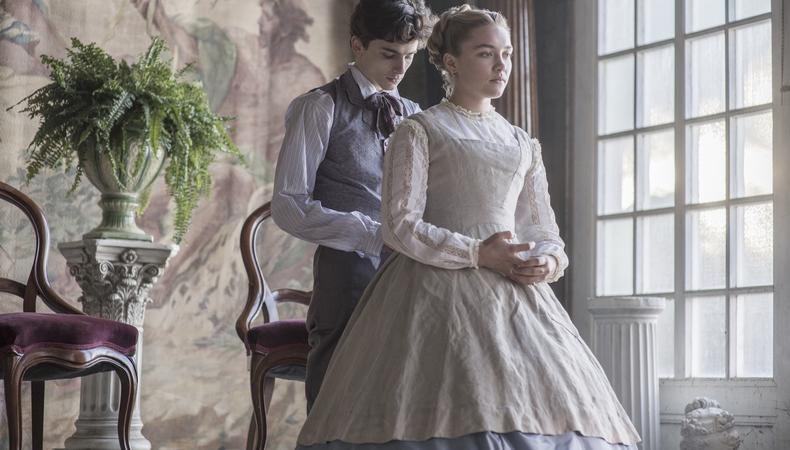
When critical consensus declares that someone “fixed” a 150-year-old character, well, seems impossible to leave them off a list like this. Pugh’s take on Amy March, the petulant, Laurie-swiping baby sister from Louisa May Alcott’s Civil War–era novel, not only infused the character with sympathetic motivation and emotional dimension, it also earned her an Oscar nomination. Pugh pulls off many marvels in Greta Gerwig’s film, especially by embodying Amy from youth to adulthood. Her stirring delivery of a big monologue about the realities of being a woman, though, stands out. It’s a craft-defining moment from an undeniable, breakthrough talent.
Dev Patel in “The Green Knight” (2021)
Cinema has returned to the well of Camelot time and time again, but David Lowery’s retelling of the Sir Gawain myth conjures particularly eldritch energy. In this tale of a would-be knight pursuing greatness, Patel pulls an Arthurian archetype into down-and-dirty relatability. He’s rakish, sure, but also anxious and impotent. The actor has long displayed a knack for unlikely heroes, like the romantic “chaiwala” of Danny Boyle’s “Slumdog Millionaire” and the traumatized avenger of his own directorial debut, “Monkey Man.” As Gawain encounters all manner of ghosts and creatures in “The Green Knight,” Patel presents a legendary crusader as a failson kicking and screaming at every step toward nobility. Still: He takes the steps.