Off the top of your head, do you know who Don LaFontaine, Janora McDuffie, and Bill Scott are? If you’re deeply entrenched in the entertainment industry, you might recognize these names. But in a friendly game of Celebrity, your teammates would struggle. (The answers: LaFontaine was the longtime voice behind many movie trailers, coining the iconic line, “In a world…”; McDuffie was the announcer for the 94th Academy Awards; and Scott was the voice of one Bullwinkle J. Moose.)
Not too long ago, these three existed in a world where voice actors were recognizable to the ear, but rarely the eye. Cut to today, when every other commercial seems to be narrated by Oscar-winning royalty, be they for Nationwide (Julia Roberts), Visa (Morgan Freeman), Budweiser (George Clooney), or Duracell (Jeff Bridges). Celebs often appear in front of the camera, as well; a recent Booking.com spot featured Tina Fey, Jane Krakowski, and Glenn Close. To borrow a phrase from a classic “South Park” episode, are professional voiceover actors leveling the charge: “They took our jobs”?
RELATED: How to Become a Voice Actor
“It’s not a new thing, but there’s been an uptick,” says David Shatraw, a 33-year veteran of the industry whose numerous TV, commercial, and voiceover credits have provided his livelihood through decades of Tinseltown turmoil. “Years and years ago, a famous TV or film actor would go overseas to do commercials because they never were going to be run on American broadcasts. They’d get a really nice paycheck and then come back here. And no one ever saw [their overseas work] because this was way before YouTube and way before the internet, and celebrities were doing it quietly.”
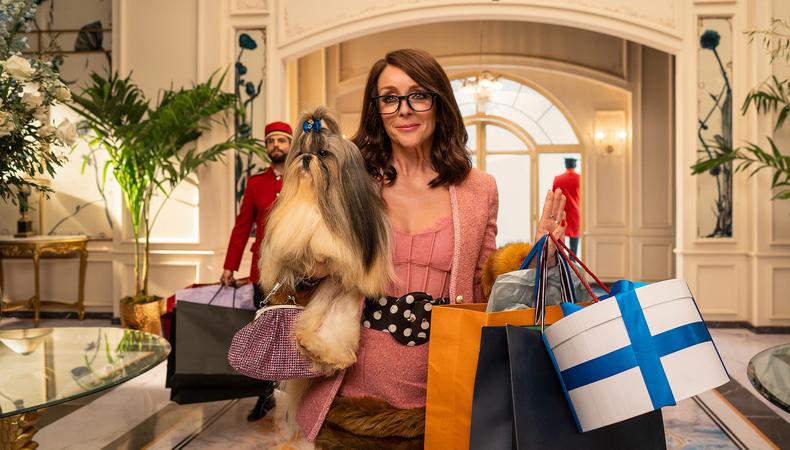
That quiet has become a cacophony, though you’ll still see the occasional unknown success story—think spokespeople like Progressive’s Flo (Stephanie Courtney) and State Farm’s Jake (Kevin Miles). But more often than not, it’s Melissa McCarthy as a songbird on a balcony, hawking Booking.com.
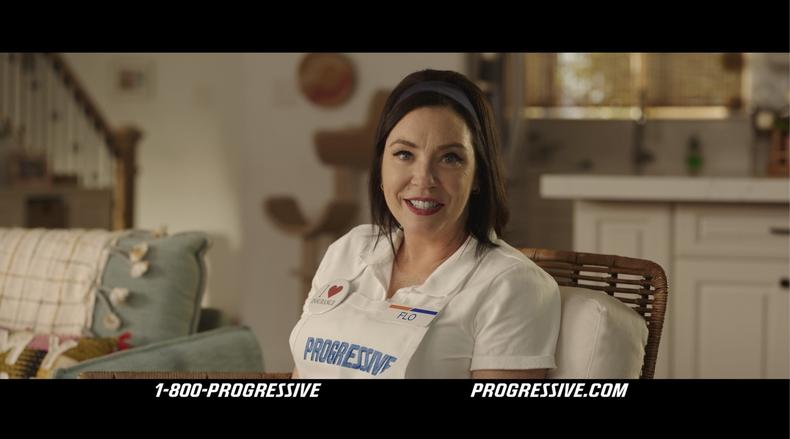
Stephanie Courtney in a commercial for Progressive Courtesy Progressive Its For Everyone
Shatraw says this boom goes all the way back to the 2000 SAG strike, when commercial actors demanded residuals for cable TV spots. At the time, they were being paid a meager one-time fee for these ads, no matter how often they aired. The strike last for six months.
“Because it was such a long strike, the ad agencies started learning how to do things nonunion,” says Shatraw. “They didn’t need the union to figure out how to shoot commercials without using union talent and to satisfy what the client wanted. So [union work] never came back; it’s never returned.” He estimates that, these days, “way more than half” of commercial gigs go to nonunion performers.
It’s a bummer for actors who routinely booked these types of jobs in the past. What’s more, the influx of celebrity commercials has led to casting descriptions with very specific reference notes. “You’ll [hear] things like, ‘We want that quiet confidence that Jon Hamm has,’ or, ‘We’d like that serious, authoritative, confident tone of Brian Cox for McDonald’s,’ ” Shatraw explains. “But there’s an energy to it; and now you go, ‘Oh, OK; I see what you’re looking for.’ You have some template to work from, but celebrities are the touchstone for that.”
 How to Become a Commercial Actor
 Despite the shrinking number of available jobs, having a celeb paying into everyone’s health and benefits packages can be quite advantageous for a gig actor, as they will eventually reap the rewards of an A-lister’s much larger salary. “They keep my pension healthy!” Shatraw says with a laugh.
But even celebrities worry about when they’ll book their next gig. Shatraw paraphrases a quote from James Earl Jones when he was asked why, considering his many accomplishments, he would need to do a Bell Atlantic campaign. “He said, ‘Because I’m an actor, and one day, they will stop asking.’ And I love that, because if you’re an actor and you’re a celebrity like Julia Roberts or Tom Hanks, and somebody offers you that, you don’t audition. It’s an offer.”
Shatraw believes that the biggest threat to his way of life isn’t the big bad celebrity, but a little interloper with the initials A and I. “If we don’t get AI protections into contracts, we’re in a lot of trouble,” he explains. “But unfortunately, with all of the [commercials] being done right now that are nonunion, any producer working on a major product doesn’t need to follow the SAG-AFTRA rules for AI regulations; they can just do whatever they want. Text-to-speech translation is going to really do a number on rank-and-file actors.”
He cites Scarlett Johansson’s insistence on finding out where, exactly, the tech company OpenAI sourced voices for ChatGPT after she discovered one that bore an alarming similarity to her own. (It’s an example of life imitating art, considering the Oscar nominee voiced one of cinema’s most famous AIs in Spike Jonze’s 2013 film “Her.”)
Like many actors, Shatraw is aware of the hard fact that Hollywood’s ultimate goal is to make money, and producers will explore any avenue that allows them to generate more revenue. “Will celebrities continue to dominate? Absolutely,” he says. “It’s not going to stop. I’m at a point in my career right now where I’ll never say the words, ‘Boy, it’s between me and Brad Pitt for that commercial!’ It’s never gonna happen. So I just have to accept what they’re giving and what they’re doing. And hopefully, hopefully, the unions can survive AI.”
This story originally appeared in the July 11 issue of Backstage Magazine.