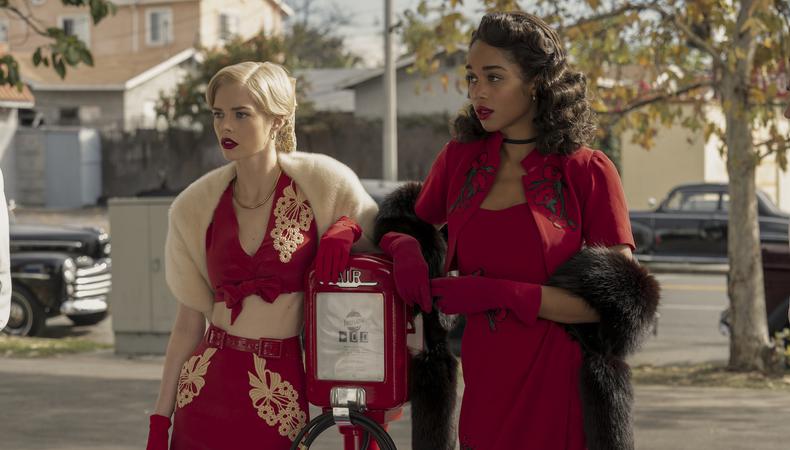
Makeup designer Eryn Krueger Mekash has been a mainstay of the Ryan Murphy empire before such a thing ever existed. Starting with “Nip/Tuck,” Mekash has helmed the lacquered lips of Murphy’s “Glee,” “Scream Queens,” “Feud,” and almost every “American Horror Story” installment. The trend continues with two of Murphy’s new Netflix offerings that, coincidentally, stand on polar ends of the spectrum: the hypermodern “The Politician” and the new “Hollywood,” which epitomizes 1940s showbiz glamour. Here’s what it’s like to be Murphy’s go-to makeup maven.
Once you’re hired onto a series, how do you start creating the looks?
Almost every television show I do is from the Ryan Murphy camp, and that’s who I’ve been working for for the past 17 years. He’ll usually send me a script or he’ll have a chat with me first and say, “I’m going to do this as my next project,” or, “Here’s what’s going on right now, what shows are you interested in doing?” I usually oversee the shows—I have an advisory job, so people can come to me if they have issues or questions about things or if they need to get in touch with Ryan. That’s how I got a producer title, which has been really interesting and different and a lot of work, but really fun. Ryan usually comes to me, and it starts with a script and we go from there. Sometimes it’s really straightforward, like, he wants Hollywood 1945 glamour, 18 months post-war. I know that look. Other shows you have to do a lot of research. Sometimes it’s modern-day and you’re doing tests and presenting looks to him. Sometimes he has a different twist in mind, but it all starts with research.
Read: Laura Dreyfuss on ‘The Politician’
What is it about the Ryan Murphy world that appeals to your sensibilities as a makeup designer?
A lot of it just has to do with my relationship with Ryan. It started off with “Nip/Tuck.” We’re a similar age and have similar upbringings and we get each other. I get him and I get his references. Initially, it was just that one show, but he would take it to such a different level. It was really out there, so even though it was the same series, he was always coming up with these crazy things. My intrigue in not having to do the same show every single day was piqued by his creativity. Then we started doing all these other shows: “Glee,” which wasn’t just a musical, it was all this crazy stuff that kept me on my toes. I’ve stayed with Ryan so long because it is so creative and so rewarding in that way. Then of course, getting into “American Horror Story,” that’s a whole other thing, and he’s always giving me these incredibly insane things to try and achieve. Every time it has to be something totally different, that’s what he always says—totally different and totally original. I love his genius.
Speaking to two recent Murphy projects, what’s the difference between working on a contemporary show like “The Politician” and a period piece like “Hollywood”?
“The Politician” is contemporary, but it also has a very wild vibe to it. The clothes are really unusual. And the storylines are contemporary, but there are very specific character looks. It has a lot of color to it, a lot of poppiness to it. It’s very kooky and fun but it also looks different than anything Ryan’s done. “Hollywood” is these very rich tones, very indicative of the time. The clothes are so specific and the makeup—there are only three shades of red lipstick, basically. There is a very specific look, and you don’t want to deviate from that. The difference creatively is that there’s this wild, funky, cool show going on over here, where there are a lot of different looks, and then “Hollywood” is high glamour, but the ’40s is also a very simple look. There are also some mature actors in it who would be influenced by the ’30s, so you pull those tones into it. There are a few more rules than there are for “The Politician.”
In general, how closely are you collaborating with actors on their makeup looks?
You always take into consideration what actors want. And for the most part, they know what they’re signing up for when they’re doing a Hollywood 1940s thing. You’re not going to have a lot of contemporary looks, and they know that. The fun part is collaborating with actors; the casts Ryan has created over the years have been so much fun, and you hardly ever get pushback. Everyone is always really excited about creating something different. It’s definitely a fun challenge and [I love] meeting all the new, incredible people he casts—for “Hollywood,” we had Patti LuPone and Holland Taylor, and we all fought over who would get to do Rob Reiner. We had so many great actors. Everyone wants to be representing the time period correctly.
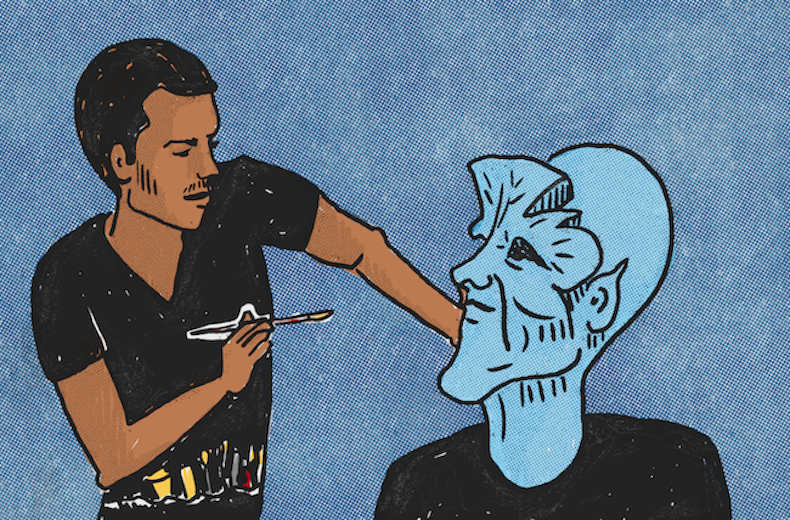 How to Become a Makeup Artist
 Do you feel makeup design—when done well—helps actors with character development?
A lot of times, when actors come for the makeup test or when they meet with you initially, when they see their clothes, they get really excited. And then with the hair and then the makeup, they get their wig on or their hair done and then they get their makeup done, they’re like, “I’m transformed. I’m this character.” To step into the story with the authentic look really helps people to become that character. That’s one of the best parts, when people see how they look.
Do you often see a moment when actors “transform” in hair and makeup?
It’s like magic. One of the days on the “Hollywood” set, we had 300 background [actors]. I started in the parking lot and went all the way down to where all of the artists were working, and we had, like, 20 makeup [artists] and 20 for hair. I walked down and all the background artists are sitting there in various states of rollers and costumes and everyone is going through the works and it felt very much like this is what it was like to work on the old films, where everybody is getting done up this way and having their makeup done. Working on these giant lots and seeing everybody driving the cars and carrying the purses and using the props of the time period, it is a total transformation. It makes you not only really proud of your hard-working team, but it makes you think: We did it.
Do you oversee makeup for background, as well? What is that process?
I do oversee it. We create little kits and little boards for each person, a little binder that has laminated looks. Those kinds of things really help you step into the time period. I’ll have little lipstick advertisements from that time and we’ll play music from the ’40s so everybody gets into that vibe. I oversee it, but I also have somebody that takes charge because I’m working with my main team [on the principal actors]. You pick somebody who knows what they’re doing and then you don’t have to think about it too much! That’s part of it: picking your team correctly so you don’t have to worry about it.
What advice would you give someone who wants to get into makeup design?
Back when I started, there weren’t a whole lot of schools available. I did go to a makeup effects bootcamp, but now there are so many schools and a lot of options for financial help, too. The schools nowadays have facilities and connections in order to help place people, help them get some jobs and get their foot in the door. If I were starting out, that’s what I would do, because not only do you make a lot of friends who are becoming makeup artists, you also just make a lot of connections. That’s a great way to do it. But you have to have the gumption to make the connections, to call people. A lot of the people who are younger who end up working for me are the ones brave enough to make the phone call or send the text. The very hesitant people who are like, I don’t want to bother people, those are the people that probably won’t make it. People expect it! That’s part of it, so you just have to really have the drive and the ambition.
Ready to get to work? Check out Backstage’s TV audition listings!