From Ash Ketchum to Eren Yeager and beyond, anime is full of characters that have transcended the medium to become as famous as anyone in live-action entertainment. Of course, it takes a village of writers, animators, and art directors to bring these stories to life, but at the end of the line is the voice actor who breathes life into a character worth following over hundreds of episodes. Whether you’re an aspiring VO artist or just an anime enthusiast, we’re taking a look at nine characters who define the medium and the ultra-talented voices behind them.
Monkey D. Luffy (“One Piece”), Mayumi Tanaka
Monkey D. Luffy is unique in the anime world. He’s single-minded, impulsive, often clueless, and cartoony to the extreme. That might sound ludicrous, but Tanaka manages to make Luffy equal parts funny and endearing. What makes it work is the way Tanaka focuses on Luffy’s sincerity and emotional intelligence beneath the mayhem. It’s a tricky balance: Luffy never really changes, but Tanaka has managed to portray a character whose simplicity hides quite a lot of complexity.
Spike Spiegel (“Cowboy Bebop”), Kōichi Yamadera
Though American fans may be more familiar with Steve Blum’s portrayal in the English dub, kudos must be paid to Yamadera’s suave, endlessly cool performance as Spike in the original Japanese. The key to the portrayal—what Yamadera understands perfectly—is that this is a film noir antihero filtered through a 2000s comedy with a bit of classic kung fu thrown in. Yamadera’s seemingly effortless juggling of these tones makes Spike unforgettable.
Usagi Tsukino (“Sailor Moon”), Kotono Mitsuishi
Tsukino (Serena in earlier English translations), better known as the titular Sailor Moon, is arguably the best-known female character in all of anime. She’s a regular, relatable teenage girl who also happens to be the reincarnation of a space princess with superpowers. Mitsuishi’s performance has been hugely influential to the entire medium as she seamlessly balances teenage awkwardness and superheroic confidence, creating an icon that’s both relatable and aspirational.
Shinji Ikari (“Neon Genesis Evangelion”), Megumi Ogata
Unlike most other faces you’ll find in the mecha subgenre of anime, Shinji Ikari is not brave or heroic. He’s full of self-doubt, anxious, and pessimistic—cowardly, even. To bring that across in a way that feels sympathetic instead of grating is Ogata’s greatest skill. She captures Shinji’s flaws without ever losing the audience. It’s a rather demanding job—Ogata is an honorary scream queen given the amount Shinji shouts in horror—but the results are easy to root for.
Son Goku (“Dragon Ball”), Masako Nozawa
Is there any other character as synonymous with anime itself as Son Goku? For the last 40 years, Goku has served as the medium’s archetypical protagonist, his spiky hair, loud personality, and voracious appetite inspiring virtually everything that’s come after him. The range of the legendary Masako Nozawa is a vital part of Goku’s staying power. Whether it’s adult Goku’s badassery in times of bravery, his heartbreaking turns in moments of sacrifice, or even the pivot to kid Goku’s wide-eyed sense of wonder and silliness, Nozawa has kept surprising fans for decades.
Tanjiro Kamado (“Demon Slayer”), Natsuki Hanae
“Demon Slayer” is arguably the most popular modern-day anime, with the fourth film, “Demon Slayer: Kimetsu No Yaiba Infinity Castle,” the highest-grossing Japanese film of all time. At the center of that whirlwind of popularity is Hanae as Tanjiro Kamado, a soft-spoken protagonist who is more likely to cry over the death of an enemy than make jokes about how much he wants to fight. The unique sensitivity that underscores Hanae’s performance is a massive reason “Demon Slayer” has garnered such a huge, loyal audience.
Pikachu (“Pokémon”), Ikue Ōtani
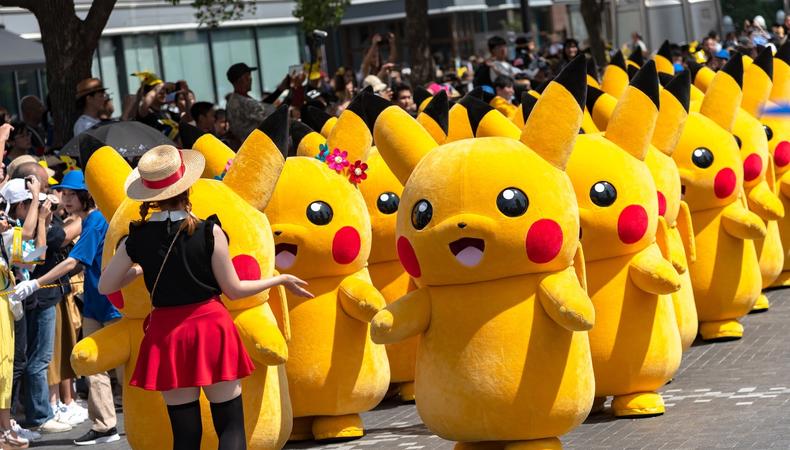
Even beyond anime, Pikachu is one of the most iconic, instantly recognizable characters in fiction. Which makes it even more impressive that he only ever says one single word: “Pikachu.” Thank Ōtani, who manages to imbue that name with whatever emotion the moment calls for. You can feel the vulnerability in the earliest episodes—the wariness Pikachu feels toward strangers, the respect and admiration he feels toward Ash, and the joy when he realizes he can trust others. There’s a reason there is no localized Pikachu voice in other languages.
Eren Yeager (“Attack on Titan”), Yuki Kaji
Eren’s journey is deeply complex. He starts out as a young boy filled with rage and grief, channeling that into a desire to protect his loved ones but ending up a monster that unites the world against him. It wouldn’t work without Kaji’s range. The actor can take Eren from vulnerable and raw to inspiring and brave to monstrous and dark in the span of just a couple of episodes. (And that’s not to mention his inimitable scream.) It’s that depth that made Eren a cornerstone of 2010s animation.
Vegeta (“Dragon Ball”), Ryō Horikawa
If Goku became the archetypical anime protagonist, Vegeta did the same for anime rivals, inspiring hundreds of antagonists turned allies. It’s a wild character arc from genocidal villain to loving husband and father, but veteran Horikawa kept it steady by always adding human touches to Vegeta in all forms. This allowed the franchise to slowly tear down the character’s walls, with Horikawa providing every emotional pivot along the way.