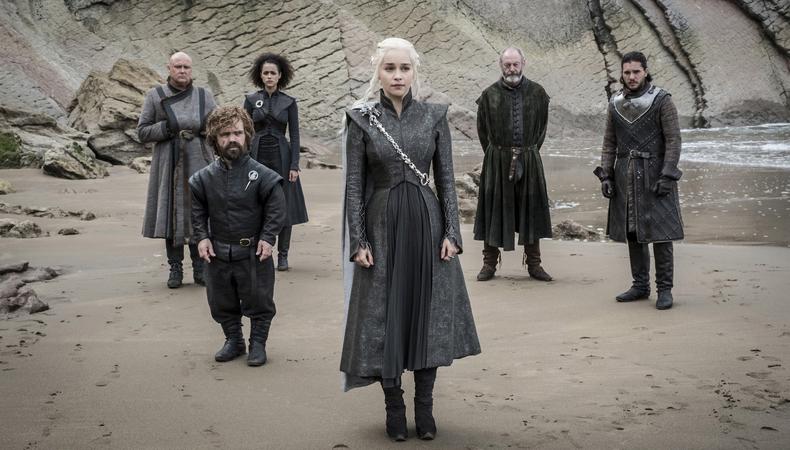
Gemma Jackson has four decades of experience in production design and more than 30 credits to her name, having worked on everything from “Game of Thrones” to “Bridget Jones’s Diary.” And yet, of HBO’s new sci-fi Victorian drama “The Nevers,” which premiered April 11, Jackson says it is unlike anything she’s ever seen. Here, Jackson takes a deep dive into how she broke into the business, built a lasting career, and always keeps things interesting.
How did you get into production design?
I was at art school; I was doing painting. I thought, all through my teenage years, that’s all I ever wanted to be. When I got there, I just felt that I really wasn’t very good at it. It wasn’t doing it for me. I was extremely lucky to get on to a postgraduate theater design course, and with that, my whole life went click, click, click, into focus. Suddenly, everything that I knew was interesting—whether it’s a doorstep, a high-heel shoe, or a space station—suddenly had a relevance in my life. And I was very happy doing theater all through the ’70s, really. And then, by an absolute fluke, somebody wanted an all-female crew, which was a bit of a cool idea in the early ’80s; there were very few women technicians at that point. Somebody approached me [for that film], and I said, “Sure, I’d love to do it!” And that was really the beginning. I had to get into the union to do my third film, and once I was in, I thought, Wow, this is fantastic! And, really, off I went. I don’t regret an instant of it.
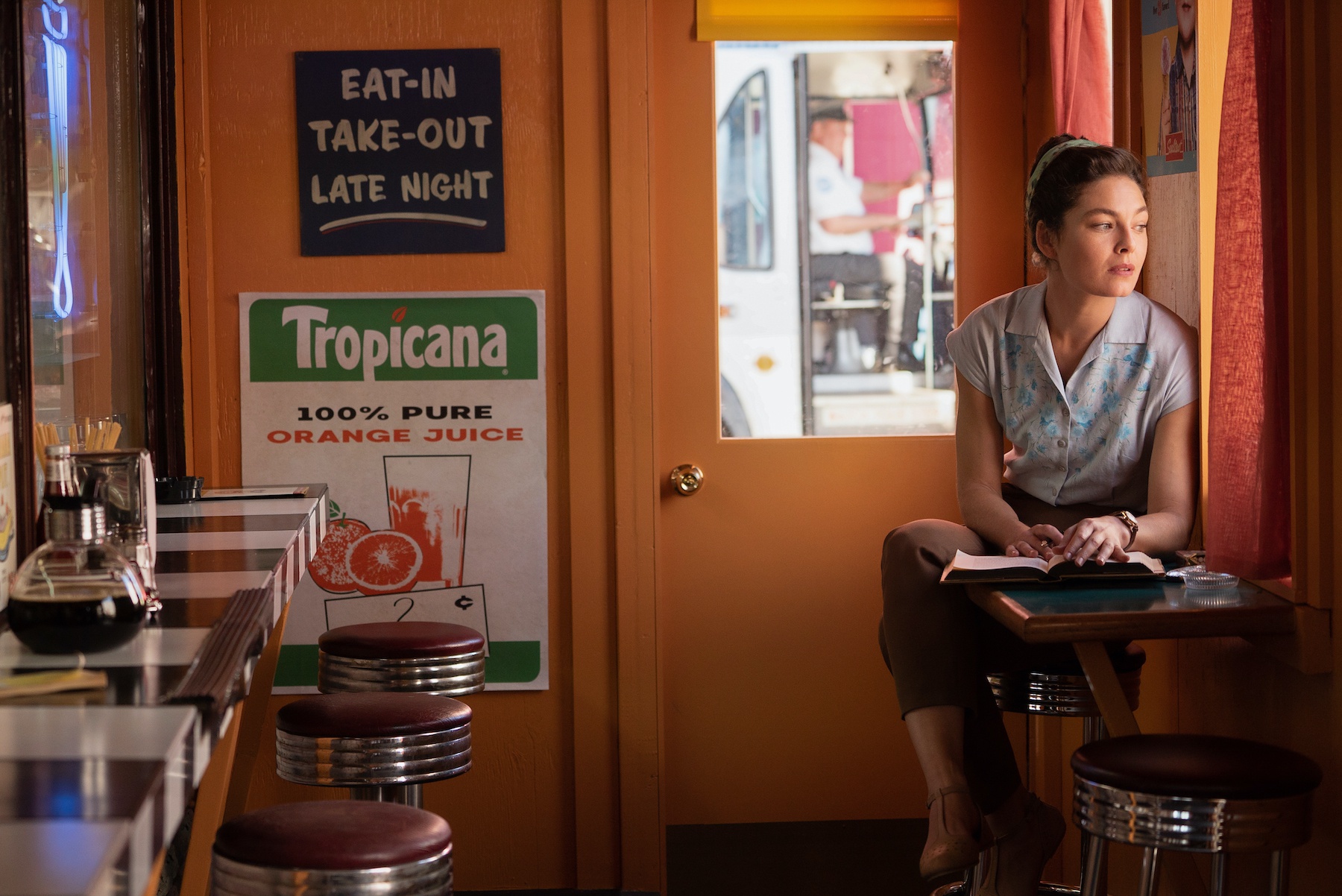 A Day in the Life of a Production Designer: Drew Boughton of ‘The Man in the High Castle’
 Is scenic design for theater very different than production design for film and TV? How did you navigate those intricacies?
They are very different, but by the same token they both employ design skills and an understanding of space, and people in space. I think that theater is actually really good training, because you’re in a very defined space and you have to be very imaginative with how you can move it around and change it; even if it’s just a curtain coming down and going up. In some ways, there’s an element that I always miss, which is a slight stylization, a simplification you can do with theater that you can’t do with film. With film, it’s really a 365-degree world; you’re creating the world. But I think theater absolutely educates you really well for anything. Film requires having so many more balls in the air. With theater, you’ve more or less got one or two sets. In a film, you might be dealing with 20 sets at any one time. But then, in film, you also probably have a bigger crew. I really like working with a team, and in theater it’s quite lonely, you tend to spend your time at home, listening to the radio all night. Whereas in film, there’s more of a sense that you’re supported by your team.
“You read it, you respond to it, you dig around in your memory, you dig around in your books, and you dig around for images, textures, and spaces. And then each job demands its own set of these rules.”
When you were first starting out, how did you figure out and establish your design aesthetic?
I don’t know if I’ve got a style, even today. I don’t think I ever thought about that. You just go from job to job. But I’ve always been quite careful about what I do. I don’t just take any old job that comes along. I sort of—not that I have particular caveats like no violence or this or that—but I want a script to speak to me. I want to have a reaction to it. And if I don’t have a sort of creative reaction, I probably will pass on it. I guess it must be the choices that I’ve made over the years that have somehow put me into whatever you imagine my “look” is.
How different is production designing for a fantasy like “Game of Thrones” compared to designing something grounded in reality?
I tend to approach them all much the same way. You’re dreaming up these environments, and you’re responding to the script you’ve been given. You have these environments come into your mind. “Game of Thrones” for me was sort of in Northern Ireland, but then very quickly we built onto all the other countries that came into it. Of course, you could go crazy with gorgeous embellishments; if you decided to do a film on a submarine, you’d probably get completely absorbed in those details of what the guys have got pinned up over their beds or something. I think, whatever it is, you go down that journey, and each job is a journey, and you’ll get to explore a whole new set of visual references. Everything you read, everything you think about makes your brain kind of tick in a different way. That’s the exciting thing about doing it. Every job is different, and that’s why, sometimes, for example after “Game of Thrones”—I did a year of prep, and then three seasons—I kind of had to do something else. That’s a long time in one world. I enjoy the constant changing and different worlds that make my brain work in different ways.
What kind of research do you for a period project like “The Nevers”?
For this one, it’s Victorian. So you start with a bit of proper historical research. But then you realize that most people—even today, you don’t walk into a house and it’s all, bling, 2021! You’ve probably got things there from all around the world, and [from] different periods. Similarly, in the Victorian times, we’ve got Georgian influences and all the other influences from before. And then for this [series], it’s also got this sci-fi element to it. Although you don’t really see it until Episode 6, it’s there, you’re being informed about it all the time. That gives a little liberty for a bit of madness. You can kind of take a trip and be fairly confident that no one’s going to say, “You can’t do that!” The world is Victorian, so that’s a good basis. But from there you can jump off and have some fun. That was a big part of the attraction of doing it, that there was this whole other side to it.
“Each job is a journey, and you’ll get to explore a whole new set of visual references. Everything you read, everything you think about makes your brain kind of tick in a different way.”
Right, the show combines these different elements in a way that’s unlike anything I’ve ever seen. What was unique about it from the design perspective?
It’s a bit unlike anything I’ve ever seen, too! And I have to say, my team and I have had a look over all of the episodes, and we’re all rather stunned and amazed, ecstatic that it worked! Again, you read it, you respond to it, you dig around in your memory, you dig around in your books, and you dig around for images, textures, and spaces. And then each job demands its own set of these rules. Looking at it now, we’re thinking, This has got our own inner London feel to it. It feels very inner-city, but it’s ours. We kind of created our version of London. That became an exciting element of putting it all together: Although it’s a proper world, as in “Victorian melodrama,” it’s also got this strong science fiction, and it’s got this strong sense that anything could happen. But it’s like, people say if you’re doing a comedy, you don’t design funny sets. “Bridget Jones” didn’t have funny-haha sets. It had a very real world where she lived. And, similarly, with this, you don’t think, Spooky, spooky. You try to be as true to the demands of the story as possible, and then because those demands are a bit weird, they color how you finally represent the world.
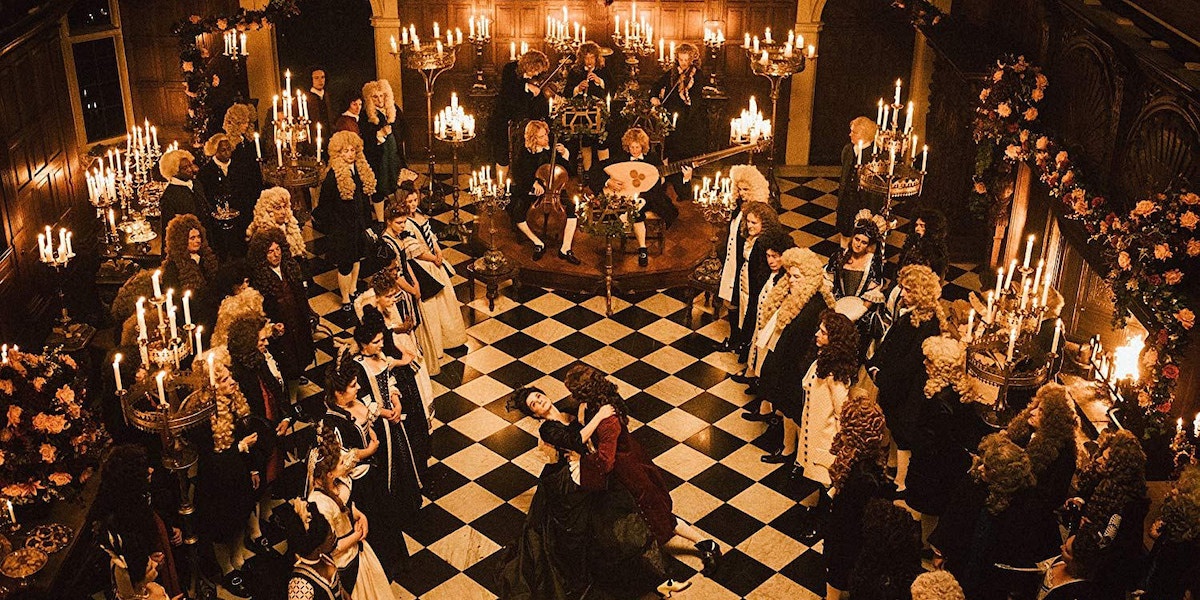 What Is a Production Designer? Job Description, Salary, Responsibilities + More
 Because you don’t want to tell the audience what to think. You want them to make natural inferences through the design, right?
I call myself a “visual storyteller.” We’re giving them every piece of information, help, nuance, mood. It’s all those things. And then the audience can sort of make their way through that journey, backed up by us and the fantastic script. The scripts are so good in “The Nevers,” and I think the performances are excellent. And so all of us together have created this kind of weird and wonderful world.
What advice would you give someone who wants to pursue production design?
To pursue it! Knock down those doors. It’s really good to do a bit of basic technical drawing training first. It’s important to have an artistic drive inside you, and you need to find ways of expressing your visions and your ideas. These days, I think it really helps to be able to do a bit of technical drawing, either by hand or on one of the programs on the laptop. And then just beat down those doors until somebody lets you in. When you’re there, work as hard as you can; take any opportunity. If you’re in there as a runner and most of the time you’re making tea, if somebody says, “We need a model-maker,” say, “I’ll do it!” Be available and enthusiastic. And look around you all the time, see what’s going on, see what people are doing. [If you think to yourself,] Perhaps I’m really good at graphics, perhaps that’s what I should be doing, use the opportunity to really see how everybody works and how everybody works together. I take quite a lot of pains to choose people for my art department, and therefore you want to listen to their talents and their ideas, because otherwise what’s the point? You get people you can communicate with, and you hope they’re going to communicate with one another. That’s really important to me.
Looking for work? Check out Backstage’s crew job listings!