Grindhouse cinema is proof that yesterday’s trash can be today’s treasure.
In the days of the Hollywood studio system, five major companies controlled most of the production, distribution, and exhibition pipeline. They also had the budgets and resources to dominate what audiences saw, making it harder for independent producers to compete. Eventually, the restrictive Motion Picture Production Code, also known as the Hays Code, withered, filmmaking technology became more widely available, and low-budget independent films had more room to thrive.
By the 1960s and 1970s, cheap thrills predicated on sex and violence started to find their way into these films. The movies spanned various genres but all fell under the banner of grindhouse, so named after the movie houses that ran low-quality pictures continuously for cheap admission fees. Though budget theaters existed throughout the country, grindhouses were synonymous with urban audiences who saw the first run of low-budget B movies rather than second runs of Hollywood fare.
Although these movies were made to score a quick buck, some showed enduring popularity, kept alive not only in the imaginations of popular filmmakers like Quentin Tarantino and Robert Rodriguez but also in the creative freedom that would eventually make its way toward a newly liberated Hollywood.
“The Wild Angels” (1966)
You don’t get to the groundbreaking “Easy Rider” if you don’t first associate Peter Fonda with motorcycle pictures, as this Roger Corman classic does. Co-starring Bruce Dern, his then-wife Diane Ladd, and Nancy Sinatra, “The Wild Angels” follows a biker gang (based on the Hells Angels) that comes to the aid of their incarcerated pal—only to create more chaos along the way. The film helped solidify the biker genre that would continue to be popular throughout the 1970s. Its prelude to “Easy Rider” makes it an important movie for understanding the rise of New Hollywood and the second golden age that followed.
“Coffy” (1973)
The story of grindhouse is also the story of blaxploitation cinema, as these low-budget flicks frequently featured Black stars in exciting roles that were scarce to nonexistent in Hollywood. So it was that a film like Jack Hill’s “Coffy” could make a star out of the gorgeous, exhilarating Pam Grier as a nurse who goes undercover as a sex worker to take out the dealers who are ruining her city. Aside from being a giant of the blaxploitation genre, “Coffy” is also a good example of how these new indies could create household names outside of the system. Grier found success not because of some carefully calibrated marketing campaign but because audiences were thrilled whenever she was onscreen and wanted to see her again and again.
 What Is a Cult Classic? How Underappreciated Films Find Devoted Fandoms
“The Texas Chain Saw Massacre” (1974)
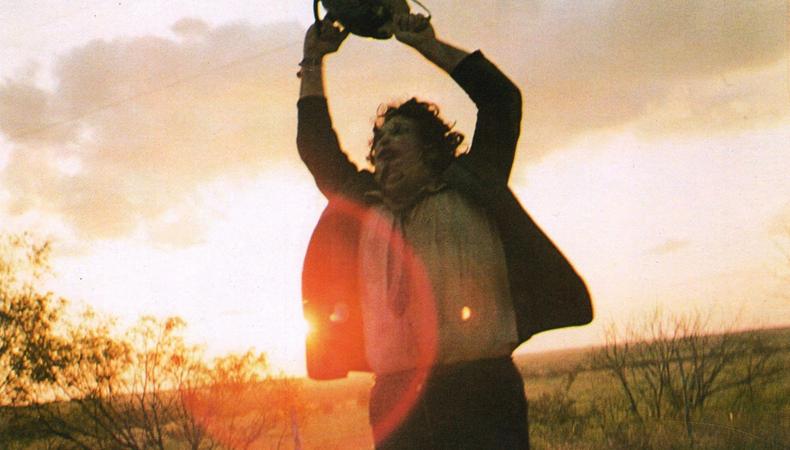
On its (leather)face, Tobe Hooper’s “The Texas Chain Saw Massacre” checks all the boxes for a grindhouse feature, from its low budget to the grisly violence and shocking story surrounding a group of friends waylaid by a family of cannibals. The film was a massive hit and spawned a franchise that continues today. But it also proved to be one of the most influential contributors to the slasher genre—predating the widely regarded cornerstone “Halloween” by three years—weaving in unnerving aspects beyond the slasher himself and crafting the predator-prey action climax centering on a final girl. Despite its humble origins, you can’t tell the history of American horror cinema without “The Texas Chain Saw Massacre.”
“Abby” (1974)
Grindhouse cinema was also happy to take what had worked in Hollywood and find a less costly, more populist solution. That’s how you get to William Girdler’s “Abby,” a blaxploitation supernatural horror feature that pulled so hard from “The Exorcist” that American International Pictures was accused of copyright violation by Warner Bros. The film, which follows the title character being possessed by a Yoruba sex spirit, is difficult to track down but is emblematic of how similar films, including William Crain’s “Blacula” and Paul Maslansky’s “Sugar Hill,” would take mainstream horror and repurpose it for a different but no less eager audience.
“Death Race 2000” (1975)
Corman was the King of Cult, and by his own admission, the only time he ever lost money on a movie was when he tried to pursue art over commerce. Plenty of Corman movies would qualify as grindhouse pictures, but perhaps the most influential was Paul Bartel’s “Death Race 2000.” The film is a dystopian sci-fi actioner in which the totalitarian government pacifies the populace through a murderous race, with colorful drivers racking up points based on how many kills they net along the way. Silly and grotesque, “Death Race 2000” predicted the type of action that ruled the 1980s, when American entertainment hungered for bloody violence onscreen delivered with sadistic glee. It predated the “government subjugation via deadly game” theme explored in “The Hunger Games” and “Squid Game” decades later. The movie even features one of the marquee stars of the ’80s, Sylvester Stallone, in a supporting role before he broke out thanks to “Rocky” the following year.
“Switchblade Sisters” (1975)
If you want more from “Coffy” director Jack Hill, check out “Switchblade Sisters,” which offers the lurid thrills of a female gang inflicting violence where they please. It’s a good example of how the exploitation genre allowed filmmakers to be ahead of the curve on social issues. Certainly, Hollywood was making exciting films in 1975, but the low budgets of the grindhouse genre allowed these creatives to take real chances. While today’s audience wouldn’t think twice about a female-led film featuring characters of questionable morality, “Switchblade Sisters” highlights how much filmmaking freedom we owe to our so-called trashy ancestors.
“I Spit on Your Grave” (1978)
The rape-revenge thriller is a familiar staple of grindhouse cinema, and it shows how such exploitation storytelling can easily dip into queasy territory. Meir Zarchi’s story follows a writer (Camille Keaton) who falls victim to gang rape and vows revenge against her attackers. While there is a sense that grindhouse cinema can just be tawdry fun, it’s important to keep in mind that it’s not inherently empowering. Throughout the years, other filmmakers have tried to wrestle with the legacy of this particular dynamic, such as the 2017 thriller “Revenge” by “The Substance” director Coralie Fargeat.